Wednesday, January 22, 2020

RORKE'S DRIFT

1/22/1879 - On the same day as Great Britain suffers one of its worst military defeats at the Battle of Isandlwana, a debacle of arms in which a Zulu force of 20,000 warriors blunts the invasion of its south African homeland by destroying a British military camp of over 1,300 soldiers (by contrast, on the hilly plains of Montana the 7th United States Cavalry will lose 268 men at the 1876 Battle of the Little Bighorn, Custer's Last Stand), the empire of Queen Victoria also experiences a legendary epic of bravery and endurance in which a small garrison of roughly 150 British and colonial troops holds off thousands of Zulu warriors attacking over and over for hours ... a clash now known to history as the Battle of Rorke's Drift.
File:Alphonse de Neuville - The defence of Rorke's Drift 1879 - Google Art Project.jpg
The Defence Of Rorke's Drift By Alphonse de Neuville

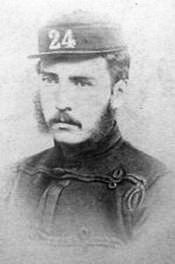
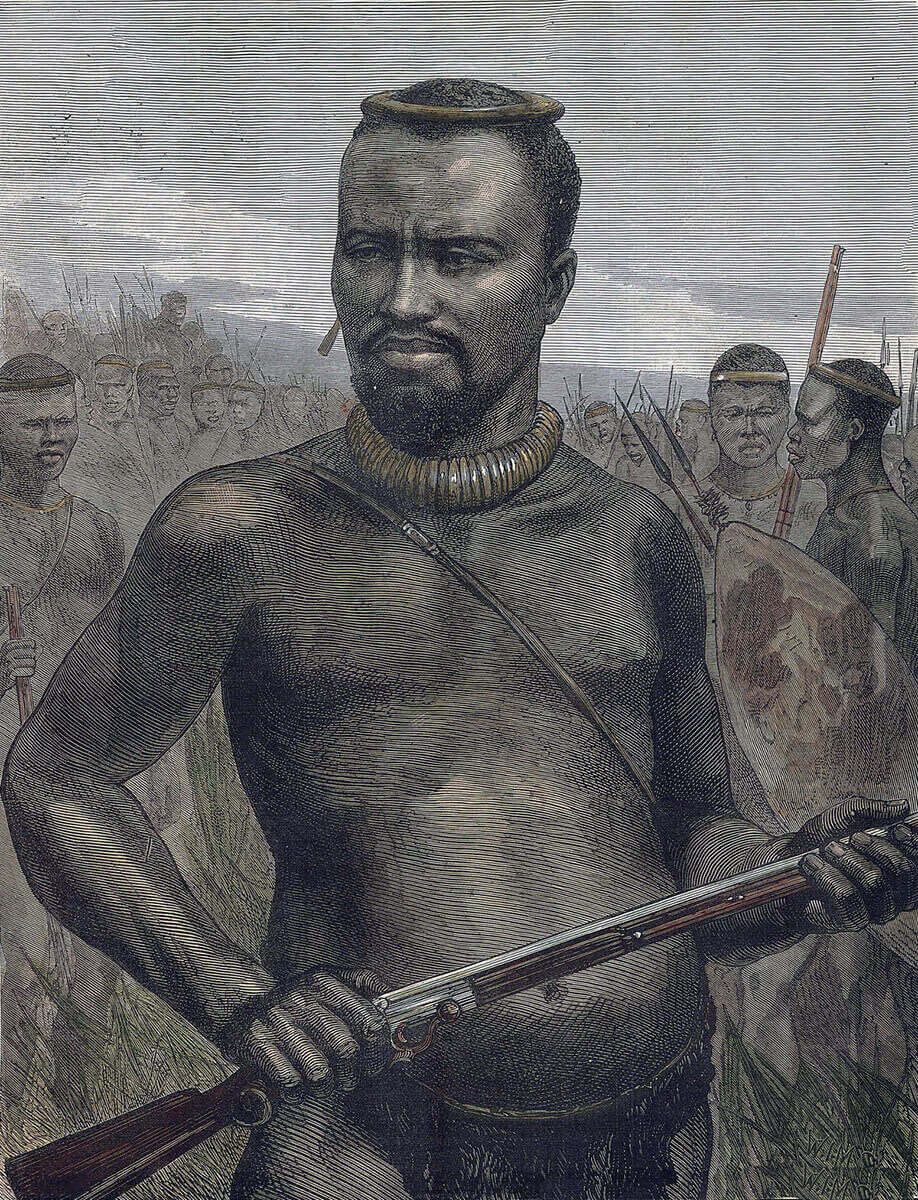
Built as a mission station and trading post at a ford (drift) on the Buffalo River dividing the British colony of Natal from the Zulu nation of King Cetshwayo kaMpande (built by an Irish merchant named James Rorke of course), in early January of 1879 the station becomes a staging ground for an invading force of British and colonial troops under the command of Lt. General Frederic Augustus Thesiger, 2nd Baron Chelmsford (a war begun over disputed territory).  Turned into a supply depot and small hospital, when the invasion force moves six miles forward to Isandlwana in Zululand, the station is manned by B Company, 2nd Battalion, 24th Regiment of Foot (led by Lieutenant Gonville Bromhead and largely composed of Welshmen), and is commanded by Brevet Major Henry Spalding, a member of Lord Chelmsford's staff.  On Wednesday, January 22nd, with Spalding away investigating why overdue reinforcements have not arrived from the British base at Helpmekaar, temporary command of the station is given to Lieutenant John Chard of the Royal Engineers, the senior officer prsent, at the site to repair the pontoon bridges over the Buffalo River.  When two survivors of the Isandlwana disaster arrive at Rorke's Drift in the early afternoon with news that the advance column has been wiped out, and a force of Zulu warriors is advancing on the drift, Chard, Bromhead, and Acting Assistant Commissary of the station, James Dalton, hold a quick meeting and decide instead of risking being caught out in the open as they retreat back into Natal, they will make a stand where they are.

King Cetshwayo
Lord Chelmsford
John Chard.jpg
Chard
VCGonvilleBromhead.jpg
Bromhead
James Langley Dalton, VC.jpg
Dalton

Decision made, the men quickly get the garrison to create a defensive perimeter of mealie bags, biscuit boxes, carts, and tipped over wagons that link the station's storehouse, stone kraal, and hospital together.  Loopholes are knocked into the walls of the buildings as firing positions and doors are blocked with furniture.  Adjustments to the line are still being made, when at around 4:00 in the afternoon, lookouts come down from the nearby Oscarberg hillside and report Zulus are fording the river to the southwest and are only about five minutes away ... a warning that soon sends Swedish missionary Otto Witt, native support personnel, and a small contingent of Natal Native Horse riders that survived Isandlwana earlier in the day (under the command of Lieutenant Alfred Henderson) away from the station and the coming carnage.
Image result for battle of rorke's drift
Chard's Drawing Of The Station
Image result for battle of rorke's drift
After

The warriors arriving at Rorke's Drift have had a long day that is about to get even longer.  Moving over twenty miles since they woke up in the morning, the 4,000 Zulu commanded by Prince Dabulamanzi kaMpande (the king's half-brother, he takes command when its original leader is wounded ... he is considered rash and aggressive by his own people) do not participate in the Isandlwana battle, but instead, are assigned to sweep around the British left flank and serve as a blocking force to prevent support coming into Zululand from Natal, and to deal with survivors fleeing the area.  They have been ordered to not enter Natal, but the prince has other ideas and decides his warriors should take out the British station on the banks of the Buffalo River (the warriors are eager too, many are unmarried and in the Zulu culture, to take a bride, a groom must first crimson his spear with the blood of an enemy).  Stabbing assegai short spears and cowhide shields versus Martini-Henry rifles and fixed bayonets, by about 4:20 in the afternoon all the players are in position and the battle begins.
Image result for isandlwana
Isandlwana

Prince Dabulamanzi
Image result for rorke's drift
Members Of The 24th
Image result for rorke's drift
Battle

Charging the south wall joining the hospital to the storehouse with a vanguard of 600 Zulu warriors, the British defenders open up on their opponents from 500 yards away, but soon they are at the station and hand-to-hand combat breaks out around the perimeter.  The Zulu are turned back, but it is a near thing as Chard and Bromhead move men about the perimeter where help is needed ... and it will be followed by hours of more of the same, hours of it.  Realizing the north wall can not be defended against the insistent attacks of the Zulu as more attacks develop, at about 6:00 in the early evening, Chard pulls his men back into their next defensive position in the yard and the hospital soon becomes untenable ... a huge problem for the men still within the structure, patients and soldiers.  Rooms within barricaded against the warriors inside the building, the British within the hospital, now on fire, begin an escape of carving holes between the separating walls, withdrawing a room at a time while under continual pressure from the Zulu (outside of one small window Private Joseph Williams defends, 14 dead warriors will be found after the battle), an effort which takes over an hour of time ... in the withdrawal, all the able-bodied soldiers assigned to the hospital manage to get out, along with nine of building's eleven patients (for their exceptional bravery at the hospital, Corporal William Wilson Allen, and Privates John Williams, Alfred Henry Hook, Robert Jones, Frederick Hitch, and William Jones will all be given Great Britain's highest military award, the Victoria Cross).
Image result for battle of rorke's drift
Battle

Hospital evacuated and perimeter shortened, the disjointed attacks of the Zulu continue through the long January night, forcing Chard to abandon the cattle kraal at about 10:00 in the evening and fall back on a small bastion backed against the storehouse where three ranks of soldiers can be positioned for sequential firing ... front rank, middle rank, and rear rank firing, over and over and over, a devastating Gatling gun of ordered volley fire from individual rifles and pistols.  Finally, at around midnight, the Zulu attacks begin to slacken, and then end a little after 2:00 in the morning of January 23rd (the Zulu sniper fire using rifles captured at Isandlwana lasts until 4:00 a.m.) ... just in time it would seem, as the British are down to 900 bullets (from a reserve at the station of 20,000 rounds of ammunition when the battle begins).  Exhausted, at dawn the British begin policing the battlefield (with Isandlwana and the clash they have just endured still fresh wounds, any Zulu found living are soon dispatched), but are soon back in their positions when a force of warriors is spotted in the hills above Rorke's Drift ... warriors on their way back home (they have been on the move for six days and haven't eaten properly for the last two) that pause to pay tribute to the enemy they have unsuccessfully fought through the night.  It is 7:00 in the morning and the battle is over ... at a cost of seventeen dead and basically all the other defenders bearing wounds of some sort (ten critically), Rorke's Drift has been defended (many of the surviving British soldiers will deal with Post Traumatic Stress Disorder for the rest of their lives, with Private John Fielding's hair turning white shortly after the battle).
Image result for battle of rorke's drift
Battle

A near thing despite Prince Dabulamanzi mismanagement of his force (the exact total of killed and wounded is never known, but historians believe between 351 and 900 warriors die in the clash), along with the hospital defenders, Victoria Crosses will be won by Lieutenant John Rouse Merriott Chard, Lieutenant Gonville Bromhead (both Chard and Bromhead will also be promoted to the rank of major), Surgeon-Major James Henry Reynolds, Acting Assistant Commissary James Langley Dalton, and Corporal Ferdinand Schiess ... eleven in all, and there might have been even more, but at the time the award is not given posthumously (four other men will win Distinguished Conduct medals).
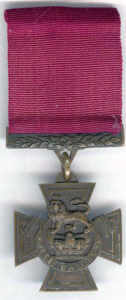
Victoria Cross: Battle of Rorke's Drift on 22nd January 1879 in the Zulu War
The Victoria Cross

Schiess In Action

The blood letting just beginning (the war will last until July of 1879, and will result in another British tragedy, the death of the exiled heir to the French throne, serving on the staff of Colonel Richard Harrison of the Royal Engineers, Imperial Prince Napoleon Eugene Louis Jean Joseph Bonaparte), instead of being forgotten as the war continues (and decades of other colonial clashes take place for the British around the world), the battle lives on as a revered moment for the British Empire, still inspiring books, songs, magazine articles, movies (the 1964 film Zulu, will mark the star debut of actor Michael Caine, taking on the role of Lt. Bromhead), and epic paintings.
Image result for battle of rorke's drift
The Defense Of Rorke's Drift By Lady Butler

1/22/1879 ... the ground of south Africa becomes bloodily hallowed at a place called Rorke's Drift.
Image result for rorke's drift
Rorke's Drift - 1879
Image result for rorke's drift now
Rorke's Drift - Present Day


Sunday, January 12, 2020

THE CHILDREN'S BLIZZARD

1/12/1888 - New Ice Age or global warming or just the usual ... Mother Nature getting in a snit has always been a problem for the human race ... as evidenced by the events of 1/12/1888 that come to be known as "The Schoolchildren's Blizzard" (it is also called "The Schoolhouse Blizzard" or "The Children's Blizzard").
Image result for the children's blizzard
Seeking Shelter

In a time without radio, TV, or the Internet, with no weather satellites overhead, a huge Arctic cold front from Canada slams into warm moisture laden air from the Gulf of Mexico and the Great Plains of the United States gets a monster storm that creates deadly havoc throughout the region as temperatures drop in a matter of minutes from slightly above freezing to -20 (-40 in some spots ... Fahrenheit), snow falls, and high winds blow ... catching thousands unprepared for the severity of the weather (and depending on the location, the storm will rage for 12 to 18 hours) with visibility being at ZERO to only a few feet ... ice seals nostrils in minutes, eyelids freeze together, and people die from exposure only feet from safety that can't be seen.  No exact toll is never decided upon, but most historians go with a figure in which the storm causes over 230 deaths, many of them to children.  
Image result for the children's blizzard
Image result for hero dog of children's blizzard
Big Snow

Here are a few of the stories that come out of the disaster:
*After gale winds blow off a corner of the sod and tarpaper roof of the elementary school south of Ord, Nebraska, 19-year-old school teacher, Minnie Freeman, links her pupils together with twine, and walks the thirteen members (in some accounts, 17 children are rescued) of her class to the safety of her home (the youngest is 5) ... a half mile away (nearby, a farmer freezes to death attempting to walk the 150 feet from his barn to his home).
Image result for the children's blizzard 
Song Of The Great Blizzard
Image result for the children's blizzard
Freeman

*In O'Neill, Nebraska, church bells toll and the mill sets off its whistle every minute for hours, to try and help guide people caught in the blizzard to safety (flipping things, another Nebraska teacher will sound her school bell all day and night to let the locals know their trapped children are still safe within the school).
*Determining that the school's fuel supply won't last the night, teacher Lois May Royce tries to lead her three students to her boarding house, 200 yards away ... but the group loses its way and the children, 9,9, and 6 years of age, all perish ... while Royce survives, but less her amputated, frostbitten feet.
*Teacher Emma Shattuck takes refuge in a haystack ... where she is discovered two days later, so badly frozen that both her legs are amputated ... and she eventually dies from the shock to her system.
*In Omaha, cigarmaker Ferdinand Eller, freezes to death within a block of his boardinghouse, and 8-year-old Wixell Beck perishes walking home from Walnut Hill School, a distance of a quarter mile.
Image result for the children's blizzard
Goodbye Walking

*Out hunting muskrat and beaver, Omaha Indians Charley Stabler and Rough Clouds, along with Stabler's dog, Bear Claws, take shelter beneath a tree and are soon entombed in snow and ice ... the next day Stabler wakes to find Rough Clouds dead, and Bear Claws missing ... unable to break out of the snow trap he is in, Stabler accepts his coming death ... until around noon on 1/15 when he hears digging sounds above him ... Bear Claws had broken loose, gone for help, and finding none, decided to dig out his master himself (crawling to a nearby farmhouse after freeing himself, Stabler and his dog both survive their ordeal).
*An intoxicated idiot loses both hands trying to walk the three miles to his house near Falls City, Nebraska ... and sues the saloon keeper $5,000 for causing him to get drunk and not realize the severity of the storm he was walking into (along with his hands, he loses his suit too).
Image result for the children's blizzard
Freezing!

*Mary Masek of Milligan, Nebraska walks two miles to the local school to find her two sons, finds the school deserted (her sons have already been taken to safety), turns back for home ... and dies huddled under a cottonwood tree only a short distance from a neighbor's farmhouse.
*Trying to reach home from school, two sisters die in an open field ... the body of the 8-year-old vainly wearing the wraps her 13-year-old sister had taken off herself to try and protect her younger sibling.
Image result for children's blizzard of 1888
Image result for the children's blizzard
A National Story!

*Out with the family cows, an Antelope Valley, Nebraska girl is caught in the blizzard but survives following her daily routine ... she grabs the tail of the old cow that guides the herd home everyday ... and discovers it works in a storm too, the old cow gets itself, the girl, and the rest of its family back to the barn area with no fatalities or injuries.
*Theodore Peterson is saved because when the blizzard strikes, he turns loose the blind mare he uses transporting product from his mill ... and route memorized from years of daily walking, the mare leads him home through the whiteout without missing a step.
*Caught in his boxcar office, 20-year-old night telegraph operator Frank Carney reaches safety by digging down and crawling along the railroad tracks to the nearby depot, his face only inches away from the tracks, reaching out to the north every few steps so he doesn't go by the depot platform.
*Searching for his sons, his sons trying to reach home, using a fence and a line of trees as reference points, the Hagemeisters walk past each other in opposite directions, without ever knowing it (they all survive).
*In Great Plains, South Dakota, two men rescue the school's children by creating a rope chain between the school and the nearest house.
*Near Garvin, Minnesota, 25 people survive three cold days and nights on a snow stalled train.
*Found days later, their arms entwined in each others, James Baker of Chester, Minnesota loses his six children on their walk home from school.

Just some of the stories of a very bad day that will be remembered for years and years to come by those that survive the storm's wrath ... 1/12/1888!
Image result for children's blizzard of 1888
Historical Marker
Image result for the children's blizzard
Blizzard 

Monday, January 6, 2020

THE MURDER OF MALCOLM DAVIS

1/6/1933 - Only days removed from the senseless killing of 27-year-old Doyle Johnson in front of his father-in-law, brother-in-law, and wife on Christmas Day, killed for interfering in the theft of his Model A Ford (which will then be abandoned only three blocks away), outlaw Clyde Barrow shows that curbing his trigger happy ways will not be part of his plans for the new year by killing 52-year-old Fort Worth Deputy Sheriff Malcolm S. Davis during a West Dallas police ambush gone bad.
Image result for clyde barrow
 Young Thug Clyde

Davis

A terrible case of being at the wrong place at the wrong time, the Davis killing is set in motion by Clyde's friendship with outlaw Raymond Hamilton, and the December 29th robbery of the Home Bank of Grapevine, Texas (a suburb of Fort Worth) by two bandit friends of Hamilton's, Les Stewart and Odell Chambless.  Captured shortly after the robbery, seeking a lighter sentence, Stewart sells out his partner by telling his captors that Chambless often visits the West Dallas home of Hamilton's sister, Lillian McBride (only a few blocks away from the Barrow Family gas station).  Visions of a fairly easy arrest and positive headlines dancing through his head, after being contacted by the Tarrant County district attorney with the Chambless information, newly elected Dallas County Sheriff, Richard Allen "Smoot" Schmid, approves a joint stakeout/ambush operation with Fort Worth police, scheduled to take place on the evening of January 6th.
Image result for smoot schmid
Schmid

A familiar character in the region as a result of running a bicycle and motorcycle shop on Commerce Street in downtown Dallas (there are rumors he accepts "hot" merchandise) for years, and for his penchant of wearing white ten-gallon hats and wearing size 14 cowboy boots, standing 6'5" and 35-years-old when he begins his duties on 1/1/1933, Schmid wins office by campaigning that he will aggressively pursue lawbreakers and bring order to the county.  The Chambless take down is planned as the Dallas sheriff's office first major arrest of Schmid's regime.  Showing up at 11:00 p.m. at the McBride home are Tarrant County assistant district attorney W.T. Evans, Special Texas Ranger J. F. Van Noy, Dallas County deputy sheriff Fred Bradberry, and Fort Worth deputy sheriffs, Dusty Rhodes and Malcolm Davis.  Armed with the layout of the poorly constructed shack McBride calls home from an afternoon visit of a Dallas deputy sheriff, Bradberry, Evans, and Van Noy take up positions in the house's small living room, while Rhodes and Davis wait outside by the structure's back porch (no McBride at home, the house is occupied by McBride's and Hamilton's younger sister, Maggie Fairris, and her young children).  They are ready for Chambless to show up, but not for the killer that arrives instead.
Image result for odell chambless
Chambless

Unbeknownst to the authorities, Clyde Barrow, Bonnie Parker, and W. D. Jones are still in the area, both for a holiday visit with family, and to try and bust Raymond Hamilton out of jail where he is facing murder charges for the death of pawnshop owner John Bucher (a death Clyde knows Hamilton had nothing to do with ... since Clyde was outside Bucher's home, behind the wheel of a getaway car, when his confederates in the crime, Ted Rogers and Johnny Russell, murder Bucher).  Shortly after 1933 begins, Clyde delivers a radio to McBride for her to deliver to her brother ... a radio containing hacksaws hidden inside for Hamilton to cut through the bars of his cell (the outlaw had just been moved from lockup at the Dallas County jail to a cell in the town of Hillsboro, where the Bucher murder took place).  Checking on 1/6 whether the radio has been delivered to Hamilton (it has and Hamilton is discovered sawing away at the bars of his cell on 1/8), Clyde misses both McBride and the deputy sheriff who shows up later, but tells Fairris that he will return to talk to McBride later that night, which in company with Bonnie and W.D., is exactly what he does.

Bucher Image result for raymond hamilton
Hamilton

Knowing Clyde might be showing up, when Fairris puts her children to sleep and the house goes dark, she cons the waiting lawmen into allowing her to leave a red light on as a night light for her children, unaware that it is also a signal that the coast is very much not clear for a visit.  At around midnight, a Ford V-8 coupe drives slowly by the house with its headlights off, and thinking Chambless is about to stop in, the officers have Fairris extinguish the light.  Minutes later, the car is back and parks outside, and with no warning signal on, Clyde, carrying a shotgun by his side, walks up to the front porch.  Before reaching it however, Fairris swings the front door open and screams, "Don't shoot!  Think of my babies!"  Like telling a rattlesnake not to strike when a rodent crosses its path, Clyde instead reacts instantly by sending a blast of buckshot through one of the home's front windows, just missing the three lawmen who throw themselves to the floor.  Trying to fire into the home again, Clyde discovers the shotgun has jammed, and exposed horribly, he claws at the spent cartridge inside, trying to make his weapon viable again.  Bad shell out, new one in, the shotgun is working again just as first Davis, and then Rhodes come running around the corner of the house.  Firing from almost point-blank range, Clyde blows a hole in Davis's chest, sends another blast at Rhodes as the lawman drops to the ground, before vanishing into the shadows between houses in the neighborhood, heading towards nearby Eagle Ford Road.  Image result for clyde barrow
Clyde
Image result for malcolm davis murder
Newspaper Recreation Of The Murder

Behind him, the McBride neighborhood is in chaos as W.D. begins firing wildly from the car into the front of the hoiuse, while the lawmen react and fire back as neighbors begin stumbling from their homes to see what all the commotion is about.  Only Bonnie keeps her head, ordering W.D. to stop shooting as he might hit Clyde, while she starts the car and screeches away down the street (as expected, they pick up Clyde a few blocks away, and with the killer now behind the wheel again, the trio heads out of Texas.  Rain now pouring down, Davis is rushed to a nearby hospital (thankfully, a helping bystander is missed by a bullet sent his way by one of the lawmen who thinks he is firing on another outlaw), but dies from his horrific chest wound.  Crime scene now swarmed by authorities, when McBride finally arrives back at her home at 3:00 in the morning, she is instantly placed under arrest.
Image result for malcolm davis murder
Headlines
Image result for malcolm davis murder
Questions

At first, Chambless is believed to be the killer, but when he surrenders to police on January 18, it quickly becomes clear that he had nothing to do with the murder, having been under arrest in Los Angeles, California for suspicion of robbery on the 6th.  Soon, witness accounts and on-site evidence point to the correct killer, Clyde Barrow.  Badly embarrassed by the public fiasco his department has participated in during his first days in office, Sheriff Schmid becomes an avowed nemesis of the young killer and swearing his men will end Barrow's criminal career, he assigns two deputy sheriffs full time to the case, Ted Hinton and Bob Alcorn, both have had dealings with both the Barrows and the Parkers in the past.  They will have to wait until 1934 for payback however, for the next few months, their quarry is aimless wandering the back roads of Oklahoma, Arkansas, and Missouri.
Image result for odell chambless
Chambless Fingerprint Card
Image result for ted hinton and bob alcorn
Hinton And Alcorn - 1934

Less than a year since being paroled from Huntsville Prison, at only 22-years-of-age, Clyde has committed a host of cheap robberies through the southwest, and has killed three men, Eugene Moore, Doyle Johnson, and Malcolm Davis (the authorities also want him for two more killings) ... and his murderous behavior will get even worse in 1933 ... in March, during a vacation with his brother Buck and Buck's wife Blanche, there will be a gun battle in Joplin, Missouri that will cost two police officers their lives.  More death and more running into 1934, both Bonnie and Clyde will eventually be gunned down on a lonely rural back road in Bienville Parish, outside of Gibsland, Louisiana on May 23, 1934 (W.D. is already in jail, telling stories about being forced to be a member of the Barrow gang) by a posse of six men led by legendary Texas Ranger, Frank Hamer (he is believed to have killed between 53 and 70 bad boys during his days in law enforcement in Texas) ... firing Browning Automatic Rifles into what will become known as the Bonnie & Clyde Death Car, two of the men in the ambush party that brings down the outlaws are Bob Alcorn and Ted Hinton.
Image result for bonnie and clyde
Doomed Lovers
The Death Car Moments After The Ambush