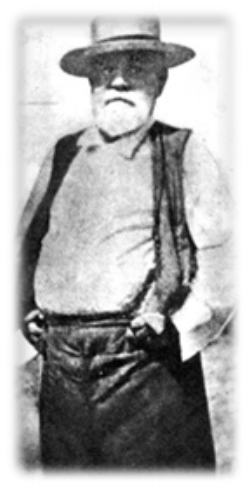
4/19/1955 - Living with his sister in retirement at a cabin he calls "Paxtu" on the grounds of the Hotel Outspan in Nyeri region of Kenya, the adventure rich life of British hunter and naturalist, Colonel Edward James "Jim" Corbett, comes to an abrupt end when he suffers a major heart attack a few days after completing his six and final book, "Tree Tops." The beast hunter extraordinaire is 79-years-old at his passing.

Corbett
A throwback to the "sun never sets" heights of Great Britain's colonial days, Edward James Corbett is born in the town of Nainital, India on July 25, 1875. The eighth of sixteen children (in researching Corbett's life, various sites have the number of children in his family as being 9, 12, 13, 14, 15 and 16 siblings large), he is born into the large Irish family of retired military officer Christopher William Corbett (in 1862, the father is appointed the postmaster of Nainital and retains the job until dying from a heart attack in 1881, when Edward is just six years old) and his wife, Mary Jane. Well off, during India's hot seasons, the family moves to a second home in the Himalayan foothills, living in the village of Kaladhungi in a house the family calls "Aruhdel," where Mary Jane Corbett becomes influential in the social lives of Europeans settling in the region by becoming their real estate agent. As a youngster, Edward becomes fascinated by the local jungle forests and the wildlife that frequents the Kaladhungi region, over the years becoming expert at identifying birds and animals by their calls while developing excellent tracking and hunting skills as a pupil of Nainital's Oak Openings School (now Birla Vidya Mandir). Leaving his formal education behind before his nineteenth birthday so he can help support his mother and family, Corbett finds work with the Bengal and North Western Railway, first as a Manakpur village fuel inspector, and then as a contractor for the trans-shipment of goods across the Ganges River at the town of Mokama Ghat (the blue eyed boy grows into a 6 feet tall adult of immense strength, fortitude, with exceptional vision, hearing, and powers of observation). Over time, along with his railway duties, Corbett builds a reputation as the best tracker/hunter in the country (solo stalking most of the time with only his spaniel Robin as a companion), and eventually representatives of the Indian government enlist his services to remove a notorious man killing beast known as The Champawat Tiger.

The Corbett Home In Kaladhungi

Robin

Corbett At 22
A 12-year-old monster over eight feet long from head to tail weighing over 500-pounds with 4-inch canines and paws that can decapitate a human with a single swap, and extremely intelligent, the Bengal tigress that will come to be known as the Champawat Tiger begins a documented killing spree in Nepal at the turn of the century that will last seven years and cost at least 436 men, women, and children their lives (it is believed the beast begins going after humans after it's hunting grounds are encroached upon and it suffers a rifle wound that shatters it's upper and lower right canines), the most prolific killer animal of all-time. Chased out of Nepal by over 300 members of the country's soldiers in a massive beat that forces the beast to cross over the Sarda River into India, the tigress enters it's new hunting ground with over 200 deaths already on it's murderous record. Traps, bounty hunters, army troops, and police seemingly powerless to exterminate the creature, in 1907, embarrassed government official Charles Henry Berthoud (the deputy commissioner of Naintal) finally asks his friend, Corbett, if he can track the beast down ... and although he has never gone after any man-eaters before, the 31-year-old hunter agrees to try if the government will waive the bounty (he wants no pay for killing the creature) and allows him to chase the beast down by himself. Five days after receiving his friend's challenge, Corbett is on the hunt when he gets word that the tigress has taken another victim, a woman gathering leaves to feed to her family's cattle. Setting up a base camp near the town of Champawat, Corbett follows the bloody tracks of the beast after it kills sixteen-year-old Premka Devi of the village of Fungar (blood evidence all over the jungle, the ghastly track of the cat heads into a nearby ravine where Corbett finds more blood, Devi's skirt, bone splinters, and then a severed, still warm leg covered in gore) and is almost killed himself when the tigress ambushes the hunter (two quick shots sent in the beast's direction momentarily drive the monster off). The next day, Corbett organizes locals into a beating party (the spread out group fires rifles into the air, beats drums, and scream as loud as they can as they move forward) that forces the tigress into the kill zone of the Champa Gorge where the hunter and the tehsildar (executive magistrate) Champawat are waiting (a man named Pandit Sri Kishan Pant). Shadow suddenly solid, at around noon the tigress speeds into the gorge, where Corbett misses it with his first shot (using a heavy duty, modified double-barrel .500 cordite rifle for it's stopping power, a weapon capable of bringing down an elephant or a rhino), but hits it in the shoulder and chest with his second and third shots (Pant also misses with two shots from his shotgun). Mortal wounds, the hurting and angry beast shifts directions and charges it's tormentor, who is now out of ammunition (a habit developed in his childhood when there isn't a lot of money in the family for bullets, Corbett carries only three rounds when out hunting) ... dropping his gun, an unarmed Corbett runs across an open area until he is close enough for the tehsildar to toss Corbett his shotgun. Whirling back towards the tigress and firing almost too late, Corbett's last shot hits the monster in the foot and she goes down only twenty feet away from her killer. Content that lives have been saved by his actions, after the tigress' corpse is paraded about the various villages in the area, the hunter skips the celebration feast scheduled for the next day, borrows a horse, and rides out of the jungle carrying the trophy of his victory, the skin and head of the tigress now known as the Champawat Tiger (though he had asked for nothing in return for killing the beast, Corbett does receive an award for his triumph, a new hunting rifle crafted by famed English gunsmith John Rigby ... a lightweight weapon with a Mauser 1898 action barreled to a 275 Rigby <7x57> that becomes the hunter's favorite gun).

Killer

Victory Painting

Head Of The Killer
With the triumph, Corbett becomes the go-to person when an assortment of other man-killing big cats become India problems in need of removal in the coming years. In 1910, the hunter takes out a murderous male leopard known as the Leopard of Panar, a beast credited with at least 400 fatal attacks on residents living in the Panar region of the Almora district of northern India. The notorious man-eating Leopard of Rudraprayag (it develops a taste for human flesh after feasting on unburied corpses that die in a 1918 outbreak of cholera, and a creature that is willing to break down doors, leap through windows, and claw it's way through mud and thatch walls to reach it's victims), a killer of at least 125 individuals and religious pilgrims traveling to the Hindu holy shrines of Kedarnath and Badrinath meets Corbett's bullets in 1926 after the hunter spends ten weeks stalking the beast and kills it from a rope seat in a tree (the previous year, he helps build a wall around the village of Chotti Haldwani to keep wild beasts out that as of 2018 was still standing). He puts down the Talla-des Bengal tigress, (killer of 150 over a period of eight years) in 1929 despite suffering from a severe ear infection that hampers the hunter's hearing and sight on a five-day stalk that requires six shots from Corbett's .275 Rigby rifle. Also in 1929, Corbett begins tracking the Tigers of Chowgarh, an old tigress and her sub-adult cub that kill 64 individuals in eastern Kumaon (an area spanning 1,500 square miles of India) over a four year period. In February of 1929, Corbett kills the cub with a round from a .450/400 Nitro Express double rifle made by W. J. Jeffrey & Co., but the mother bolts before he can fire on the mother. Using buffalo as staked out bait, Corbett goes after the mother three times over the course of the next year, before finally ending the cat's killing career on April 11, 1930 with a bullet from his Rigby trophy Mauser when he encounters the monster sitting on a boulder along the trail he is following and fires on the beast with one hand from a distance of only eight feet while holding bird eggs in his other hand that he wants to add to his prized specimen collection.

The Panar Leopard

Corbett And The Rudraprayag Leopard

The Talla-Des Tiger And The Grandson Of It's
Last Victim

Encounter With The Mother
A new decade begun, it will be more of the same for Corbett through most of the 1930s. Though not a man-killer, the most sought after Indian trophy animal, a 10 foot and 7 inch long Bengal known as the Bachelor of Powalgarth, is taken by the hunter in a 1930 stalk that includes his spaniel discovering the cat in forty yard wide patch of clerodendron flowers, going back to camp for breakfast and a change in weapons, drawing the creature close with a recreation of it's mating call, shooting the animal in the eye from ten yards away, laying motionless on the ground for over an hour as the wounded beasts tears apart a tree it thinks the hunter is in, then pursuing it for two more days before killing the tiger with two bullets fired from only yards away. 1930 also has Corbett making a march of 24-miles and a climb of 4,000 feet up into the Himalayan foothills to go after a problem beast near the village of Mohan (and near the hunter's summer residence), a tiger called the Mohan Man-eater (the beast is dispatched after the hunter finds the monster taking a nap after finishing off two buffalo Corbett had been using for bait). In 1933, Corbett goes up against a tiger known as the Kanda Maneater. Asked by officials to deal with the beast, Corbett hunts it down from the branch of a tree that he sits in for 13 hours before using two shots to dispatch the beast, after wounding the creature the previous day (and also doing away with a huge snake, something he believed was necessary mojo before any hunt for a killer cat). In the winter of 1936, people start getting attacked by a male tiger that in 1937 becomes the Chuka Man-eater when it makes it's first human kill (it becomes a killer after suffering several woundings and a broken tooth in it's lower jaw). On the scene later in the year (April), Corbett is successful on his third try at the animal (several nights are spent in trees over buffalo bait) when it decides to rest under the very fig tree that Corbett is occupying) with one shot that breaks the tiger's back and a killing blast to the chest. And Corbett is the hunter that is called in to deal with a female Bengal with two cubs that hunts it's human prey in India's Kumaon province, near the country's border with Nepal (the area is also filled with thousands of prospective victims, laboring under government direction felling trees). The village of Thak completely abandoned due to the tigress (it is believed she becomes a killer after a wound to one of her shoulders becomes septic), Corbett spends three weeks in November (the mating season for the area's tigers) hunting a beast known as the Thak-maneater, aware that based on the pugmarks he has seen (footprints) in the region, the cat is also hunting him. Readying to pack it in the next day after hunting the animal from October 23rd to November 7th and then from November 24th to the 30th, Corbett (he has told his family that this will be his last hunter for a man-killer), on November 30, 1938, hears the tigress calling in the night for a mate, and decides to answer, hoping he can lure the beast into an ambush. This time his bullet blind is a four-foot tall rock on a ledge above the trail between Thak and the village of Chuka. Sure enough, after thirty minutes of bellowing into the night, pretending to be a sexy cat, the tigress approaches Corbett's position just as the light on the path is fading, and takes out the creature with two shots that also knock Corbett off the rock and on to the backs of the four villager helpers and two bait goats that are hiding there. Busy for over three decades, it will be Corbett's last kill of a man-eater; he is 63-years-old at the time. In total, the Irish hunter will be credited with having ended the murder sprees of thirty-three problem tigers (19) and leopards (14) in the region, with a total estimated human victim count that may have exceeded one thousand five hundred.

Corbett With The Bachelor

Corbett Takes A Tumble
Off His Hunt Rock
Corbett's .275 Rigby Rifle
Despite the demands on his time each hunt takes, Corbett somehow maintains his job with the railroad throughout most of his hunting career (he also starts a school for the railway personnel at Mokama Ghat). Additionally, Corbett contributes to the British war efforts during both world wars. Already 38-years-old when WWI begins in 1914, the hunter is at first refused enrollment in the army due to his age, but with the attrition of men that takes place in France, he is taken into the service in 1917 and ordered to raise a labor corps for work on the Western Front as Captain J.E. Corbett. Recruiting 500 men from his home ground of Kumaon, the hunter will promise to bring all of his men home (1,027,000 Indians will serve in the war, with 47,756 becoming casualties) and almost succeeds in keeping his word, the only individual not to make it back home is an infantryman that doesn't die in battle, but perishes of acute seasickness on the journey to France. During WWII, Corbett volunteers to serve again (at the age of 64), and rising to the rank of Lt. Colonel is able to stay in India, teaching Indian and British troops fighting the Japanese jungle survival skills (for his efforts, the hunter will receive a Volunteer Officers' Decoration for meritorious service during WWII).

Lt. Colonel Corbett
Mellowing with age, and seeing how the encroachment of man has decimated the Indian wilderness and it's many creatures, inspired by his friend, conservationist Frederick W. Champion, the world famous shikari (the Indian word for hunter) transitions from killing tigers and lions, to hunting them down with the still and movie cameras he purchases (which he will then use in giving talks about his many adventures to school children). And taking his new conservationist ideals to a new level, Corbett is instrumental in getting the government to set aside 125 square miles of jungle real estate in the Nainital district of the state of Uttarakhand as a nature park ... the first of it's kind in Asia. Opened in 1936 and named Hailey National Park after India's Governor of National Provinces, Sir Malcolm Hailey, the park will be renamed Ramganga National Park in 1954, before in 1955, settling on it's current moniker honoring the legendary hunter that made it's existence possible ... Jim Corbett National Park. He will also become instrumental in the creation of the Association for the Preservation of Game in the United Provinces and the All-India Conference for the Preservation of Wildlife. With Lord Linlithgow, the Viceroy of India (1936-1943), as a patron of sorts, for eliminating the man-eaters he kills in his three decade career as a big game hunter, his work during WWI, and for his conservation efforts, Corbett is awarded a Kaisar-i-Hind (Emperor of India in Hindustani) medal as a person of distinction in 1928, and is invested as a Companion of the Order of the Indian Empire in 1946 (after Sir Corbett's death, another honor will come his way, when in 1968, the Indochinese tiger, one of the five remaining sub-species of the animal, is officially named Panthera tigris corbetti).

Champion

Tiger Photo By Champion

Park Protected
Adventures piled on adventures for the "Gentleman Hunter," Corbett becomes a favorite dinner guest of prominent British and Indian officials and visiting celebrities, and the man to lead special guests on treks through the Indian jungles. Eventually, with the encouragement of family and friends, Corbett puts down his experiences on paper and becomes a best selling author. Privately published in 1935 (only 100 copies are printed), Corbett's first work is the simply titled "Jungle Stories." Combining portions of his first work with new material (while recovering from a bout of typhus fever, he is convinced to expand his original work by his close friend, publisher R.E. Hawkins) his second batch of tales, called "Man-Eaters of Kumaon" is published in 1944 by Oxford University Press (as will all of the hunter's subsequent efforts, all are still in print, with profits from "Man-Eaters" sales being donated to the St. Dunstan's Hostel for Blind Soldiers and Sailors, over 500,000 copies will be printed by May of 1946, and as of 1980, four million copies will be in circulation with the book translated into Spanish, Czech, Finnish, and six Indian languages, 25 languages in all). "Man-Eaters" (the screen rights to the book are gobbled up by Universal Pictures in 1946, and they will release their "Hollywood" version of the hunter's adventures in 1948, with actor Wendell Corey in the lead role, a flop movie bearing very little truth to Corbett's actual hunts ... as he will say after watching the film, "... the best actor was the tiger") is followed by "The Man-eating Leopard of Rudraprayang" (1947), "My India" (1952), "Jungle Lore" (1953), "The Temple Tiger and More Man-eaters of Kumaon" (1954), "Tree Tops" (1955), and after his death, the compilations "Jim Corbett's India - Selections" edited by R. E. Hawkins (1978), and "My Kumaon: Uncollected Writings (2012).

Hollywood

And He Fished Too
A confirmed bachelor his entire life, Corbett lives in his family's childhood home, Gurney House, with his sister, Miss Margaret Winifred "Maggie" Corbett until 1947. Sensing that chaos might sweep through his beloved India with the country gaining it's independence from Great Britain after the WWII concludes, the pair sell Gurney House to Sharda Prasad Varma in 1947 (the home, built in 1881, is now both a private residence and a museum) and relocate to the African country of Kenya, living in a Nyeri village cottage called "Paxtu" (the Swahili word for complete) built for Corbett's friend, Lord Robert Baden-Powell (the 1st Baron of Gillwell ... a writer, British Lt. General, and founder of the world-wide "Scout Movement" that will eventually become the Boy Scouts and Girl Scouts) on the grounds of the Outspan Hotel (a hotel of 45 rooms on 20 acres of gardens over-looking a river gorge with views of Mt. Kenya in Aberdare National Park, about a two hour drive from the capital city of Nairobi). In retirement, Corbett begins exploring the African wilderness with his cameras and continues to guide important parties into Kenya's jungles. His most important guiding takes place when British Princess Elizabeth Alexandra Mary, and her husband, the Duke of Edinburgh, request Corbett's services while visiting Aberdare National Park's Treetops Hotel (first opened in 1932, the 35-room hotel gives visitors a safe, elevated view of the area's wildlife coming to nearby water holes). As duly noted in the hotel's visitor logbook by Corbett, on the evening of February 5, 1952, Elizabeth climbs into her room as a princess, and descends the next morning to news that her father has died in the night and that she is the new sovereign of Great Britain, Queen Elizabeth II. Seventy-nine years old in 1955, the grizzled hunter has a heart attack and passes away in his sleep on April 19th, just days after completing his sixth annd final book, "Tree Tops," about life in Kenya. Both he and his sister are buried at St. Peter's Anglican church in Nyeri.


Treetops Hotel & Watering Hole

Memorial Plaque
Dead for decades now, Corbett is nonetheless still remembered because of the national park that bears his name, his writings, the foundations he helps fund, artifacts (his famed .275 Rigby rifle is currently on display at the John Rigby & Company main office in London), the 4.5 mile wall that still stands outside of Chotti Haldwani, historical houses, Indian and African tours of areas that he hunted, the Moti House meeting place in Nyeri, books about Corbett and his activities like "Carpet Sahib: A Life of Jim Corbett" by Martin Booth (1990) and "No Beast So Fierce: The Terrifying True Story of the Champawat Tiger, the Deadliest Animal in History" by Dane Huckelbridge (2019) and "In the Jungles of the Night: A Novel about Jim Corbett" by Stephen Alter (2016), and on screen in the form of "The Corbett Legacy" produced by the Uttarakhand Forest Department featuring footage shot by Cobett, a 1986 BBC docudrama called "Man-Eaters of India" with actor Frederick Treves as Corbett, a 2002 IMAX movie, "India: Kingdom of the Tiger" based on Corbett's books with actor Christopher Heyerdahl as the hunter, and a 2005 TV movie, "The Man-eating Leopard of Rudraprayang," with actor Jason Flemyng in the lead.

The Corbett Museum In Kumaon

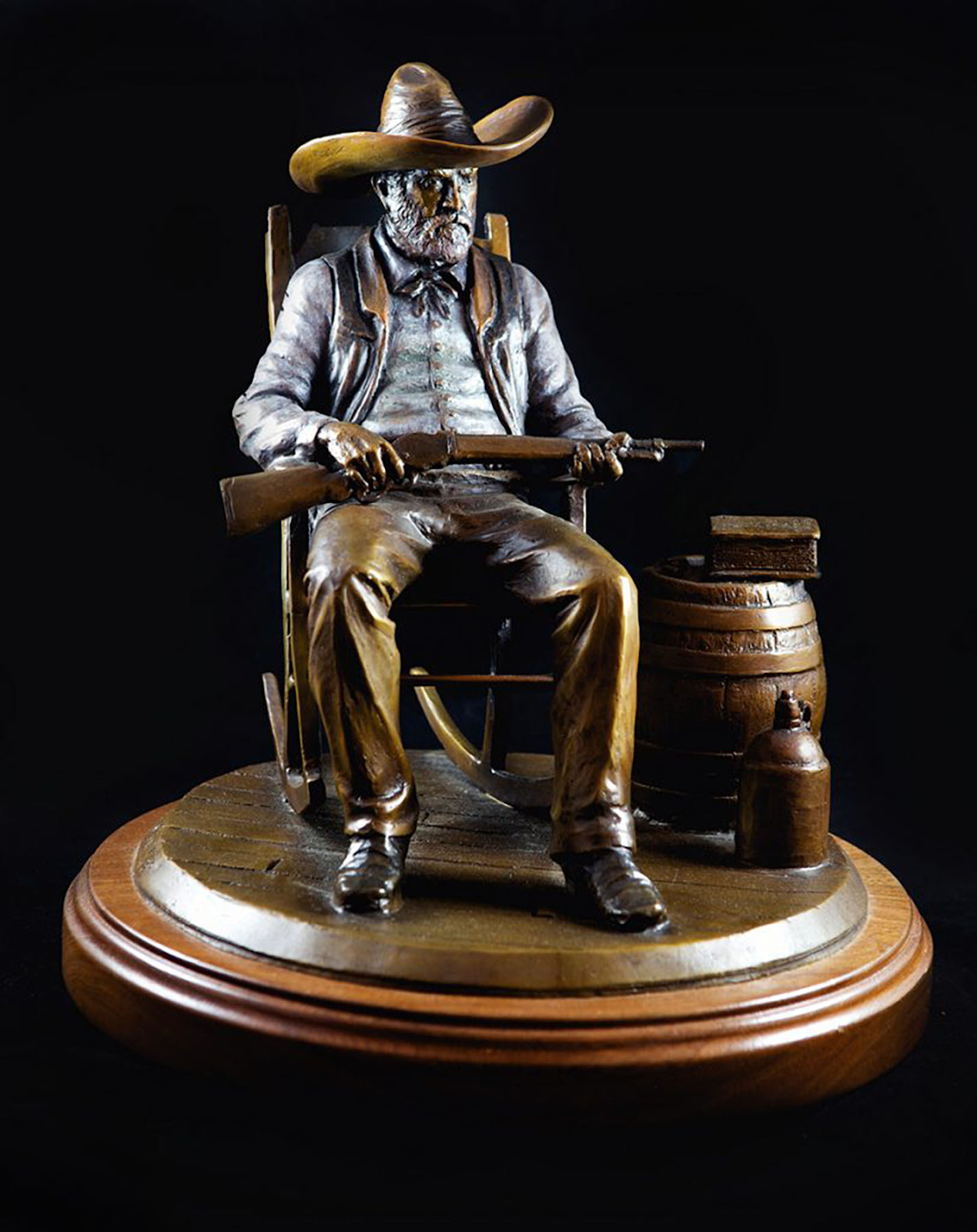
National Park Sculpture

Corbett .450-400 Rifle Sold In 2015 For $264,500

IMAX
A meaningful life, well lived ... Sir Edward James Corbett passes away on April 19, 1955.

Corbett