General Robert E. Lee - Petersburg, 1864

Pleasants
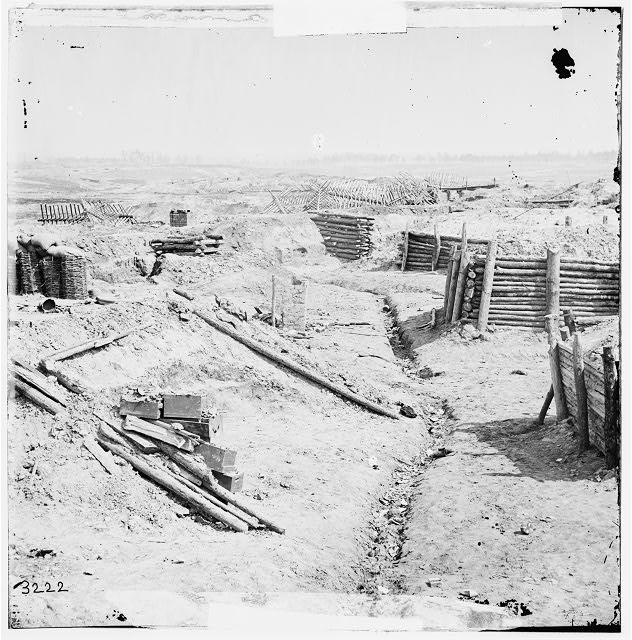
Confederate Works Near Elliott's Salient
Mind inventively engaged when he hears one of his men exclaims, "We could blow that damned fort out of existence if we could run a mine shaft under it," Pleasants, the Buenos Aires, Argentina product of an American father and a Spanish mother who moves to the United States when he is 13- years-old and becomes a railroad and mining engineer, soon comes up with a plan that goes up the chain of command of the Union Army, and in turn is approved by division commander, Brigadier General Robert Porter, IX Corps commander, Major General Ambrose Burnsides, Army of the Potomac commander, Major General George G. Meade (the victor at Gettysburg), and overall commander of all Union forces, Lt. General Ulysses S. Grant.. Approved, but not at first actually believed ... most that know of the plan believe it can not be done (there are breathing issues in tunnels of 400 feet at the time) and is just a way of keeping the troops busy while the next offensive is planned.

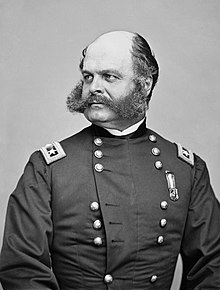
Potter & Burnsides
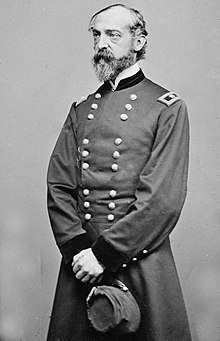

Meade & Grant
Green lit but not believed, Pleasants puts his men to work around the clock on June 25th, making due with what is available, improvising the impossible into reality ... picks are created by the regimental blacksmiths, hardtack boxes are converted into wheelbarrows, a nearby wrecked sawmill and an old bridge are used for timber to shore up the gallery walls and roof of the tunnel, and a theodolite for measuring angles in the horizontal and vertical planes is procured all the way from Washington when Meade's engineers refuse to loan one to the operation. Technical problems are also resolved, the biggest being ventilation, achieved by using a system of airtight canvas doorways, wooden ducts, and a continually burning fire that produces a chimney effect in which bad air is drawn out of the tunnel and replaced with fresh air from outside. Foot by foot, burrowing through clay and sand, the volunteer soldiers familiar with mining for anthracite in Pennsylvania's Schuylkill County before the war began advance the tunnel ... 18,000 cubic feet of earth is moved to create a small gallery five feet high, four feet wide at its bottom and only two feet wide at its top that stretches 511 feet forward. At its terminus, twenty feet below Elliott's Salient, creating a "T," perpendicular tunnels go 75 feet in either direction. By 7/23, the digging portion of the operation is complete and then the mine is prepped for destruction ... 320 kegs of black powder, weighing 25 pounds each, 4 tons of explosives, are moved forward, linked, packed with dirt to direct their detonation upward (11 feet of dirt in the side galleries, 32 feet of earth in the main gallery), and when insulated wire and a galvanic battery can not be procured, armed using two 50 foot long lengths of mining fuse. The big boom is ready to go by 7/28.

The Work

Placing The Gunpowder
Tunnel complete, explosion and attack okayed to coordinate with other movements of the Union Army (Major General Hancock's II Corps movements remove four Confederate divisions from the area, leaving only 18,000 Southerners to defend the line, Major General Warren's V Corps is to support the breakthrough to its right, and Major General Ord is in support on the left, additionally, elements of Major General Sheridan's cavalry are to launch a secondary assault southwest of Petersburg, and the guns of Brigadier General Hunt, 144 field pieces, siege guns, and mortars, more artillery than was massed by either side at Gettysburg will pound the center of the Confederate lines), Burnside makes his final plans ... his most rested division, two all-Negro brigades under Brigadier General Edward Ferrero will get their baptism in fire by leading the attack, sweeping along each side of the breach, and then the rest of Burnside's three other divisions will follow, making a direct beeline for Petersburg itself. out of sight of the Confederates, two miles behind the lines, for over a week Burnside's soldiers practice their assignments ... as the Fates laugh at the efforts.
Ferrero
In high spirits anticipating a successful attack and the vindication of his military career (from commanding the Army of the Potomac at the Battle of Fredericksburg), less than 24-hours before the assault is to begin, Burnside is stunned to receive orders from Meade, approved by Grant, that Ferrero's black troops are not to lead the charge and another division is to be selected ... a decision based on unstated racist worries on how the troops will perform, and the politics of how it will look if they are slaughtered at the front while white troops remain safe behind (Meade is not a favorite of his Abolitionist critics). Angry, Burnside tries to get the order reversed, and is basically told to pound sand ... and pound it he does, leaving the decision of who should replace Ferrero to the drawing of straws by his other division commanders (a drawing that Brigadier General James H. Ledlie loses), and by not following through on any of the prep work that is still required so that his men can charge forward (openings in parapets and and abatis are not done, entrenching tools are not distributed, and engineers are not allocated to advance with the troops).

Ledlie
Explosion scheduled for 3:30 in the morning, at 3:15, Pleasants enters the tunnel and lights the fuse ... at 3:30 nothing happens though, at 3:45 there is still no boom as the colonel becomes more and more aggravated, as do the generals above him in the chain of command (watching, Grant considers calling the assault off completely ... and will later regret he didn't). Finally, at 4:15, Peasants allows two volunteers, Sgt. Harry "Snapper" Reese and Lt. Jacob Douty to climb into the tunnel and investigate what is wrong (many believe the men should have both been awarded Medals of Honor). Using a lamp to guide them, the men find the problem, the fuse has burnt out at a splice ... using a jackknife, Douty cuts out the bad fuse, provides ignition again from a match, and the two men scurry to safety 150 yards away, clearing the mine just moments before it erupts at 4:44.


Douty & Reese
As if an earthquake is beginning, the earth tremors for a second, and then erupts in a thunderous explosion that mushrooms into swirling columns of dirt, smoke, fire, stones, broken timbers and equipment, and blackened pieces of human beings. No one has ever seen anything like it before, and to the men on both sides near the detonation, it seems as if it is the end of the world ... for the 278 Confederate soldiers of the 18th and 22nd South Carolina infantry and gunners stationed at Elliott's Salient, it is. Boom, the explosion creates a crater in the Virginia soil that is 170 feet long, 100 to 120 feet wide, and has walls 10 to 30 feet tall. Briefly, in the chaos that ensues (Northern artillery has now opened fire on the Southern lines), the way forward to Petersburg is open ... the aggressive reaction of Confederate Brigadier General William Mahone, Major General Bushrod Johnson, and Lee's arrival at the site, coupled with mistakes and a lack of Northern leadership, however, soon insure that the breach is closed instead of being exploited.

Watching The Explosion


Mahone & Johnson
Uncertain of their changed role in the attack, confused by the chaos at their front, and lacking leadership (a known coward and drunk to the men of the Corps, Ledlie spends the battle in a bunker behind the Northern lines, swilling rum he has procured from a staff surgeon), the assault elements instead of fanning out around the crater, instead, thinking of it as a huge gun pit, enter the massive hole ... and are soon followed by more and more Union soldiers, transforming the hole into a fish barrel, in which they are the fish, three waves of Burnside fish. Counterattacking just as Ferrero's leaderless black soldiers (he joins Ledlie in the bombproof, hitting the rum) now join the fray in a fourth wave of madness, the Southerners fire down into the crater (bayonets, knives, shovels, and hammers are also pitched down on the men milling below), where bodies compacted and exits not available, they don't even have to aim to achieve hits. Carnage already immense (in some places on the battlefield, the Union dead are piled eight bodies deep), the butcher's bill is increased even more when the Confederates, incensed at the sneakiness of the early morning blast and involvement of black troops, gun down Northerners trying to surrender. By 2:00 in the afternoon the battle is over and the Union has suffered another defeat (Grant will wire back to Washington D.C. that, "It was the saddest affair I have witnessed in the war. Such an opportunity for carrying fortifications I have never seen and do not expect to again have.").

Counterattack To The Crater's Rim

Carnage

Fish In A Barrel
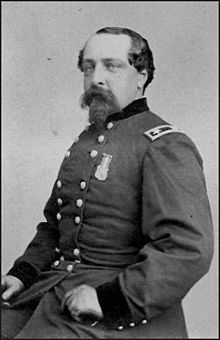
For no real gain in real estate, creating a scar in the Virginia countryside that will never really heal, the Union suffers 3,798 casualties (504 killed, 1,881 wounded, and 1,413 missing or captured), while the South has casualties of 1,491 (361 killed, 727 wounded, and 403 missing or captured). Court of Inquiry convened afterwards to assign official blame, Burnside, Ledlie, Ferrero, Medal of Honor holder (for valor during the First Battle of Bull Run), Brigadier General Orlando B. Willcox (commander of one of Burnside's divisions), and Medal of Honor holder (for valor during the Battle of Fredericksburg), Colonel Zenas R. Bliss are all censured for their behavior in the battle. While after the war, the Congressional Joint Committee on the Conduct of the War will exonerate Burnside, and instead, condemn Meade for his change the plan of attack less than 24 hours before its execution. Only Pleasants comes out of the battle untainted, for his idea and its execution, he is brevetted to Brigadier General of Volunteers by President Andrew Johnson, confirmed by Congress as of March 13, 1865.
After
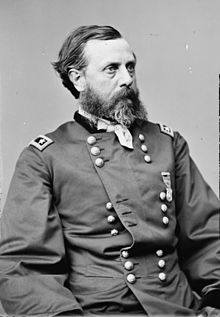

Willcox & Bliss
7/30/1864 ... The Battle of the Crater

Then
Now