Friday, July 20, 2018

PANCHO'S DEATH

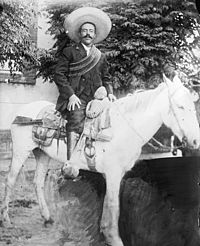
7/20/1923 - Reaping what you sow, living and dying by the sword, nine lives used up, luck finally fully drained ... it all is evident on this day in Parral, Chihuahua, Mexico, when a band of assassins guns down Jose Doroteo Arango Arambula, better known to the world as the bandit and Mexican Revolution general, Francisco "Pancho" Villa.
Pancho villa horseback.jpg
Villa

Born as the oldest of five children on 6/5/1878 into a sharecropping family on Rancho de la Coyotada, one of the largest haciendas in the state of Durango, Villa receives a rudimentary education from the local church-run school, that ends when his father dies and he quits to help his mother and family ... working as sharecropper himself, bricklayer, butcher, muleskinner, railroad worker ... and a sometime bandit.  His first murder is said to be the killing of a hacienda owner named Agustin Lopez Negrete, a revenge killing for the man raping Villa's sister.  Outlawing out of the Sierra Madre Occidental region of Durango, he is captured in 1902, but instead of being executed, he is forcibly inducted into the Federal Army ... it does not take, and by 1903, he is going by the name of Pancho Villa, the nickname of La Cucaracha (The Cockroach), has killed an army officer and stolen the man's horse, and is again practicing mountain banditry.  Career path seemingly chosen, his life changes in 1910 when he is convinced by Abraham Gonzalez (educated at the University of Notre Dame in Indiana) that better days can be his if he and his outlaws, join the Mexican Revolution by marrying their activities into supporting wealthy hacienda owner turned politician, Francisco Madero, in his opposition to incumbent Mexican President, Porfirio Diaz.  Villa is thirty-two years old when his revolutionary activities begin.
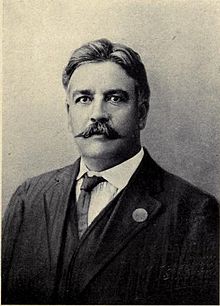
Gonzalez
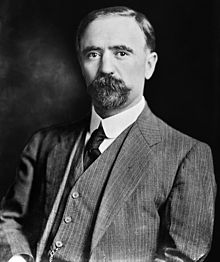
Francisco I Madero-retouched.jpg
Madero
Porfirio diaz.jpg
Diaz

Blood and betrayal, in the years that follow, Villa begins by capturing a Diaz supporting hacienda, captures a train of Federales, takes the town of San Andres, beats the Federal Army at Naica, Camargo, Pilar de Conchos, loses at Tecolote, is made a colonel in the Revolutionary Army, and disobeying orders, with the support of fellow revolutionary Pascual Orozco, captures the border town of Ciudad Juarez.  Diaz forced into exile, instead of retiring, in the insane machinations of the Mexican Revolution, when Orozco is unsatisfied with the spoils of victory and revolts against Madero, Villa is recruited to attack his former comrade, joining forces with the Federal Army of General Victoriano Huerta.  Orozco forced into exile in the United States, Huerta makes Villa an honorary brigadier general in the Federal Army, but then realizing he can't use Villa in his future plans for Mexico, arrests the bandit leader on hoses stealing charges and sentences him to death by firing squad ... an execution that almost happens, Villa takes his "last words" opportunity and talks and talks until he is pardoned by President Madero at the last minute, but not let loose.
Pasqual Orozco 4350858909 e010cde9b1 o.jpg
Orozco
Victoriano Huerta.(cropped).jpg
Huerta

Villa Talking To His Firing Squad

Imprisoned, Villa escapes on Christmas Day of 1912, and crosses into the United States at the beginning of 1913.  In Texas when Madero is forced to resign and then murdered by his enemy (his friend, Gonzalez, will also be murdered this period), Huerta, in yet another coup, with just seven men, some mules, and a handful of supplies, Villa crosses back into Mexico in April of 1913 ... and the Mexican Revolution continues.  Robbing and recruiting (there is a train robbery of 122 bars of Wells Fargo silver), joining forces with Venustiano Carranza, while Huerta also fights against the forces of Emiliano Zapata, Villa and his forces win victories at Ciudad Juarez, Tierra Blanca, Chihuahua, and Ojinaga.  Made revolutionary governor of Chihuahua, Villa prints his own currency, takes gold from the regions banks, signs a Hollywood contract to have is exploits filmed (the first feature movie of legendary Hollywood director, Raoul Walsh), meets American General John "Black Jack" Pershing, and creates the most powerful military unit in all of Mexico, the Division of the North, which wins victories over the Federal Army at Gomez Palacio, Torreon, and then, defying orders from Carranza, the battle that forces Huerta to flee the country, Zacatecas, in June of 1914.

Villa (Center) And Troops

Villa In Action

And then, in control in Mexico City, another falling out of the revolutionary leaders takes place, this time with Villa and Zapata opposing Carranza and General Alvaro Obregon (who retreat to Vera Cruz) ... better tactics used, more revenue raised, portrayed as a bandit sociopath in the press, defeats, and the Division's men accepting amnesty, by 1915, Villa goes from national leader to a guerrilla hiding in the mountains with only two hundred men (Zapata is murdered in 1919) ... where he plans to raise money and men, by crossing the border and attacking the town of Columbus, New Mexico.  Border breached, Villa spends the period between 1916 and 1920 avoiding the expeditionary force of General John "Black Jack" Pershing, and those of Carranza, while continuing to rob and raid for money and resources.  More betrayal, on 5/21/1920, Obregon has Carranza and his top advisers and supporters murdered, and seizes power, opening the door for Villa to negotiate a peace settlement with the government (interim President Adolfo de la Huerta before Obregon is elected President of Mexico on 12/1/1920)  in which for ending hostilities, the former guerrilla is granted a 25,000 acre hacienda in Canutillo, near Hidalgo del Parral, Chihuahua where he can live with his 200 remaining men (50 are allowed to become his bodyguards), while enjoying a pension of 500,000 gold pesos.  Living the life of a wealthy landowner, with friends and family nearby, it appears Villa will end his story peacefully, but  such is not to be the case.

Villa (L) & Zapata (R)
Image result for zapata death
Murdered Zapata
Portrait of Venustiano Carranza (cropped).jpg
Carranza

General Obregon   

Many enemies still upright, making rumbles about getting involved in the 1924 elections, surrounded by loyalists, guard down after several years of living peacefully in the region, on the Friday morning of 7/20/1923, taking only Colonel Miguel Trillo (who serves as chauffeur), Claro Huertado (bodyguard), Rafael Madreno (main personal bodyguard), Danie Tamayo (Villa's personal secretary), and Ramon Contreas (bodyguard) along, Villa journeys into Parral in a black 1919 Dodge touring car.to pick up a consignment of gold from the bank to pay his Canutillo ranch staff.  Funds received, the party is headed back through town when they pass a local school and a pumpkin seed vendor runs at the car and shouts "Viva Villa" ... the signal to nearby killers that Villa is in the front seat of the car (two "Viva" shouts would designate he is in the backseat).  Message received (the telegraph service to the ranch is conveniently cut at the same time), from out of concealment seven assassins step into the road and open up on the occupants of the touring car.  Overkill, over forty bullets are fired into the car, including nine dumdum rounds that hit Villa in the head and chest, killing him instantly ... he is forty-five years old.  Only Ramon Contreras survives the fusillade, and though severely wounded, will manage to kill one of the assassins as the other killers flee the area.  Buried the next day, Villa is carried to his grave by two black horses and a military honor guard while a band plays in a ceremony that is attended by thousands.
Image result for pancho villas murder
Museum Piece - The Repaired Car
Image result for pancho villas murder
Murder
Image result for pancho villas murder
Villa

A state legislator from Durango at the time, the only man to be found guilty in the killing is Jesus Salas Barraza, who confesses to the crime, and is sentenced to twenty years behind bars ... a sentence which is commuted by the governor of Chihuahua after the admitted killer serves only three months in prison (after his release, Barraza will be made a colonel in the Mexican Army (supposed payback for whipping Barraza in a quarrel over a woman ... upon his death in 1951, his last words are "I'm not a murderer.  I rid humanity of a monster!").  Barraza never mentions who the other killers were and they are still unknown, with various theories being that Villa is killed by the last male member of the Herrera Family he has been engaging with in a deadly blood feud, by Meliton Lozoya, the former owner of Villa's ranch (to stop Villa from demanding payback over embezzled funds), and by the forces of Obregon and his pick for next president of Mexico, General Plutarco Elias Calles (Mexico's 40th President), to keep Villa from interfering in their election plans (conveniently, the federal troops of Felix Lara that guard Parral just happen to be out of town on the day of Villa's death).  What is known is that Villa is reburied in the Monument to the Mexican Revolution in Mexico City in 1976 ... missing his skull, which vanishes from his grave in 1926 (stolen and said to be sold to an eccentric millionaire who collected skulls of the famous), and that the man lives on in an assortment of books, magazines articles, and movies, and inherited memories ... La Cucaracha indeed!
Image result for jesus salas barraza
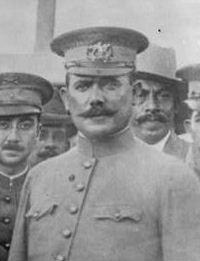
Barraza
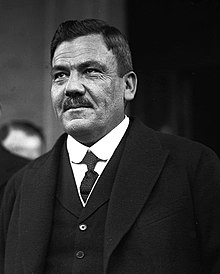
General PE Calles 8 (cropped).jpg
Calles
Image result for pancho villa death mask
Death Mask And Pistol

Final Resting Place
Image result for pancho villa
Villa

Tuesday, July 17, 2018

THE MURDER OF THE ROMANOVS

7/17/1918 - One hundred years ago today!  Negating their potential to be placed back in power and symbolic value should the White Army prove victorious in the civil war raging across Russia, the Red Army Bolshevik leadership in Moscow, led by Vladimir Lenin (chairman of the Council of People's Commissars), Yakov Sverdlov (chairman of the All-Russian Central Executive Committee), and Felix Dzerzhinsky (leader of the Cheka, responsible for dealing with internal threats to the new regime) make the decision to eliminate the head of the royal Romanov Family (reigning over the country from 1613 to 1917), former Tsar Nicolas II, his wife, their children, and a handful of loyal servants ... orders that are executed by way of gunfire and bayonets.
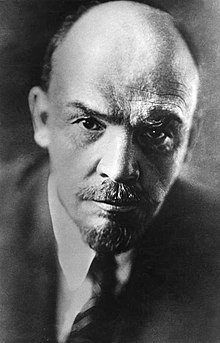
Bundesarchiv Bild 183-71043-0003, Wladimir Iljitsch Lenin.jpg
Lenin
Свердлов Яков Михайлович.jpg
Sverdlov
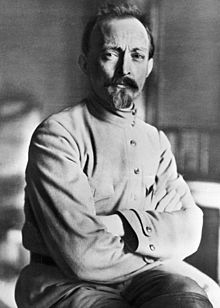
RIAN archive 6464 Dzerzhinsky.jpg
Dzerzhinsky

Prisoners from the moment he abdicates his throne, surrounded by guards and kept in their quarters, Nicholas and his family are first kept captive at the Alexander Palace just outside of St. Petersburg, then moved to the former governor's mansion in the Siberian town of Tobolsk, before finally arriving at their last home, the Ipatiev House in the city of Yekaterinburg (the fourth largest city in Russia, located on the Iset River, east of the Ural Mountains) ... sinisterly designated the House of Special Purporse by the Bolshevik government.  The Imperial family will occupy the House of Special Purpose for 78 days.
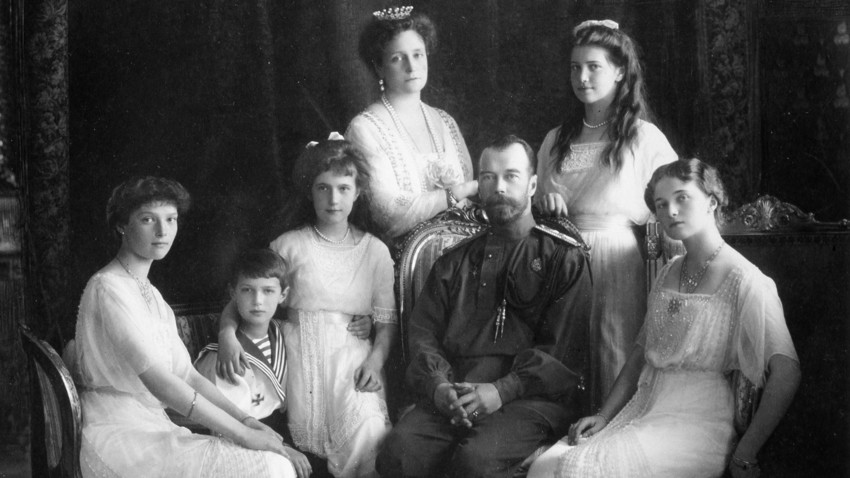
Russian Imperial Family 1913.jpg
The Romanov Family
L to R - Olga, Maria, Nicholas II, Alexanda Fyodorovna,
Anastasia, Alexei, and Tatiana
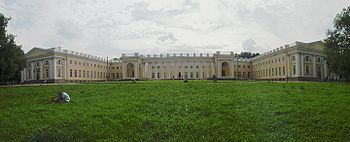
Alexander palace.JPG
Alexander Palace - 2010

Tobolsk - 1913

Ipatiev House - 1918

Formerly a rich merchant's house, the two story structure the Romanovs call home is a two-story building (the Romanovs occupy the upper floor, their guards, the ground floor) surrounded by a 14 foot high double wooden palisade that obscures the House of Special Purpose from the street ... and obscuring its occupants, the windows in the house are covered in newspaper, and then later, whitewashed, and anyone looking out of one may be fired on by the guards.  Inside, there are rules upon rules ... the Romanovs cannot be addressed by their former titles, only Russian may be spoken, the prisoners must ring a bell each time they want to leave their rooms, recreation outside only takes place twice a day for only thirty minutes, conversation with any of the guards is banned, their brownie cameras and photographic equipment is taken by the guards, the Romanovs are not allowed to attend mass at a nearby church, and in June, newspaper information is banned, as is access to their luggage, the piano in the home is removed, their phonograph and records taken over by and for the guards entertainment, their money is confiscated, they may have no visitors and everyone is subject to regular searches, water is strictly rationed, and meals consist mostly of tea, black bread, soup, and cutlets of meat.  The hellish conditions are maintained by 16 internal and 56 external guards manning 10 guard posts ... and there are four machine gun nests ... one in a bell tower of the Voznesensky Cathedral across the street that is aimed at the home, a second is aimed at the street from a basement window (less someone try to rescue the prisoners), a third gun monitors the balcony in back of the house that overlooks the garden, and a fourth weapon station is located directly above the tsar's and tsarina's bedroom.  The exterior of the house is patrolled twice hourly, both day and night, and nothing is done about the guards drinking and fornicating across the street as they await their shifts (300 are employed by July of 1918, all under the command of Yakov Mikhailovich Yurovsky), or singing revolutionary songs, drawing crude graffiti on the home, or shouting sexual insults at the Romanov women.  The many miseries of the family end on 7/17/2018.
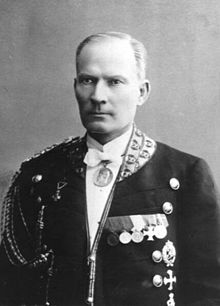
Yakov Mikhailovich Yurovsky 1918.jpg
Yurovsky 

Unwilling to continue to move the Romanovs about Russia, and fearful that they might fall into the hands of elements of the White Army approaching Yekaterinburg (forces of the Czechoslovak Legion, the Bolshevik regime decides to rid itself of it's "royals" problem ... the Romanovs will be secretly executed and then vanished.  Decision made, Yurovsky works out a plan to kill the family  and the servants all at once, and then dispose of the bodies in the nearby countryside ... executioners are selected (a group of Lithuanian guards, two of whom refuse to participate in the killings), tasks assigned, a truck is acquired for body transport (it is also hoped that its running engine while muffle the sounds of the execution), and fourteen handguns are passed out to the killers, two Browning pistols, two American Colts, two 7.65 Mausers, a Smith & Wesson, and seven Nagants from Belgium.   Everything in place, the family and servants (Ivan Kharitonov, former cook of the royal court, Alexei Trupp, footman to the royals, Anna Demidova, the family maid, and Dr. Eugene Botkin, the family physician) are allowed to have dinner and then retire for the evening.
 
Kharitonov & Trupp
Anna Demidova.jpg BotkinES.jpg
Demidova & Botkin

Shortly after midnight, Yurovsky wakes Dr. Botkin, and tells him to pass the word on to the other prisoners that they are to dress and ready themselves for a move to a new location.  Ready, the eleven prisoners are moved to the basement room of the home to await transportation (a space of 20 feet by 16 feet), and at Nicholas' request, two chairs are brought in for Alexandra and Alexei to sit on while they wait.  A few minutes later, Yurovsky and his executioners arrive.  "Nikoli Alexandrovich, in view of the fact that your relatives are continuing their attack on Soviet Russia, the Ural Executive Committee has decided to execute you," Yurovsky announces.  Nicholas' last words are "What?  What?' and as Alexandra and Olga are in the processing of blessing themselves, Yurovsky fires on Nicholas and the carnage begins.  Though specific targets have been assigned, everyone seems to fire on Nicholas and he falls dead, riddled with bullets.  A drunken Peter Emakov shoots Alexandra in the head, then wounds Maria as she attempts to flee the basement.  Bullets flying everywhere (it is dumb luck that none of the killers are wounded in their own fire) and the room quickly filling with gunsmoke, murderer Alexey Kabanov goes outside and does a sound check, the dogs in the Romanos' quarters are howling, the gunfire can be heard, and nearby households have been awakened.  Returning to the basement, he tells Yurovsky of his assessment, and the killers are ordered to finish off their victims with bayonets ... and their are plenty of victims yet to dispatch, targets have een missed, and hidden diamonds sewn into the clothes of the family have deflected bullets, all the Imperial children are still alive, with only Maria even wounded.
Image result for the tsar's killers
Kabanov

Bayonets also proving ineffective (blades deflected again by hidden jewels), the slaughter becomes a mix of stabbing and shooting ... transfixed in his chair, Alexei has a full magazine shot into his chest, he is stabbed, and then Yurovsky finishes him off with a bullet to his head, covering their heads in terror as they crouch against a wall, after being stabbed, Maria and Anastasia are gunned down, Olga dies from a gunshot to the head, and Tatiana is also shot in the head by Yurovsky.  Fainting when the attack begins, and protected by two pillows containing hidden diamonds, Demidova awakes to find herself alive and proclaims, "Thank God!  God has saved me!" ... a declaration that only draws the killers her way, and trying to fend of further attacks with her pillows, she to perishes, bayoneted to death.  Killings of the eleven prisoners over (but not the bloodbath as Emakov goes about the room slashing at the bodies with a bayonet), Yurovsky checks each victim for lack of a pulse, then has the bodies taken on stretchers to the waiting truck.  It is estimated that over seventy bullets have been fired at the prisoners ... and the executions have taken over twenty minutes (in the coming days, other Romanovs will also be murdered ... Grand Duke Sergei Mikhailovich, Prince Ioann Konstantinovich, Prince Konstantin Konstantinovich, Prince Igor Konstantinovich, Prince Vladimir Pavlovich Paley, and Grand Duchess Elisabeth Fyodorvna, even though she has become a nun after the 1905 assassination of her husband, they are all shoved into a mine shaft that explosives are then dropped into ... and Grand Duke Michael Alexandrovich, Grand Duke Dmitry Konstantinovich, Grand Duke Nikolai Mikhailovich, Grand Duke Paul Alexandrovich, and Grand Duke George Mikhailovich are all shot in the head).  Only Alexei's spaniel, Joy, survives the carnage of 7/17, rescued by a British officer with the Allied Intervention Force that participates in the Russian Civil War, it lives out its days in Windsor, Berkshire.

Crime Scene - Damaged Wall Is Where
Later Investigators Dig Bullets Out Of
The Wall

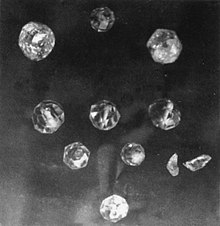
Topazes Missed By Yurovsky And
His Killers

Deciding to supervise the removal of the bodies himself due to Emakov's drunken state, Yurovsky has the dead loaded into a Fiat truck with a 60 HP engine, its cargo space is six feet by 10 feet, which is then driven over nine miles on a boggy road out into the Koptyaki Forest.  There, the party meets 25 men working for Ermakov (many are also intoxicated) with horses and light carts ... and Yurovsky can barely contain his anger, discovering Emakov has brought only one shovel for the required burials, and has told his men that there would be prisoners for raping (stopped at gunpoint by Yurovsky, Alexandria's corpse is pawed by two men, one of whom giggles about now being able to die in peace because he has touched the "royal cunt.").  Sun now up, the disposal of the bodies becomes a farce ... clothes removed and searched for valuables, the bodies are sprinkled with sulphuric acid to disfigure them beyond recognition, and then dumped into a mine shaft ... but the pit they are placed in is only nine feet deep and the bodies are not fully submerged in its muddy waters (including the body of Anastasia's King Charles spaniel, Jimmy).  Hand grenades not forceful enough to collapse the cave, Yurovsky leaves guards behind and then reports back to his superiors in Yekaterinburg, bringing the looted royal jewels with him.  The decision is then made to find a alternate burial site for the Romanovs.  Taking more burial supplies and men (including petrol, kerosene, more sulphuric acid, ropes and concrete blocks), in the morning of 7/18, Yurovsky is back in the forest, leading another burial party that pulls the sodden bodies from the pit, places them back in the truck, and goes off in search of a deeper copper mine.  His men exhausted and beginning to refuse orders, the next day when the truck becomes stuck in the mud near a place called Porosenkov Log (Pig's Meadow), the decision is made to bury the bodies in the road where the truck is stuck.  Six feet by eight feet, by two feet deep hole is dug, and nine bodies go in (to throw off searchers should the site be discovered, Alexei and Maria are burned, their charred bones smashed with spades, and the pieces tossed into a small pit and buried about fifty feet away), getting another bath in sulphuric acid, a face bashing with rifle butts, and a covering of quicklime before being being covered in soil and then beneath railroad ties that are driven over repeatedly.  By 6:00 in the morning of 7/19, the bodies have all been buried.
Image result for the tsar's killers
Emakov Standing Over The Burial Site

The victims will not remain in the Koptyaki Forest however (despite extensive attempts, including Stalin himself, to cover up Soviet involvement in the crime) ... the mass grave located by local amateur sleuth Alexander Avdonin and filmmaker Geli Ryabov in 1979, they tell their story in 1989 during the era of Mikhail Gorbachev's "glasnost," and what is left of the bodies are removed, examined, and eventually (1991), the Tsar, Tsarina, and three of their daughters are laid to rest with state honors in the St. Catherine Chapel of the Peter and Paul Cathedral in St. Petersburg, in a ceremony attended by Boris Yeltsin and his wife.  In August of 2000, the Russian Orthodox Church announces the canonization of the family in 2003 ("... for their humbleness, patience and meekness"), work is completed on the Church of All Saints, built on the former site of the House of Special Purpose, and in 2008, the Supreme Court of the Russian Federation rules that Nicholas II and his family were ictims of political repression (DUH!!!!!!!!!) and rehabilitates them.  As for Alexei and Maria, their remains are discovered in 2007, and plns are made to have them buried with the rest of their family in 2015 at the Peter and Paul Cathedral ... however, they remain so far with the Russian Orthodox Church, which is said to still be testing them for authenticity.  Hopefully, soon, they will be reunited with the rest of their family ... rest in peace, Romanovs.

The Romanov Resting Place In St. Petersburg
 
Church of All Saints
Image result for the romanov family
The Romanovs


Monday, July 9, 2018

TRAGEDY NEAR PITTSBURGH

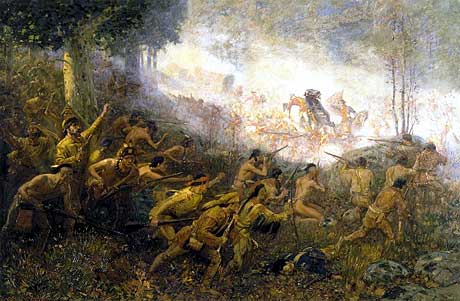
7/9/1755 - Whether its called the Battle of the Monongahela, the Battle of the Wilderness (not to be confused with the 1864 Civil War bloodbath), or simply Braddock's Defeat, on this day in 1755 during the French and Indian War, the British (and American colonist militia) receive a major ass kicking 10 miles to the east of what is now downtown Pittsburgh.
Image result for braddock's defeat   
Braddock's Defeat

Part of a global conflict between the French and the British, the battle is the result of a major English offensive to take control of what is called the Ohio Country by way of capturing Fort Duquesne with a 2,100 man force under the command of 60-year-old Major General Edward Braddock (he is the son of a former major general of the elite Coldstream Guards). 
Braddock.png 
Portrait Thought To Be Of General Braddock

Facing the logistical nightmare of moving his force, including the heavy cannons needed for siege work against forts, through 110 miles of raw wilderness, Braddock sets out from Fort Cumberland in Maryland on May 29th, creating a road as he goes that he can use for being resupplied once Fort Duquesne is his.  No subtlety in the movement, the French and Indians in the region are well aware that their foe is coming. 


Region of conflict

A defensive position controlling the site where the Ohio, Alleghany, and Monongahela Rivers all meet, the French garrison at Fort Duquesne consists of about 250 regular soldiers and Canadian militia under the command of Claude-Pierre Pecaudy de Contrecoeur, and about 640 Indians camping in the forest lands near the structure ... a mixed grouping of warriors from the Ottawa, Ojibwa, and Potawatomi tribes (in contrast, Braddock moves forward with only 8 Mingo tribe scouts).
 Watching the British

Realizing he can not withstand a prolonged siege by a superior force, de Contrecoeur decides to launch a preemptive strike against the British ... and times the attack perfectly, hitting Braddock's force as it crosses the Monongahela River, and as the British general has split his force into a "flying column" of 1.300 men, and a support unit carrying most of the force's baggage.  The Indians are at first reluctant to attack such a large force, but when French field commander Captain Daniel Lienard de Beaujeu covers his face in war paint, the native warriors are convinced to participate.
 Battle

Not expecting to encounter any hostiles until they get closer to the fort, an advance force of 300 men led by Lt. Colonel Thomas Gage (the British commander of English forces in North American when the American Revolution begins 20 years later) runs headlong into Indians rushing to the river to set up an ambush.  In the initial clash, de Beaujeu is killed, but instead of unhinging the French and Indians, they swarm the flanks of Gage and force him to retreat ... right into Braddock's main force, which has come forward at the sound of battle. Chaos ensues as the forces crash into each other on the small road ... mayhem added to by warriors screaming and shooting from within the safety of the surrounding dense forest, and nailing scalps of fallen British soldiers to trees ... and in the confusion, several British platoons will fire on each other.  In the next three hours, the British try to reform their units again and again, but the road, forest, and sniping of the French and Indians prevent suitable cohesion ... the only thing preventing a rout is the calming effect Braddock has in rallying his men. Then Braddock is shot off his horse (a bullet through the lung that will take the general's life on July 13th).   
Image result for edward braddock's defeat Braddock goes down
Image result for edward braddock's defeat Braddock

Effective resistance collapsing, a total massacre is prevented when one of the colonists with Braddock, though he has no official position in the British chain-of-command, forms a rear guard that allows the rest of Braddock's force to disengage, and by sunset, retreat back down the road they have built ... a colonel from Virginia named George Washington (a lucky survivor of the clash, unscathed, the future first President of the United States will have two horses shot out from under him, and after the battle discover four different bullet holes in his clothing).  Also allowing the British to escape a worse mauling, instead of pursuing the British, the Indians involved set about scalping and looting the corpses of the fallen that litter the road ... and get blasted on two hundred gallons of captured British rum (before he dies on the 13th, Braddock gives Washington the ceremonial sash he wore with his battle uniform, a gift Washington never goes anywhere without ... for the rest of his life ... the sash now resides, on display, at Washington's Mt. Vernon home!). 
Washington 1772.jpg Colonel Washington

A major ouch (though the British will eventually prevail in the war), the Braddock force suffers casualties of 456 men killed (the officers are especially hit hard, of the 86 that go into the battle, 26 and killed and 37 are wounded) 422 soldiers are wounded, and of the 50 women that are along as cooks and maids, only 4 make it back to civilization ... to minuscule losses for the French and Indians, of 30 killed and 57 wounded. 
 Farewell General Braddock

Braddock's last words are said to be, "Who would have thought?"  Indeed ... who would have thought?
Image result for edward braddock's defeat
Just Before The End - Braddock And Aides