Wednesday, June 6, 2018

D-DAY AT OMAHA BEACH

6/6/1944 - Okay, I don't see as there is any need to remind everyone that today marks the anniversary of the invasion of Normandy ... Operation Neptune ... Overload ... D-DAY ... over 200,000 men battling for 50 miles of French beaches (give yourself a cookie if you could name all five of the code names for the landings ... Gold, Juno, Sword, Utah, and Omaha).  Instead I'd like to hone in on one beach and gratefully remember another group of Americans that gave all they possibly could on that day so that the generation I belong to, and those that followed, could live free.  The beach is Omaha ... "Bloody" Omaha ... and the men are the soldiers Company A of the 116th Infantry Regiment of the 29 U.S. Infantry Division ... 230 men, from Virginia, Maryland, and Pennsylvania, with 35 of them hailing from the small town and area of Bedford, Virginia (known as "the place that sells itself," the town is located with the Blue Ridge Mountains to its North, Smith Mountain Lake to its South, and the James River town of Lynchberg to the East ... in 1944, the population of the town is roughly 3,200 souls).
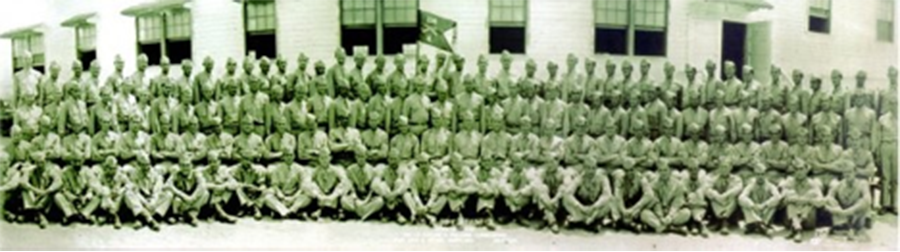
 Image result for bedford boys d-day
Company A

Formerly elements of National Guard units, they have been chosen in part for the first wave of the assault because they have not yet experienced combat and are still fired up rookies that don't know what they are in for (aboard the RMS Queen Mary, they arrive in England as part of the 29th Infantry Divison, under the command of Major General Leonard Gerow, on October 5, 1942).  Awoken at 3:00 in the morning aboard the transport Empire Javelin (shipping out of Portland Harbour in Dorset) to ready themselves for the invasion of Nazi held Europe, boated, the men carry 60 pounds of equipment on their backs and ride towards shore through 6-7 foot waves in seven, thirty man LCAs (Landing Craft, Assault) awash in water and vomit (their assault is supported by the 14-inch guns and 2,000 pound shells of the battleship, USS Texas).   Many do not make the beach (four hundred yards from the beach, four footballs from France, they begin drawing fire), and those that do, find out almost instantly that they have entered a nightmare of hell on earth.
Image result for queen mary troop transport 1942
Queen Mary Arrives In Great Britain
Image result for ss empire javelin
SS Empire Javelin
Image result for uss texas d day
The USS Texas Firing On Omaha Beach

Heading In

The assignment of Company A is to secure one of the four passages off the beach, their mission is the draw named D-1, just to the front of the village of Vierville.  Opposing them are veteran elements of the Wehrmacht's 352 Infantry Division ... behind defensive positions that extend beyond high tide.  Running the length of the beach are obstacles for both low and high tide approaches ... 10 foot high steel structures like gates covered in contact mines, heavy logs that are also mines, crossed steel rails in "X" shapes, barbed wire, and thousands of sand buried mines.  Beyond those impediments are cliffs rising 170 feet above the water where the Germans have placed firing pits, concrete pillboxes, machine gun nests, mortars. and 75mm and 88mm artillery pieces.
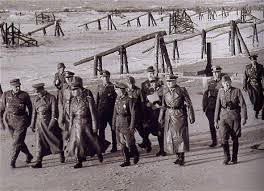
Image result for wehrmacht 352nd infantry division
Rommel and Staff Touring The Beaches
Image result for d- day defenses omaha beach
From The Mind Of Erwin Rommel

At roughly 6:30 in the morning, still 400 yards from the beach, the Germans open up on Company A ... and a massacre begins.  One of the landing craft is sunk, another has its coxswain killed and drifts into an area where German tank guns can concentrate on blowing it apart, another boat is hit and its occupants are forced to jump into chest high water peppered by machine gun fire (of its 30 man compliment of troops, only three make the beach uninjured), the company commander, Captain Taylor Fellers is shot through the head, and another boat comes to ground directly in front of a machine gun nest that kills every man aboard.
Image result for captain taylor fellers
Captain Taylor Fellers
Image result for omaha beach
Forward

In less than 10 minutes, Company A ceases to exist ... of the 230 men in the assault, all but 18 are killed or wounded.  They do gain a toehold though, and working with other scattered American combat units, the draw is eventually opened for other troops to fight their way inland.  Success at a horribly high cost!
Image result for omaha beach
At Omaha Beach

Military censorship in effect, the 3,200 residents of Bedford are unaware of the part their husbands, sons, and friends have played in the attack until telegrams begin arriving in town on July 17th.  "The Secretary of War desires to express his deep regrets ..."  Before the summer is over, twenty-two of the death notices will be received in Bedford, Virginia (the town will lose more residents per capita on D-Day than any other American community) ... 22 out of the 35 men that traveled away from their homes in 1942 aboard the Queen Mary to fight for the United States of America (hardest hit is the Hoback Family, who lose both their boys, Bedford and Raymond, on "The Longest Day").
Image result for bedford and raymond hoback
Western Union
Image result for bedford and raymond hoback Image result for bedford and raymond hoback
The Hoback Brothers

Parade's Rest In France

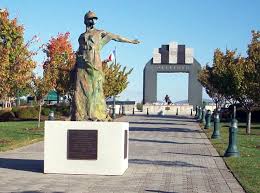
Gone, but not forgotten, brave heroes that made possible Hitler's defeat ... finding their forevers in the sea and sand of Omaha Beach ... because of the sacrifices of Company A and its Bedford boys, in 1996 the community is chosen by Congress as the home of the National D-Day Memorial ... a memorial that is dedicated by President George W. Bush on June 6, 2001.
Image result for national d-day memorial
The National D-Day Memorial - Bedford, Virginia

******6/6/1944 MEDAL OF HONORS******
@24-year-old Private Carlton W. Barrett of Fulton, New York ... a guide for the 1st Infantry Division, risking his life again and again moving through the surf and across bullet blasted Omaha Beach, Barrett moves wounded men off the beach, carries dispatches, provides movement guidance, and calms many of the shocked men of his unit.
Image result for private carlton barrett
Barrett

@26-year-old First Lt. Jimmie Waters Monteith of Low Moor, Virginia ... coming ashore on Omaha Beach with the 1st Infantry Division, Monteith begins his busy day by organizing his men into a viable defensive position, leads them in an assault to get off the beach, under fire, personally walks two blinded tanks through a minefield and guides the armored vehicles in destroying several German positions, rejoins his men and leads them in an assault that takes a strategic hill area above the beach, and leads the defense of that position against several heavy counterattacks until he is killed.
Image result for jimmie waters monteith
Monteith

@32-year-old Technician Fifth Grade John J. Pinder, Jr. of McKees Rock, Pennsylvania ... carrying his unit's vitally important radio, Pinder struggles ashore despite being wounded, refusing to be evacuated or have his wounds treated, three times he travels back over the fire swept sands and rescues communication equipment out of the surf (including a second working radio) ... an effort that gets him machine gun wounds in both legs ... in pain and weak from blood loss, he again refuses evacuation as he helps set up a communications center for his unit ... until a third hit finally kills the intrepid soldier.
Image result for john j pinder jr
Pinder

@56-year-old Brigadier General Theodore Roosevelt, Jr. of Cove Neck, New York ... landing over a mile away from the position his men have been given on Utah Beach, Roosevelt is the personification of American leadership under extreme duress ... "We'll start the war right here," are his famous words, and that is just what his command does as Roosevelt,with a heart condition (he will have a major heart attack and die on July12, 1944) and arthritis that forces him to walk with a cane, points regiments at their new objectives, recite poetry and tells stories about his father to steady his men's nerves, untangles traffic jams of tanks and trucks, and gives courage to his men by moving about the beach as if unaware of the bullets flying all about.
Image result for theodore roosevelt jr
Roosevelt, Jr.

With all the chaos and heroism on display on 6/6/1944, I'm somewhat shocked that only four men won the Congressional Medal of Honor for their actions on the Normandy beaches ... but then again, maybe the number is indicative of that combat ... with witnesses killed, or officers slaughtered that would recommend medals, maybe four is about right, and all the other acts of valor and sacrifice belong now only to God and the men that spent their last moments on the blood reddened sands of France ... opening the European foothold to end Adolf Hitler and Nazi Germany ... unknown, but still remembered!
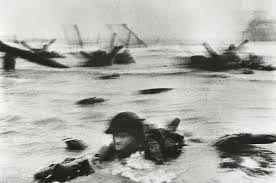
Image result for omaha beach
Omaha Beach - 6/6/1944

Monday, June 4, 2018

TORPEDO SQUADRON 8

1942 - Fresh from stateside training, Torpedo Squadron 8 of the USS Hornet arrives in the Pacific just in time to participate in the Battle of Midway ... and to become U.S. Navy aviation legends.
 Aft view of USS Hornet (CV-8), circa in late 1941 (NH 81313).jpg
USS Hornet - 1939

Reacting to an early morning sighting of Japanese invasion forces off the island of Midway, Rear Admiral Raymond A. Spruance (a last minute replacement for Vice Admiral William "Bull" Halsey, sent to the hospital for treatment of a bad case of psoriasis) orders an immediate strike on the Imperial fleet.  The elements of the strike though are fatally uncoordinated ... despite protests from VT-8 Lieutenant Commander John C. Waldron, the Hornet's fighters stay high to protect the ship's dive bombers (a bad decision agreed to by Spruance and Commander Stanhope C. Ring), and compounding matters even further, they follow a wrong heading to the west and never make contact with the enemy fleet.  
John C Waldron.jpg
Waldron

The forty-one-year-old Waldron, a 1924 graduate of the U.S. Naval Academy, however disagrees with the path taken, turns to the southwest once in flight, and at 9:20, finds what he has been seeking ... the four aircraft carriers of Admiral Chuichi Nagumo's command ... Akagi, Kaga, Soryu, and Hiryu ... all veterans of the December 7th surprise attack on Pearl Harbor.
Chuichi Nagumo.jpg
Nagumo

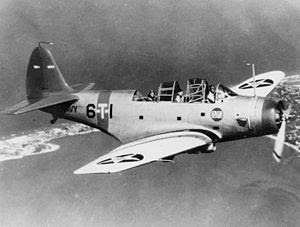
Unescorted and inexperienced,  Waldron's group is also highly disadvantaged by the weaponry they take into the battle ... fifteen obsolete, three-man Douglas TBD Devastator torpedo bombers (soon to be replaced by the Grumman TBF Avenger) ... all carrying defective Mark 13 torpedoes.  Slow, barely maneuverable, with light defensive weaponry and little armor ... the American planes stand little chance of success, but drop down and begin their torpedo runs anyway. 
Douglas TBD-1 VT-6 in flight c1938.jpeg 
Devastator

The group's only plus is its fighting spirit, as personified in their leader.  As if in possession of a magic crystal ball that shows him how the battle will go, the night before their moment in history, Waldron tells his men, "If there is only one plane left to make the final run-in, I want that man to go in and get a hit.  May God be with us all.  Good luck, happy landings, and give 'em hell."

Waldron On His Way

But for Torpedo Squadron 8 their will be no happy landings, only watery crashes.  Making their runs, the group is swarmed by Japanese fighter aces flying Mitsubishi A6M Zeros ... and one by one, in a matter of minutes, all fifteen Devastator are shot down without a single torpedo hit being scored.  Fifteen planes, thirty men, and there will be only one survivor ... Ensign George Gay.
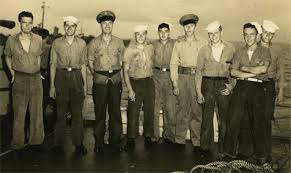
File:Pilots of VT-8.jpgTorpedo Squadron 8
L-R Top: James Owens, William Abercrombie, Waldron, Raymon Moore, Ulvet Moore, William Evans, Grant Teats, George Cambell
L-R Bottom: Harold Ellison, Henry Kenyon, John Gray, George Gay, Jeff Woodson, William Creamer, Robert Miles 
Wounded attacking the Kaga, after dropping his torpedo, Gay evades anti-aircraft fire by flying aft over the carrier's busy flight deck (where a multitude of planes are having their ordinance changed for an attack on the American carriers).  He can't evade the five Zeros though that jump him as he pulls away from the carrier ... and cannon and machine gun fire hits from all sides put Gay's plane in the Pacific.  Hiding under a seat cushion to avoid strafing attacks from the Japanese fighters, or capture by one of the passing ships of the Imperial task force until he can inflate his life raft, Gay will spend 30 hours in the water before being rescued by a Consolidated PBY Catalina flying boat.  In the water, he will also have a ringside seat from which he watches what follows the sacrifice of his squadron.

Gay (R) and his rear gunner, George Field

A sacrifice which is not in vain ... because of the attack the Japanese are not able to launch their own counter-strike on the American carriers, leaving their decks covered in planes, bombs, and aviation fuel.  Additionally, the attack brings down, scatters, and depletes the fuel and ammunition of the Zeros on combat air patrol over their ships at just the right moment, as the SBD dive bombers of the Enterprise and Yorktown arrive directly over the enemy fleet.  Bombing runs made without interference, in a little more than six minutes the Kaga, Akagi, and Soryu are turned into flaming hulks by the American aviators.

Turning Point In The Pacific

Invasion blunted, the "miracle" at Midway, America's impossible victory, allows the United States to go on the offensive at Guadalcanal, and the triumph at Guadalcanal in turn allows the island hopping campaign to move across the Pacific until it finally stops in Tokyo Bay aboard the battleship USS Missouri ... compliments of the sacrifices, like those of Torpedo Squadron 8, that were made by all those that fought at Midway on this day in 1942 ... may we never forget them.
Image result for tokyo bay surrender
Victory Ceremony - Tokyo Bay - 1945

THE CAPTURE OF U-505

6/4/1944 - About 150 nautical miles off the coast of northwestern Africa, near the Rio De Oro region, the United States Navy has a very fine day, capturing an enemy vessel (the German submarine U-505) at sea for the first time since the War of 1812 against Great Britain (one of only six U-boats that will be captured by the Allies during WWII)!
U505 bez tekstu.jpg
U-505 Shortly After Capture

Launched in May of 1941, the U-505 is on its 12th, and last, war patrol on 6/4/1944.  Crafting a missed bag of results in its cruises through the Atlantic, before its final outing, the German pig boat will sink eight ships (worth a tonnage of 44,962 ... 3 American, 2 British, 1 Norwegian, 1 Dutch, and 1 Colombian), cause the South American country of Columbia to declare war on the Third Reich (by sinking a ship from that country), be strafed by Allied aircraft, get bombed by the RAF, earn the title of the "most heavily damaged U-boat to successfully return to port," rescue thirty-three crew members of the the torpedo boat, T-25, and have its commander at the time, Peter Zschech, undergo a nervous breakdown and blow his brains out in front of the crew during a savage depth bombing attack in 1943 (the only such occurrence of its type during the war).

Zschech

Hunter hunted, unbeknownst to the sub, using Ultra intelligence from decrypted German cipher messages, the Allies dispatch a "Hunter-Killer" group from Norfolk, Virginia, to deal with the U-505 that is commanded by Captain Daniel V. Gallery, Task Group 22.3, consisting of the escort carrier, USS Guadalcanal, and five destroyer escorts, Pillsbury, Pope, Flaherty, Chatelain, and Jenks.  Searching, at 11:09 in the morning sonar contact is made and the depth charges start flying.  Only 800 yards away, Chatelain, skippered by Lt. Commander J.L. Foley is the first vessel to respond to the contact (as the Guadalcanal moves away at full speed and launches an F4F Wildcat in support, joining another Wildcat and a TBF Avenger already patrolling the area), so close, that the depth charges won't have enough time to sink to the proper explosion depth.  Instead, Hedgehog anti-submarine mortars are first used, then after a quick turn, a rack of depth charges.  On target, a huge oil slick soon appears on the Atlantic, and less than seven minutes after the initial attack, the U-505 comes up to the surface less than 700 yards from Chatelain's position.  Prey now able to be seen, the Chatelain immediately opens up on the submarine with every automatic weapon on deck, even firing a torpedo at the sub when it appears U-505 might be attacking (luckily it misses).
Hedgehog anti-submarine mortar.jpg
Hedgehog Mortars
Image result for USS chatelain
USS Chatelain

Leaking badly, believing the ship is literally going under at any second, the U-505's commander, Oberleutnant zur See Harald Lange, orders the sub to be abandoned ... orders that the crew complies with so quickly that all the scuttling valves are not opened to the sea and the engines are left running, as the empty craft circles clockwise at about 7 knots ... a prize for the taking if a Navy team can get aboard and make repairs to the sub before it goes under for good; a risk an nine-man boarding party from Pillsbury is willing to try!
Image result for u-505 crew
U-505 Crew

While Chatelain and Jenks take aboard survivors (only one member of the U-505's crew of 60 is killed during the day's actions, Seaman Gottfried Fischer), a boarding party of eight sailors led by 43-year-old Lt. Junior Grade Albert Leroy David comes alongside the sub and enters the vessel through the open conning tower. Inside, they secure charts and codebooks, two Enigma decoding machines, close open scuttling valves, disarm the ship's demolition charges, stop the engines, and plug as many holes as they can before setting up a tow line with Pillsbury.  Low in the water and down by the stern but afloat, the first towing attempt fails when the two ships repeatedly bump into each other, so another larger party boards the craft, this time a group from the Guadalcanal that is led by the carrier's chief engineer, Commander Earl Trosino, who rigs up the sub so that the propellers turning as the craft is drug north, allows the batteries to be charged which run the internal pumps which flush the water out of U-505, successfully bringing the pig boat back to full surface trim.  After three days of towing by the Guadalcanal, the sub's movements are transferred to the fleet tug, Abenaki, which brings U-505 to the Allied naval base at Port Royal Bay, Bermuda, on Monday, June 19th ... a tow journey of 1,700 nautical miles!
Image result for U-505
The Boarding Party
Image result for U-505
Barely Afloat
Image result for U-505
Salvage Operations
Towing U-505
Image result for U-505
Abenaki Takes Over

A huge catch for the United States Navy, along with the coding and cipher equipment which helps the secret decryption station at Bletchley Park, England (to make sure the secret of the U-505 being taken through the use of Ultra information, the captive submariners are segregated from other German prisoners, not allowed contact with the Red Cross, and are not returned to Germany until 1947), read German military messages for the month of June, the capture of the U-505 also gives the Allies two new G7 acoustic homing torpedoes to analyze.  For his actions leading the first boarding party, David is awarded the Congressional Medal of Honor (the only such award to be given to an Atlantic Fleet sailor during WWII ... sadly, David dies of a heart attack before he can receive his medal, his place is taken at the White House ceremony in October of 1945 by his widow, Lynda Mae David), while Torpedoman's Mate Third Class Arthur W. Knispel and Radioman Second Class Stanley E. Wdowiak, the next two men to enter the sub receive the Navy Cross, and Seaman First Class Earnest James Beaver, also a member of the boarding party, gets a Silver Star for his actions.  Accolades and awards, the taking of the U-505 also gets Commander Trosino the Legion of Merit, Captain Gallery is awarded the Navy Distinguished Service Medal, and Task Group 22.3 receives a Presidential Unit Citation.   
Image result for u-505 crew
Prisoners of War
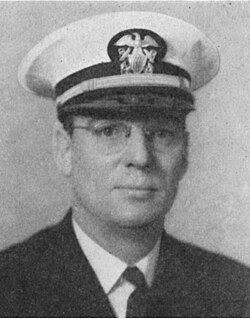
Lieutenant David.jpg
David
Image result for u-505 capture reunion
Reunion

And what becomes of the U-505?  For the duration of the war the sub is kept hidden in Bermuda as the USS Nemo while it is being intensively studied by U.S. Navy Intelligence and a host of engineering officers.  War over, the sub is ticketed for conversion to scrap metal, but is saved when wheelers and dealers in Chicago (that includes Captain Gallery's brother, Father John Gallery, and a bequest from the estate of millionaire Chicago businessman, Julius Rosenwald) decide to make the vessel into a war memorial to all the sailors that lost their lives during WWII's Battle of the Atlantic (a public subscription gets $250,000 for the sub's transportation to and installation at the Chicago Museum of Science and Industry ... and German companies that built the vessel supply replacement parts for free for U-505's upgrade, wanting her to be a reminder and credit to the German technology that came close to winning the war).  In 1989, the U-505 is officially designated a National Historic Landmark!  Outside since its arrival in Chicago, the sub is moved into a new, covered, underground, climate controlled location and reopened to public visits in June of 2005.  As part of the museum's current Explorer I package that includes entrance to the building on South Lake Shore Drive, the sub can currently be toured for $27 ($26 if you're a senior).
Image result for u-505 in chicago
On the Chicago River - 1954
Museum of Science & Industry
Conning tower of U-505, showing the badge of the flotilla to which she belonged
Conning Tower
Underside of U-505
Underside
Historic Marker


6/4/1944 ... a day the United States Navy makes matter off the coast of Africa!