Tuesday, December 6, 2016

THE END OF THE RENOS

12/6/1868 - Before there were criminal James and Younger Brothers, ahead of the Daltons, and in front of Ma Barker and her brood of murderers, showing the way for families with sociopaths, there were the Reno Brothers of Indiana, the first gang of American outlaws to rob a train ... and the first band of criminal brothers to come to a decidedly bad end.
Image result for first train robbery
First Train Robbery

At first, the family seems typical enough of Americans trying to carve out a living for themselves on the western frontier of the early 1800s ... J. Wilkinson Reno and his wife, Julia Ann Freyhafer, marry in 1835, and begin raising a family of five sons and one daughter on a 1,200 acre farm outside of the rural community of Rockford, Indiana ... Frank (1837), John (1838), Simeon (1843 ... called Sim), Clinton (1847 ... he will be known as "Honest Clint," the only Reno brother that doesn't turn out rotten), William (1848), and Laura (1851).  An upbringing that consists of church, bible reading, strict school attendance, and hours of hard, daily farm work, the brothers rebel early and soon gain an infamous reputation throughout the area for bilking travelers out of their money that pass the farm on the way to and from Seymour, Indiana with crooked card games, rustling horses, burglarizing local homes and businesses, manufacturing and distributing rotgut whiskey, counterfeiting, and using arson fires to send messages to residents interested in putting the brothers behind bars.  When the Civil War begins they take part in a new racket ... under false names, collecting the government bonuses that are paid out for men joining the Union Army, they join up, desert, then using a new batch of names, enlist again (and when the draft begins, they take money to enlist as draftees from the draftees ... and then desert again).
Image result for reno gang farm
Part Of The Reno Farm - Circa 1900

Civil War winding down, the Renos (and their newly recruited criminal associates) decide on a new post-war revenue stream ... good old armed robbery.  A post office, a store, and then a new target no one has ever tried before, a train robbery ... and so, on the evening of October 6, 1866, John and Sim Reno, along with Frank Sparkes, board an Ohio and Mississippi Railway train as it leaves Seymour, break into the express car, take the guard prisoner, and loot the safe inside of roughly $16,000 in cash (they also push a second, larger safe off the train at a spot where confederates are waiting, but the gang is unable to break the strong box open) ... a huge payday for the time, but the robbery is actually the beginning of the end for the thieves.  Adding to the already hard feelings of the locals towards the Renos, identified by passenger George Kinney as the robbers, Kinney is shot and murdered shortly after all three men are granted bail (unsurprisingly, no other witnesses step forward to testify), and worse, because the contents of the Adams Express Company safe were insured, the Pinkerton Detective Agency begins hunting the Reno Gang.
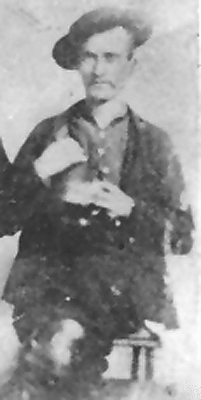
Image result for reno gang farm Image result for reno gang farm
Frank Sparkes & John Reno
Image result for allan pinkerton Image result for william pinkerton
Allan Pinkerton And Son Wiliam

Believing themselves untouchable, the gang then launches a crime spree that includes robbing the Daviess County Courthouse in Gallatin, Missouri (John will be arrested and convicted of the crime, and sent away with a 25-year sentence), a successful jailbreak of members after an arrest by William Pinkerton, an $8,000 train robbery, a train robbery that is broken up in a shootout with ten hidden Pinkerton agents, taking $14,000 from the Harrison County, Iowa treasury, and the next day, plucking $12,00 from the Mills County, Iowa treasury, another jailbreak (breaking a hole in a cell wall, the escapees leave behind a note that simply reads, "April Fools"), this time in Iowa after being arrested by Pinkertons, a robbery of a Jeffersonville, Madison and Indianapolis Railroad train outside of Seymour that nets the gang $96,000 in loot (during the robbery, express messenger Thomas Harkins is thrown off the train and suffers fatal injuries, and another train robbery that is thwarted again by gunslinging Pinkertons (insuring the end of the gang, outlaw Volney Elliott is captured and becomes a canary about his associates activities).
Image result for train robbery reno brothers
Train Robbery
Image result for pinkerton detective agency
Pinkerton Logo

And then, in 1868, the final arrests and punishments begin ... outlaws Theodore Clifton, Volney Elliott, and Charles Roseberry are grabbed off a train returning them to Seymour and lynched by a group of men in hoods calling themselves the Jackson County Vigilance Committee, arrested hiding on a farm in Coles County, Illinois, and being returned by wagon to Seymour to stand trial, masked men hang Henry Jerrell, Frank Sparkes, and John Moore from the same tree as the first trio of hung bandits.  And the leadership of the gang doesn't escape justice either, William and Sim Reno are captured by Pinkertons in Indianapolis, and against their wills, Frank Reno and Charlie Anderson are arrested in Canada and extradited back to Indiana.  On 12/6/1868, the four men are all ensconced on the second floor of the sturdy New Albany, Indiana jailhouse (after the local Seymour vigilantes announce they plan on more hangings, Laura Reno volunteers to pay all the expenses of having her brothers moved to New Albany), awaiting trials that will never happen.
Image result for train robbery reno brothers
Frank Reno

Ignoring gang threats that Seymour will be burnt to the ground if there are any Reno hangings, that night over fifty hooded men attack the New Albany jail, wounding Sheriff Thomas Fullenlove as he tries to defend his prisoners (living quarters in the building, in front of his wife, Fullenlove will be beaten and then shot in the right arm).  Seeing what has happened to their boss, at gunpoint, the two guards still standing give the angry mob the keys to the cells and the last Reno Gang hangings begin.  The oldest and leader of the group, Frank prays and begs for forgiveness as he dies of a snapped neck as he is lynched from the second-floor tier railing, William goes next, warning his attackers that if he is hung his father's ghost will come back to haunt them all.  Sim's turn, he goes berserk at the prospect of execution and fights the mob with a iron sink he has ripped from the wall to use as a bludgeon, knocking several men senseless in the process, before he tires, drops his weapon, and is pulled from his cell, and cursing his executioners, takes his drop.  Last, aware there is nothing he can do, Charlie Anderson takes his medicine without any fight whatsoever, and without uttering a word.  Seconds later, the jail empties out as four bodies sway from the railing.
Image result for new albany reno hangings
The New Albany Jailhouse   

But only three of the men are dead!  Already proving himself somewhat of a Goliath in his fight with the mob, Sim suddenly opens his eyes and revives ... and then attempts the impossible as other prisoners scream for help (no one ever comes though and the two guards are never questioned as to where they were for the crucial minutes after the mob departs).  Slowly strangling to death, for roughly thirty minutes the outlaw tries to pull himself up the rope, hand-over-hand, he is hanging from, but too tired from his efforts fighting his attackers, eventually ends up like his two brothers anyway.  Reign of terror over (John will eventually get out of prison and die in 1895), the vigilantes put the coda on their efforts to bring law and order back to the region, issuing a proclamation that declares, "Having first lopped off the branches and finally uprooted the tree of evil which was in our midst, in defiance of us and our laws, we beg to be allowed to rest here, and not be forced again to take the law into our own hands.  We are very loathe to shed blood again, and will not do so unless compelled in defense of our lives."
Image result for reno brother graves
Grave Site

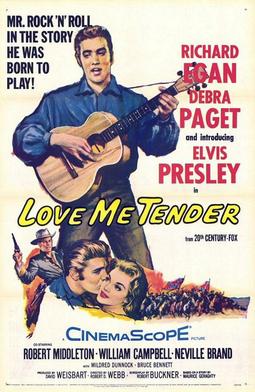
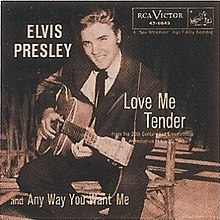
But maybe the most amazing thing about the Renos' story is that somehow Hollywood decides the monsters would make a fine subject for a Hollywood movie ... and to play the role of the good brother Clint, for his first film role ever, 20th Century Fox recruits the hottest talent in the world of entertainment for the part, 21-year-old Elvis Aaron Presley (thinking his older brother Vance has died in the war, Presley marries his brother's girlfriend, Cathy, played by Debra Paget)!  Originally intended to be released as "The Reno Brothers" (actor Richard Egan stars as the leader of the gang, a character named Vance Reno), when Presley performs his song from the movie, "Love Me Tender," a month before the movie comes out on the Ed Sullivan Show, the next day RCA receives over a million advanced orders for the single ... the first time ever a record has gone gold before it has ever been released ... and wanting a piece of that kind of profits too, the studio renames the movie, "Love Me Tender" also (a big hit, the only time Presley will play a historical figure, the movie is pure bolderdash in its portrayal of the outlaw family having good Clint killed in a last shootout, and his brothers going free after the real outlaws of the movie are revealed at its conclusion).
Lovemetenderelvissingle.jpg
The Single
Love me tender423.jpg
The Movie
Image result for reno brothers graves
Reality

Friday, December 2, 2016

THE FIRST CALIFORNIA GASSING

12/2/1938 - A reality that seems further and further away now, once upon a time before the touchie-feelies took over the state's government, California actually use to execute her killers ... and beginning on this day in 1938, it gets rid of two of the men responsible for murdering Warden Clarence Larkin and Correctional Officer Harry Martin in a failed attempt to escape from Folsom Prison by a new means ... the gas chairs at San Quentin Prison.
Image result for kessell and cannon
Next Day's Front Page - The Los Angeles Times

The specific event that will cause the executions begins on September 19, 1937, outside of Warden Larkin's office, where forty convicts are waiting their turn to discuss with the penologist their upcoming parole hearings ... a regular, routine event ... but not on the 19th.  Break planned, seven inmates suddenly produce shank knives (they have ten, and two carved wooden guns) and stab to death Guard Harry Martin (40) when he attempts to intervene, and then take captive the warden and Captain of the Guards, William J. Ryan.  So far, so good, but things go south for the convicts when they leave the office area and step outside thinking their hostages are a ticket to freedom.  Alerted by the attack and murder, the men step into the yard and discover they are in the gun sights of several guards on the wall, and are surrounded by another group of guards on the ground bearing heavy, lead-tipped riot canes.  Trained already not to negotiate with cons over hostages, that policy is reinforced to all the guards when Warden Larkin calls out to anyone within earshot that no one is to open the prison's gate, even if it costs him his life.  Which of course, it does.  Responding to orders, the wall guards open up on anyone in the yard looking hostile with rifles and .30-caliber machine guns (two of the seven escapees are shot to death in the ten minute melee that takes place ... 25-year-old Clyde Stevens and 33-year-old Wesley Eudy). The convicts in turn respond by stabbing and strangling the warden (he dies in a local hospital later that night at the age of 46) and knifing the Captain of the Guards (Ryan will survive after a week of medical emergency procedures on his shredded lungs ... helped by two convicts who supply blood transfusions to the guard) ... then once down, more payback comes the convict's way from guard boots, fists, and the canes ... beatings the stop just short of killing their recipients.
Image result for folsom prison massacre
Folsom
Weapons Used In The Escape Attempt
Image result for warden clarence larkin
Warden Larkin
Image result for warden clarence larkin
Headlines
Martin
Heroes (They Look A Little Ancient To Me)

Mended enough to receive more justice, at trial it comes out that the ringleader of the break is the notorious 1920s and 1930s public enemy, Ed Davis ... a career criminal from Oklahoma that has a resume of nefarious behavior that includes a stint in the Oklahoma state prison, the murder of police officer J. R. Hill, an escape from the Oklahoma state prison, a stint in the Kansas state prison, an escape from the Kansas state prison (along with major outlaws, Harvey Bailey, Robert "Big Bob" Brady, Jim Clark, and Wibur Underhill), two robberies as a member of the Bailey-Underhill gang, a string of one-man bank robberies in Texas that get him the nickname of "The Fox," and a Los Angeles, California (where he had retired, but running out of Texas loot, he gets back in the game) robbery and kidnapping that sends him to Folsom for life.  Slam dunk for the jury, Davis (35), and his compatriots, Albert Kessel (28), Robert Cannon (28), Benny Kucharski (31), and Fred Barnes (39) are all sentenced to death in the state's new gas chamber at the San Quentin Prison.
Image result for bailey-underhill gang
Davis
Three Of The Perps

Hanging deemed too barbaric with all its twitching and bowel releases, accidental occasional decapitations, and slow strangulations, the state of California has recently switched to executions by gas, but the gas chamber that has been built has only two seats within it (labeled "A" and "B") and takes hours afterwards to fumigate, so the men's executions are broken up with Kessell and Cannon scheduled to leave first, Kucharski and Barnes next (they go on 12/9/1938), and Davis saved for last (executed on 12/16, he leaves behind a last note in his cell stating, "No regrets for Old Ed.  All considered, my conscience is now resting easy.").
Ed Davis, the most notorious of the Folsom Five.
Davis

Resigned to their fate, Kessell and Cannon, in adjoining cells behind the gas chamber spend their last evening of life playing records, singing, and talking ... and ten minutes before their scheduled execution, they are allowed to smoke a cigar and have a shot of whiskey.  Barefooted, Cannon is marched into the chamber first and cinched to his seat, and moments later Kessell follows, muttering "Quite a congregation here" as he notes all the witnesses outside the chamber.  Both men told to count to ten, breathe deeply, and not to fight the gas, Cannon complies and appears to leave peacefully, but Kessell fights his death, holding his breathe as long as possible and fighting the fumes to no avail.  Both men, the first to be executed in California using cyanide gas, are dead within 15 minutes of the door to the chamber being shut ... and then the recriminations begin (though it will take until the 1990s for the method to be replaced by lethal injection).  Hanging replaced, the newspapers are soon filled with horrifying stories of men struggling against their bonds as they cough, gasp. wheeze, convulse, and turn red and blue as they suffer obviously painful deaths in the chamber (some articles even request a return to hangings).
Image result for san quentin gas chamber - 1938
The First California Gas Chamber
Image result for kessell and cannon
Adios!!!!!!!!!!!!!!!!!!!!!

12/2/1938 ... for the first time in California, gas is used for convict executions ... and the Folsom Five begin leaving!

Thursday, December 1, 2016

ELFEGO BACA AND THE BATTLE OF FRISCO

12/1/1884 - Never mind the deeds accomplished or failed at, some individuals, for a host of reasons, have names which resonate far beyond the lives they led, while others seem to go into a dusty corner that only a few historians ever explore ... so let me send a little light on to the exploits of a mostly forgotten Wild West gunman who never quite makes it to the levels of fame (or infamy) that the likes of Wyatt Earp, Bat Masterson, or Pat Garrett achieve ... a tough hombre by the name of Elfego Baca.
Image result for elfego baca
Young Elfego

Born in Socorro, New Mexico (his pregnant mother is said to be playing the Mexican version of softball, Las Iglesias, when the future lawman pops out of her womb) in February of 1865 as the American Civil War is coming to its conclusion, as a young boy (one Baca legend has him being kidnapped by Indians at the age of 1, but being immediately returned to his family when his screaming disturbs the silence of the renegade's camp), Baca moves with his family to Topeka, Kansas, where surrounded by Anglos, he learns to use his wits in confrontations, before resorting to fists or gunplay ... never backing down (at the age of 12, it is said that Baca helps his town marshal father escape jail by sawing through the ceiling of his dad's cell ... put there for shooting to death two men in a mob that threatened to lynch a prisoner the elder Baca was taking in), 5'7" inches of hard case.  When his mother dies in 1880 (along with a sister and brother from a plague infecting the region), Elfego and his father head back to New Mexico, settling in the town of Belen.
Socorro Region - New Mexico

In 1884, only 19-years-old at the time, Baca is told by Sheriff Pedro Sarracino that Hispanic residents of the town of Frisco are being abused by the cowboys of the nearby John Slaughter ranch ... a group that numbers more than 150.  But that doesn't bother Baca, who proclaims, "I will show the Texans there is at least one Mexican in the country who is not afraid of an American cowboy."  So off he rides to Frisco, New Mexico (now the town of Reserve) to see justice done ... but by whom ... in one story he is deputized by Sarracino, but in another, he purchases a tin star and appoints himself the law. Legit or not, his 130-mile ride southwest sets in motion a series of events that will be known as The Frisco War.
Image result for elfego baca
Baca

Upon arriving in Frisco, it does not take Baca long to make his first, and only arrest ... informed by bar owner Bill Milligan that a drunken cowboy named Charlie McCarty is making Mexicans dance with his pistol, the lawman recruits three other Hispanics to help (after having McCarty shoot his hat off in his first attempt to stop the cowboy's antics) and places the inebriated ranch hand in custody. Not amused that their friend has been arrested, about a dozen members of the Slaughter outfit march on the adobe house where Baca is keeping McCarty and demand the cowboys release.  A demand that Baca responds to by stating that if the cowboys are not gone by the count of three, he will open fire ... and as the men make fun of a Mexican's ability to count, Baca does exactly as he'd stated, and after calling out "one-two-three," he opens fire.  In the resulting hail of lead, Slaughter foreman, Young Parham, has his horse shot and killed, and is fatally wounded himself when the dead animal crushes him to death in its fall, and cowboy Tabe Allen is crippled by a bullet through his knee.  Round One over, the cowboys retreat swearing vengeance at Baca and his trapped deputies.
Image result for elfego baca
Elfego Baca Vs. The Cowboys - True West Magazine

In a quest for calm, Baca receives a signed agreement that he will be left alone if his prisoner can be tried the following day at Milligan's bar.  The next day, a sham trial does take place at the bar (by now full of cowboys from nearby ranches that have been told Hispanics are killing whites in Frisco) in which the now sober cowboy is fined $5 and ordered released by Justice of the Peace, Ted White.  Not a fool, seeing the verdict has only stoked the already boiling anger of the cowboys, as the trial ends, Baca slips out a side door in the bar, and running for his life, takes refuge in the nearby jacal (a single story adobe structure created out of mesquite sticks and dried mud with walls that do not stop bullets) of Geronimo Armijo.  Breaking through the door of the house, Spur Lake Ranch owner, Bert Hearne, is mortally wounded in the stomach and a siege on Baca soon begins, with between 40 to 100 cowboys firing into the jacal.  In the gunplay that takes place, three other cowboys are killed (some historians believe Hearne is the only fatality) and eight are wounded, but it is believed that when a lit stick of dynamite is tossed and sets the structure on fire and causes a wall and the roof collapse, that Baca is dead ... a hope the cowboys decide they will soberly investigate in safety of the light of the next day.
Elfego Baca
Baca

In the morning however, the cowboys awake to the smell of coffee and fresh tortillas being cooked as Baca prepares his breakfast ... and the battle starts all over (one hungry, and enraged cowboy, charges forward behind a cast-iron shield made from a cook stove, but thinks better of his attack when a slug creases his skull).  In all, the siege of Baca's hiding place will last for 33 hours (Baca finally emerges from cover at 6:00 in the evening), in which an estimated 4,000 rounds are poured into the home (the front door contains 387 bullet holes, and a broom is discovered that has been hit eight different times, but astonishingly, a plaster statue of Nuestra Senora Dona Ana is missed entirely, as is Baca ... the miracle of his survival is the floor of the jacal is recessed almost two feet into the dirt, allowing the lawman to lay beneath the fusillades of lead that are sent his way), before Baca agrees to surrender (justification for their hate, Baca is being brought up on murder charges in the death of Parham) ... with conditions ... safety promised (again), he agrees to stand trial in his home town of Socorro, and for the journey there, he will retain his two pistols while riding in the back of a buckboard with no accompanying, trailing cowboy, allowed to come within thirty feet.
Image result for elfego baca
Baca - Cowboys & Indians Magazine

Back in Socorro where he spends four months in jail, Baca is tried twice for murder ... once for Hearne and once for Parham, and acquitted both times.  With his fame as a hard case law-and-order man, in his ensuing years, Baca uses his fame from the gun battle to hold down a variety of jobs that include sheriff of Socorro County (he sends letters out to wanted men stating, "I have a warrant for your arrest.  Please come in and give yourself up.  If you don't, I'll know you intend to resist arrest, and I will feel justified in shooting you on sight when I come after you."), U.S. marshal, criminal lawyer, school superintendent, county clerk, district attorney, unsuccessfully runs for the United States Congress (as a Republican), chief bouncer at a gambling house in Ciudad Juarez, Mexico, private detective, newspaper columnist (in Spanish on political issues effecting the Hispanics of New Mexico), and an American agent representing General Victoriano Huerta to the United States government during the Mexican Revolution.  Having had a very full life that has moved from horse transportation to the dawn of the nuclear age, he dies in Albuquerque on 8/27/1945, at the age of seventy-five.
Image result for elfego baca Image result for elfego baca

Image result for elfego baca Image result for elfego baca
Baca In Later Life

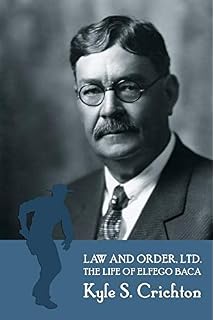
Not completely forgotten, (especially within the Hispanic communities of New Mexico), but achieving nowhere near the renown of his Anglo contemporaries, Baca has a biographies written about his life by Howard Bryan, Larry Ball, Alton Pryor, and Kyle S. Crichton, Walt Disney Studios tells his tale in a 1958 television mini-series entitled, "The Nine Lives of Elfego Baca," starring Robert Loggia in the title role (the theme song's tag line goes, "And the legend was that / like el gato, "the cat" / Nine lives had Elfego Baca"), in 1960, the New Mexico Tech university establishes the annual Elfego Baca Golf Shoot in which there is only one hole, a fifty foot circle chalked in the desert that is three miles and roughly 3,000 feet below a mountain tee box (each competitor is allowed ten balls and must finish with at least one, can tee up each shot they take, and is allowed three ball spotters ... heat, mine shafts, mountain lions, and rattlesnakes constitute some of the "course's" hazards ... the course record is nine strokes, and some competitors have taken over eight hours to finish their round) and in 2007, in the town of Reserve he made famous with his fight, a life size bronze statue of Baca in action is dedicated.
Image result for elfego baca
Biography
Image result for elfego baca
Disney's Take
Image result for elfego baca golf
That's Crazy!!!!!!!!!!!!!!!!!!!!!!!!!
Image result for elfego baca memorial
Memorial
Image result for elfego baca statue
Statue

12/1/1884 ... Elfego Baca takes on a passel of gun toting cowboys ... and survives!
Image result for elfego baca
Badge