Friday, September 11, 2015

A MASSACRE IN UTAH

9/11/1857 - A still controversial incident in the settling of the American West takes place in the Utah Territory as an emigrant train of settlers from Arkansas (and a handful from Missouri and other states) makes its way along the Old Spanish Trail, bound for Southern California ... an incident known to history as the Mountains Meadows Massacre.
The Region

Seeking a new life in California, in early 1857, a well-equipped and carefully organized wagon train of prosperous northwestern Arkansas citizens leaves Beller's Stand ... it will come to be known as the Baker-Fancher Party for the traveling Baker Family, and for its leader, farmer and cattleman "Colonel" Alexander Fancher (in charge from having made the journey to California twice before).  The group consists of between 120 and 150 men, women, and children crossing the wilderness in 20 wagons, 4 carriages, and on an assortment of horses and draft animals ... one of the richest wagon trains ever put together, the party in cash, livestock, and property is worth over $100,000 and includes 900 head of cattle.  Everything goes well until they arrive in Salt Lake City and discover the region is in a turmoil called the Utah War.

Going West

Their leader, Joseph Smith, tarred and feathered, imprisoned numerous times, and finally murdered, the followers of the Church of Jesus Christ of Latter-Day Saints violently kicked out of both Missouri and Illinois, the isolation found in Utah that the Mormons believe will protect them from further depredations by non-believers comes to an abrupt end when thousands of pioneers beginning streaming through the territory on their way to the 1849 gold fields of California.  Conflicts increasing and escalating over plural marriages, the slavery question, the United States government replacing Mormons with Federal appointees, religion trumping all in the governing of the state, and a new non-Mormon governor being sent to replace Brigham Young all result in President Millard Fillmore deciding that a force of over 1,000 soldiers (commanded by Colonel Albert Sidney Johnston, who will bleed to death as the lead Confederate general in 1862 at the Battle of Shiloh) is needed in the area to keep order ... order that the Mormon leadership of Utah says they can handle quite nicely without any Federal help.   Into this powder keg of misunderstanding and bitterness, the Baker-Fancher Party arrives in Utah as Young declares martial law and sends out the territory's militia, called the Nauvoo Legion, to deal with any unwelcome invaders.
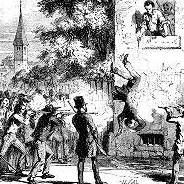
The Murder of Joseph Smith
Brigham Young by Charles Roscoe Savage, 1855.jpg
Governor Brigham Young
Millard Fillmore by Brady Studio 1855-65-crop.jpg
President Fillmore

Colonel Johnston

Still a subject for arguing historians looking for a smoking gun, it is unknown whether Brigham Young orders what follows next, or whether over-zealous leaders of the LDS Church in the southern portion of the territory overreact to the unwanteds passing through, in Salt Lake City the wagon train party is refused stock and pushes on towards California, stopping to rest in what is now Washington County, Utah, in a high grassy valley with good grazing and water on the Spanish Trail called Mountain Meadows.  There, they are suddenly attacked by Paiute Indians ... who aren't Paiute Indians at all (only a handful of Paiutes actually participate in the attack), but are actually members of the Nauvoo Legion disguised as Native-Americans ... somewhere a decision has come down to destroy the Baker-Fancher Party (and pocket all their belongings).
Mountain Meadows, Utah

The roughly 120 members of the wagon train though surprised, fight back for five days (in the opening skirmish, seven emigrants die and another sixteen are wounded) as their food and ammo supplies are used up, fighting for their lives behind a circle of turned over, chained together wagons and hastily dug ditches.  Knowing they are running out of time to destroy the wagon before Federal troops might arrive in the area, and unwilling to risk losing more lives in a frontal assault on the pioneers' position, betrayal evil becomes the Mormon attackers' end game. On Friday morning, 9/11/1857, local Indian agent, militia officer, and good friend of Brigham Young, 44-year-old John Doyle Lee, carrying a white flag, rides into the circle of wagons and offers the pioneers a way out of their predicament ... in exchange for leaving their livestock and the supplies they have left to the natives, the party will be led the 36 miles back to the safety of Cedar City under the protection of the Mormon militia.  Deal struck, the group marches out of its defensive position and into Hell!
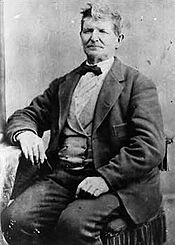
John D. Lee.jpg
John D. Lee

No witnesses, no reprisals, in less than two miles the pioneers are ambushed by hidden Mormon militia on the trail.  Bullets, arrows, knives, and rape, when the butchery of the lied-to pioneers ends, every man, woman, and child over the age of seven is a corpse.  Of those under seven, it is deemed they are too young to testify, unworthy of being murdered, and so seventeen youngsters are spared ... spared to undergo name changes and be sold into Mormon families.  Over, the meadow is filled with dead bodies that their murderers hastily cover with any nearby covering that can be found without a lot of physical energy being extended ... which weather and animals soon remove.  All participants sworn to secrecy against the promise of death for talking, the cattle and other livestock go to the Paiutes in the vicinity, and members of the Mormon militia take everything else.

Slaughter

Nancy Sephrona Huff - Survivor -
4 at the time of the massacre
Animal Chow at Mountain Meadows

Too many involved as predators or prey to keep the massacre a secret, as planned, when word finally leaks out about the massacre, it is blamed on the Paiute Indians.  Blame begins to shift however after the Utah War between the territory and the Federal government ends and an 1859 investigation into the tragedy is begun by U.S. Army Brevet Major James Henry Carleton, who leads a party back to the site and buries 34 of the exposed bodies of the dead in a pit under a cairn of rocks topped by a large cedar cross (Carleton will state of the scene, that it is "... a sight which can never be forgotten).  Progress towards the truth however becomes progress delayed when the American Civil War begins in 1861.  

First Memorial

Interest renewed in getting to truth and bringing to justice those that planned the massacre with the war's conclusion, in 1874, nine members of the Mormon militia, John D. Lee, Isaac Haight, John H. Higbee, Philip Klingensmith, William Dame, Will Stewart, Ellott Willden, Samuel Jukes, and George Adair, Jr. go on trial for multiple murders.  Trials conducted almost entirely in front of Mormon juries, only John D. Lee is found guilty and sentenced to death.  Utah law allowing the executionee to chose between being hung, shot, or decapitated, Lee chooses a firing squad for his exit, which takes place after appeal attempts are denied, on March 23, 1877.  He is the only person ever punished for the massacre, and goes to his grave proclaiming his friend, Brigham Young had nothing to do with the slaughter (he does take a parting shot at his former friend though for not doing more to help spare him from death, Lee's last words are, "I do not believe everything that is now being taught and practiced by Brigham Young.  I do not care who hears it.  It is my last word, I have been sacrificed in a cowardly, dastardly manner.").  Dead at the age of 64, he leaves behind 19 wives and 56 children!
Almost Time To Go - Lee Sits Next To His Casket At Left
Firing Squad
Goodbye Lee
Leslie's Monthly Magazine - 1877 - 
Article Entitled "Justice at Last"

A blot in American and Mormon history, ghosts restless, in 2011, pushed forward jointly by descendants of the murdered and the LDS Church, the site is designated a National Historic Landmark!
Image result for mountain meadows massacre now
Rebuilt Memorial Today
Image result for mountain meadows massacre now
Memorial

Tuesday, September 8, 2015

ASSASSINATION, SOUTHERN STYLE

9/8/1935 - Festering political bitterness over the direction Louisiana is taking under the forceful leadership of Senator Huey Long, known as "The Kingfish," and his controversial "Share Our Wealth" program (a wealth redistribution plan running under the motto "Every Man a King" that features a net asset tax on corporations and individuals that seeks to simulate the economy by public federal and state spending on public work, schools, colleges, and old age pensions as overseen by Long and his Democrat cronies ... SOUND FAMILIAR?), explodes into violence and death in Baton Rouge.
Huey Long Memorial Picture
Senator Long

Becoming a lawyer after spending less than a year studying for the bar at the University of Oklahoma School of Law at Norman and the Tulane University Law School in New Orleans (arguing before the Supreme Court in 1922, Chief Justice and former United States president William Howard Taft will describe Long as one of the finest legal minds he has ever encountered), Long begins his political career at the age of 25 as an elected member of the Louisiana Railroad Commission (running on an anti-Standard Oil platform).  In 1924 he runs for governor of the state and loses, but uses the experience to successfully become the head of Louisiana in 1928 ... and then uses that victory as a springboard into the United States Senate in 1930.  In Washington D.C., President Roosevelt will eventually become a Long enemy and call him, "... one of the two most dangerous men in America" (the other is General Douglas MacArthur). 
Image result for huey long
Long

But all is not peaches and cream in the Bayou State, and a large number of citizens hate Long with a passion for his wealth redistribution, crony contracting, firing hundreds of opponents in the state's bureaucracy (and their relatives), mandatory payments into Long's political war-chest, bribery, misuse of state funds, forcing companies wanting to do business in the state into taking out ads in the newspaper Long owns, creating a private police service answerable only to the governor called the Bureau of Criminal Identification, opposing the Federal Bank, his proposal to put a cap on personal wealth at $50 million, and crushing his rivals by any means necessary as virtual dictator of Louisiana (not happy that his orders are not being followed, Long will order the state's National Guard to surround the State Capitol until he gets his way).  By 1935, after an attempt at impeachment has failed, political opponents are openly talking armed insurrection and assassination, and Long begins moving about the state in the company of dozens of armed bodyguards.
Image result for huey long
Long 

Business as usual, a month after announcing he will run for president against FDR, in early September of 1935, Long is in Baton Rouge to personally orchestrate the destruction of a long-time enemy, Judge Benjamin Henry Pavy by changing the boundaries of the region that voted the judge into office (the parishes of St. Landry and Evangeline).  Shorting after the bill passes the special session, shortly after 9:00 in the evening, Long decides to take a break from his arm twisting (the measure redistricting Judge Pavy's locale eventually passes, and sure enough, Pavy is out of a job in 1936 when Louisiana next goes back to the polls) and steps out into the corridor of the Capitol for a breath of fresh air.  Waiting there to plea that Judge Pavy be allowed to continue practicing law as a Louisiana judge is the man's son-in-law, a member of Kiwanis International and the 1933 president of the Louisiana Medical Society, 29-year-old Dr, Carl Weiss.  
Judge Benjamin Henry Pavy  
Judge Pavy
Dr. Carl Wiess.jpg
Dr. Carl Weiss

Frustrated that he has tried to talk unsuccessfully to Long three times during the day, upset at the plan to make a Democrat district Republican, and incensed that Long has insinuated that the Pavy Family has African-American tainted blood in its past (Long refers to "coffee blood'), when Long enters corridor, Weiss is beyond chatting. Dressed in a white summer suit meant to negate some of Louisiana's muggy heat, stepping out from behind the marble column he has been waiting behind, from a distance of only four feet, Weiss forgets about his young bride, their 3-month-old child, and the surgery he is to perform the next day, and pulls out a .32 caliber pistol and shoots Long once in the abdomen ... and one is all he gets. Don't mess with The Boss, Long's contingent of gun thugs shoves Weiss away after the first shot, draw their own weapons and then blast the doctor into Kingdom Come ... hitting their target 62 times before stopping to access the situation and reload.
Newspaper Artist Rendition
Image result for huey long assassination
Another Rendition
Image result for huey kingfish long assassination
Dead Doctor

Caught by the single slug Weiss fires, Long is rushed to a nearby hospital and is being operated on by 11:00 that evening.  Doctors sew up his perforated colon and it is believed that Long will recover from his wound ... unfortunately for Long though, damage hasa also been done to the politician's kidney, and 30 hours after being holed, Long passes away.  His last words are, "God don't let me die.  I have so much to do!"

Laying In State
Image result for huey long assassination
Funeral Crowd

Larger than life while in action, Long also has the big funeral he seems to deserve ... after laying in state in the State Capitol rotunda before over 200,000 visitors, dressed in a black tuxedo, the Louisiana politician goes to his rest in a casket made of bronze with a copper inner liner and glass lid before thousands of mourners ... Airline Highway between New Orleans and Baton Rouge suffers a bumper-to-bumper traffic jam, airplanes circle overhead filled with cameramen recording the event for posterity, and every available flower in Baton Rouge and its vicinity are sent to the funeral to mark the somber occasion as Long is buried on the grounds of the new State Capitol he had championed (a large statue at his grave depicts the man's accomplishments).  
Image result for huey long's grave
Long's Grave
Image result for huey long's grave
Long's Statue
At the Assassination Site - Circles Mark the Spot!

And of course, as things seem to go when big figures suddenly exit history's stage, conspiracy theories start being bandied about almost immediately relating to Weiss being unarmed, and that Long's death is actually the result of the poor aim of an over zealous bodyguard (no resolution is ever forthcoming as evidence is lost or never found involving the murder weapon and whether the killing bullet was a .32 caliber round, or a .38 caliber slug like those used by the bodyguards), or that the doctor's working on Long butchered his operation and caused the infections that take the politician).  The only fact certain is that Long was shot and died, and that even now, 80 years after the event, his influence on the peoples of Louisiana is still immense!
Long Postcard

Thursday, September 3, 2015

A DYING DAY IN DELTA

9/7/1893 - Once called Uncompahgre after the nearby river, the western Colorado town of Delta (so renamed for being located near the delta of the Uncompahgre and Gunnison Rivers) wakes to what its citizens believe will be just a normal, though hot, Thursday.  They are right about the weather, but dead wrong, literally, about the day being normal ... not when the town will have to endure a visit from the outlaw family composing the McCarty Gang.
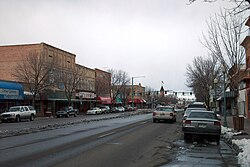
Main Street
Delta, Colorado - Main Street - Current

Composed of a group of Mormons gone bad after their mining and ranching ventures fall apart, the gang for the Delta job consists of Tom McCarty, his younger brother Bill, and Bill's 17-year-old son, Fred. Bill and Fred are relative neophytes to the outlaw game, but big brother Tom has been a bandit for over a decade, teaching Robert LeRoy Parker the trade before the youth becomes history's Butch Cassidy, and participating in robberies which include taking down a Denver bank for over $10,000 in cash with a bottle of water he pretends is volatile nitroglycerin, hitting the San Miguel County Bank of Telluride, Colorado with Matt Warner (Tom's and Bill's brother-in-law) and Parker for over $20,000, raiding a mining camp in Sparta, Oregon, taking the receipts of a circus playing Moscow, Idaho, lifting $5,000 in cash from the bank of Summerville, Oregon, hitting the Wallowa National Bank in the town of Enterprise, Oregon, and attacking Roslyn, Washington's financial establishment.  Good scores, but when the money from their criminal endeavors peters away, and over $40,000 in loot is used to hire a lawyer to spring two other wayward family members from jail, a new caper is needed ... one that the Farmers and Merchants Bank in the town of Delta seems to fit perfectly.
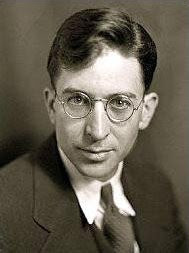
Tom McCarty

Originally built in 1828 as a trading post and fort to serve the local Ute Indians, and keep them under control, Delta becomes an incorporated town in 1892 ... a town of several hundred individuals, on the day of the McCarty raid, the town is made up of three hardware stores, two saloons, three lawyers, two banks, over two dozen other businesses, an assortment of homes, and a sharp-shooting merchant from Kentucky named William Ray Simpson.
Delta, Colorado - Bank Is Just Out Of Photo To The Left
Simpson

Pretending to be in the market for ranch lands, the trio of outlaws spends a few days casing the bank and region, chatting with the owner of the livery stable where the keep their hoses while in town, savoring the steaks at the Bricktop restaurant and sampling the various beverages in the Palace Sampling Rooms (otherwise known as the Steve Bailey Saloon) ... it is even said afterwards that Fred takes time out from casing the bank to play marbles with a bunch of local boys.  On the morning of the robbery, the group rides into town from their camp ground in nearby Escalante Canyon and stop in the alley behind the targeted bank.  Tom stays with the horses, taking pulls from a flask of whiskey while watching the street for trouble.  Bill and Fred pull their revolvers, step inside the bank, and announce they want all the money in the establishment.  It is approximately 10:15 a.m.
Single-shot .40 caliber Sharps rifle

Inside the bank two employees are working ... cashier Andrew Trew Blachley, and teller and assistant cashier H. H. Wolbert.  Also in the bank, using a space in the back as a law office is attorney W. R. Robinson. Greeting the outlaws when they step inside, the bank's safe stands wide open for plundering.  Wolbert and Robinson are cowed by the pistols pointed their way, but for some mysterious reason, Blachley, a founder of the bank and father of nine sons is having none of it, and instead of complying with the bandit's demands, starts screaming that the bank is being robbed.  Told to shut up, when the cashier doesn't, a nervous Fred shots the man in head, killing Blachley instantly (his widow will give music lessons to support her family ... and all nine boys grow up to be prominent businessmen in the region).  Knowing the shot has probably alerted local folks that their bank is being robbed, the thieves grab a bag of gold coins and around $1,000 in cash, and then run out of the back of the bank through the lawyer's office space.  Losing most of the money as they mount up with Tom, the trio spur their horses and head out of town at a gallop.

Blachly

Across Main Street from the bank, while the robbery is taking place, Simpson is sitting in the back of his hardware store cleaning his Sharps rifle ... incredibly, the night before he has had a nightmare about the store being robbed, and just in case there might be a kernel of truth in the bad dream, he is in the process of cleaning his weapon and telling his father about the evening thoughts that came his way when shots ring out across the street.  Up in an instant, with rifle and rounds in hand, Simpson sprints outside and immediately realizes the bank is being robbed and the bandits are escaping through the alley. Loading his Sharps while running to the corner of Main Street and Third Street, the merchant arrives at the position just as the bandits ride by.  Rifle up and the nearest outlaw targeted, Robinson sends a slug Bill's way that takes off the top of the desperado's head (a major chunk of his brain is found twenty feet away from his body, and afterwards, when victory pictures are being taken of his corpse, a hat has to be placed on his head to prevent his cranium from separating into two grisly pieces).  One down, three badmen to go, Simpson runs further down the street, reloads, and fires again ... and down goes another outlaw, this time the teenager Fred, killed by a piece of lead that explodes into the base of his skull.  Tom McCarty's turn next, the distance his galloping horse is able to obtain is just enough so that the two rounds Simpson sends the gang leader's way both miss ... by an inch, McCarty feels the breeze near his brain as the bullets blow by.
Image result for delta colorado - 1893
Bill and Fred McCarty After ... "V" Under The Hat Is
Where Bill's Head Use To Be!

Robbery over, the dead father and son are taken to the Gale Brothers Undertaking Parlor for burial prep and some nice souvenir photographs (stood up against boards, Fred is stiff enough to not require holding, but Bill droops all over the place and has to be secured to his picture board with several ropes).  Pictures taken, the two men are then placed in one big box and buried in the town's Potter's Field.

Outlaw Marker

As for Tom McCarty, a change of horses gets him away from the posse of Delta Sheriff W. S. Giradet with $100 in his pocket to show for his lousy morning in town losing his brother and nephew ... and into the land of mystery, myths, and tall tales.  Criminal days over after Delta, one story has him shot to death over a game of cards in the Bitterroot country of Montana in 1900, another being shot near Green River, Utah, and he is also said to die in Skagway, Alaska during the area's gold rush, at the home of his son Lew in California, in Wallowa County, Oregon, and as a sheepherder outside of Rosebud, Montana.

Delta, Colorado - 1910

9/7/1893 ... the town of Delta learns up close and personal what the term "Wild West" really means!

Wednesday, September 2, 2015

PEACE ON TOKYO BAY

Image result for japan unconditional surrender
Big Headlines!

Finally, the long nightmare comes to an end after six years of destruction and death (over 55 million people will lose their lives in the conflict) ... 9/1/1939 to 9/2/1945 ... WWII finishes on the deck of the American battleship, USS Missouri, in Tokyo Bay, Japan (the Missouri is chosen as the site to negate naval anger that the ceremonies are going to be presided over by the Army when so much of the Pacific war was fought at sea ... and to honor the home state, Missouri, of the current President, Harry S. Truman).

Japanese representatives

Not wanting any more of the "OH SHIT" radioactive quitting time medicine dropped first on Hiroshima, and then Nagasaki, the Japanese agree to the signing of a written agreement between the parties concerned, bringing the conflict to an end ... a signing ceremony aboard the victorious Missouri.
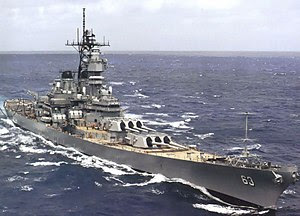
Missouri post refit.JPG
USS Missouri

Short and bittersweet, missing the malice often present when victor and loser come together, before an assemblage of dignitaries, the crew of the battleship, and over 200 newspapermen and photographers, the signing ceremony takes only brief twenty-three minutes to complete on a cool and grey morning.  Representing the Emperor and his government, after the playing of the Star Spangled Banner, Foreign Minister Mamoru Shigemitsu (wearing yellow gloves and a formal silk top hat) and General Yoshijiro Umezu, Chief of the Army General Staff, sign the surrender of Japan shortly after 9:00 in the morning (Umezu doesn't bother to sit when it comes his turn to autograph the document).

Shigemitsu Signs

Japanese autographs obtained, the next person to put their John Hancock on the instrument of surrender is U.S. General of the Army, Douglas MacArthur, the Commander in the Southwest Pacific and Supreme Commander for the Allied Powers.  Using six different pens (American General Jonathan Wainwright, who surrendered the Philippines, and British Lt. General Arthur Percival, who surrendered Singapore each get a pen, another pen goes to West Point, a MacArthur aide gets one, MacArthur keeps one, and the only pen that isn't black, but plum-colored, goes to MacArthur's wife), MacArthur signs the document at 9:08 a.m., then it is the turn of representatives of the Allied powers ... Fleet Admiral Chester Nimitz signs for the United States, General Hsu Yung-chang follows for China, Admiral Sir Bruce Fraser makes his marks for the United Kingdom, Lt. General Kuzma Derevyanko goes for the Soviet Union, General Sir Thomas Blamey signs in the name of Australia, Colonel Lawrence Moore Cosgrave puts his name to paper for Canada, General de Corps d'Armee Philippe Leclerc de Hauteclocque (Can you see him going first and there being no more room for anyone else to sign?) represents the French, Lt. Admiral C. E. L. Helfrich signs for the Netherlands, and last but not least, Air Vice-Marshal Leonard M. Isitt closes things up before 9:30 in the morning by signing for New Zealand (the table used is battered felt-covered piece of furniture from the battleship's mess hall).

MacArthur Signs
Japan Instrument of Surrender
Instrument of Surrender - Japanese Copy
Jonathan M. Wainwright.jpg
Wainwright
Arthur Percival.jpg
Percival
The West Point Pen


Overseeing the ceremony are two American flags.  The large banner that flies from the Missouri's mast flew over the Capital in Washington D.C. on December 7, 1941, when the war starts for the United States with the Japanese attack on Pearl Harbor.  And another special banner is also present for the ceremonies ... returning to Tokyo Bay from its honored spot at the Naval Academy Museum, for the surrender ceremony the Missouri also wears the same flag that Commodore Matthew Perry (and MacArthur is a direct descendant of the Perry Family, the Commodore being a distant cousin) bore on his flagship when he opened Japanese ports to foreign trade 92 years before (in photographs of the event it appears to be flying backwards because of the protective backing it is sewn on to to protect how fragile the flag is).

Perry Flag in Background

Signings gathered, MacArthur intones, "Let us pray that peace be now restored to the world and that God will preserve it always.  These proceedings are closed."  But really, not quite.  As the Japanese depart the Missouri, MacArthur turns to Admiral William "Bull" Halsey and asks, "Bill, where the hell are those airplanes?"  And as if on cue, the clouds over Tokyo Bay parted and the sun came out for the first time in the day, illuminating Mt. Fuji in the distance ... and reflecting off the bodies of 1,900 Allied planes flying overhead in a massive victory salute.  WWII is over!

The Flyover Begins
Looking Down on the USS Missouri

70 years ago today ... 9/2/1945 ... the guns go quiet!

Surrender!