Sunday, October 30, 2022

SKY DOG TO THE SKY - 10/29

10/29/1971 - On the cusp of becoming a major star in the world of musical entertainment, tragedy takes away guitar playing marvel, Duane Allman, following a motorcycle accident in the town of Macon, Georgia.  The guitarist is only 24 years old at the time of his death.  

Skydog

Named for Revolutionary War hero, General Francis Nash, Nashville, Tennessee, the town that will one day be known as "Music City," becomes the home of WWII veteran Willis Allman (he, along with his younger brother, Howard, will be among the thousands of Allied soldiers that land on the beaches of Normandy, France on D-Day, June 6, 1944) and his wife, Geraldine Robbins Allman following Allman's return from the war.  Remaining in the service as a recruiting officer stationed in Nashville, the Allman Family welcome into their ranks a third member, Howard Duane Allman, on November 20, 1946.  A year later, on December 8, 1947, the family expands again when Gregory Lenoir Allman is born.  In 1949 the family pulls up stakes when Willis is sent to the Fort Story army base at Virginia Beach, Virginia.  Sadly, while away celebrating Christmas with her parents in North Carolina, the young brothers (Duane has been three for all of a month) and Geraldine lose Willis on December 26th, when the second lieutenant is shot in the chest by a fellow veteran in East Ocean View, Virginia, during a failed robbery following a night of holiday celebrating bar hopping with a buddy.  For the next few years the threesome live with Willis' parents in Nashville.  The small family is fractured once more in 1955 when Geraldine decides to use military benefits available to Army widows to attend college to receive a degree in accounting (a higher paying career than continuing to work as a secretary), while using another widow benefit to send her sons to the Castle Heights Military Academy of Lebanon, Tennessee (roughly 30 miles east of Nashville), while she concentrates on her studies.  Barracks, military uniforms, studies (Duane enters as a fourth grader, while Gregg goes in as a third grader, with Gregg on the top floor of the school's Hooker Hall and Duane assigned a space on the Hall's first floor) , discipline, and being separated from family not to the liking of the wild youngsters from Nashville, the threesome are reunited two years later when Geraldine, now a certified public accountant begins her new career and sets up shop in Daytona Beach, Florida.
Geraldine & Willis
The Allmans - 1947
With Grandma
Military School - Gregg & Duane

Except for when Duane is beating on his brother over one thing or another (per Gregg, the muggings happen almost everyday until they both become teenagers sharing a deep passion for music), the boys flourish in their new home, filling their days with kid adventures, trips to the beach, and summer visits to their loving grandparents.  The Daytona 200 motorcycle race celebrating its 20th anniversary in 1957 (the race takes place just south of the Allman's abode near the Ponce Inlet), Duane develops his life long passion for motorcycles and lots of speed, soon acquiring a tiny Harley 165, which he drives into the ground.  The first Allman to be hit by musical lightning however is Gregg, who after being taught how to play "Comin' Around the Mountain When She Comes" by one of his grandmother's neighbors during a summer visit, returns to Daytona in need of an axe of his own ... which he procures in the form of a brand new Sears Silvertone with proceeds from his paper route and ninety-five cents from his mother.  His motorcycle in pieces, Duane is soon hooked on plucking his brother's new possession and the brothers soon have something new to fight about, at least until bringing peace to her home, Geraldine buys her oldest son a cherry-red 1959 Gibson Les Paul Junior electric guitar (to keep the boys from fighting over Gregg's newest guitar, and electric Fender Musicmaster).  And so the boys begin playing, playing, and playing some more, with both left-handers teaching themselves to play right-handed.  Inhaling the rhythm and blues, country, and rock & roll of the region, Duane tells his brother they have to be professional musicians too after the brothers attend a concert in Nashville (during another visit to their grandparents' abode) feature the guitar stylings of Jackie Wilson, B.B. King, and Johnny Taylor.  Soon both brothers tire of school and just want to play music (they are sent back to military school as their grades begin slipping ... Duane will drop out of school (he also becomes a father for the first time, having a deaf little girl with his high school sweetheart Patti Chandlee that the pair of youngsters put up for adoption) and Gregg will graduate from Seabreeze High School in Daytona ... and both boys will begin boozing and dabbling in drugs, playing with and forming various bands ... the Y Teens, House Rockers, the Escorts (who actually open a concert for the Beach Boys in 1965), the Allman Joys, and Hour Glass (which records two albums for Liberty Records of Los Angeles, that both fail to register with the public).
Harley 165
1959 Gibson Les Paul
Hour Glass Trying To Be The Beatles - Duane 
Strumming And Gregg Singing

Playing way beyond good by 1966, while seeking the right vehicle to bring together his musical vision of the blues mixed with country and rock, Duane begins taking session work on other artist's recordings despite being unable to read charts (instead, he has whatever song he is working on played for him and memorizes it after only one listen), beginning with work at Nashville's RCA Studio "B" (on The Vogues first album, produced by Tony Moon) before moving on to FAME (Florence Alabama Music Enterprises) Studios of Muscle Shoals, Alabama, where he pitches a tent in the parking lot of the studio and befriending owner Rick Hall and legendary bluesman, Wilson Pickett.  During a lunch break from recording his next album for Atlantic Records in 1968, Pickett is taught the Beatles' "Hey Jude" by Duane, and then is invited inside to play on the track, which becomes the name of Pickett's next hit album.  It also serves as a doorway to other session work as other producers and artists want Allman on their albums (among his new admirers are Atlantic Records executive, Jerry Wexler, and the world's then reigning guitar God, that "Creem guy" as Duane will state, Eric Clapton, who is astonished by Allman's lead break at the end of the tune).  Among those that will benefit from working with Duane at Muscle Shoals will be Clarence Carter, King Curtis, Aretha Franklin, Laura Nyro, Otis Rush, Percy Sledge, Johnny Jenkins, Boz Scaggs, Delany & Bonnie, Doris Duke, and jazzman Herbie Mann (impossible to count, during his Allman Brothers band days, he often just stops in to see who is recording and adds little bits of this-and-that to numerous recordings that go uncredited).  
FAME Studio
Pickett & Duane
Duane & Hall

Another seminal moment of 1968 for Duane is Gregg's story of how his brother discovered slide playing.  Visiting his brother in Los Angeles as Hour Glass crashes and burns, Gregg talks Duane into going horseback riding, a ride that does not go well for the guitarist, who is violently thrown on his left elbow crossing a road.  Absolutely pissed with his younger brother as the architect of the disaster (Duane won't talk to his bother for weeks), on Duane's birthday, Gregg leaves a glass bottle of Coricidin and bluesman Taj Mahal's debut album on his brother's front porch, then rings the doorbell and runs off.  Happy Birthday indeed and another tempest between the boys stilled, two hours later Duane is on the phone to Gregg.  "Baby brother, baby brother, get over here now," Duane tells his brother, and complying immediately of course, Greg learns that his brother has poured the pills out, steamed off the bottle's labels, and placing the empty container on his ring finger, can now play slide to Mahal's version of "Statesboro Blues (matching the slide musings on the recording of Jesse Ed Davis).  As Gregg will later state, "He just picked it up and started burnin'.  He was a natural."  And just like that slide guitar becomes Allman's latest and last musical obsession (while working the Coricidin bottle over his guitar, Allman fingerpicks with the thumb, index, and middle finger of his other hand, picking with one of the three digits while muting with the other two) as he plays and plays, developing an electric bottleneck sound that will soon become known as Southern Rock, with his playing influencing Dickey Betts, Derek Trucks, Gary Rossington, Joe Walsh, Don Felder (he is said to have the taught his technique to the future Eagles guitarist during a late 60s stop in Gainesville, Florida), and countless others (of course there are other stories of how Duane learns how to play slide guitar, but I like Gregg's the best).
Taj Mahal & Jesse Ed Davis
Coricidin Circa 1968
Duane Playing Slide

Meanwhile, Duane is still working on putting a rock band of musicians together with improvisional chops who can play a mélange of blues, rock, jazz, and country in the unusual format of having two drummers and two lead guitarists.  And of course, everyone must get along (around a campfire one evening, the band will all take the musketeer vow of "one for all, and all for one").  Led by Duane, the group that will come to be known as the Allman Brothers Band (thankfully, it quickly rejects the moniker, "Beelzebub").  Emerging from rehearsals and free concerts at the Willow Branch Park in Jacksonville, Florida, the band featured Duane on lead and slide guitar, Gregg on vocals and keyboards (and writing new material), Dickey Betts on vocals, lead guitar (and also writing new songs), Berry Oakley on bass guitar, Butch Trucks on drums, and Jai Johnny "Jaimoe" Johanson on drums.  Shortly after officially debuting on March 30, 1969 at the Jacksonville Armory and signing a recording contract with Capricorn Records (a subsidiary of Atlantic Records), the group sets up its base of operations in Macon, Georgia (Capricorn's home, the record label and the band will transform the sleepy small town of white rednecks into a vibrant musical location of long hair musicians, bikers, and multiple races), first residing in the apartment of their future road manager (the communal home of the band will soon come to be known as "The Hippie Crash Pad," and Duane will be called simply "Dog" by his companions, and "Sky Dog" by the fan base that begins to grow around his virtuoso guitar playing), Twiggs Lyndon, then on a farmhouse on a lake just outside of the town (the rent is $165 a month and the location is dubbed "Idlewild South" for all airport-like the comings and goings that take place at the location), before eventually settling into a Tudor Revival home in Macon of 18 rooms and 4,440 square feet that is rented from Day Realty for $225 a month, which the group simply calls, "The Big House" (inside the home, the future hit songs "Blue Sky," "Ramblin' Man," "Ain't Wastin' Time No More," and "Midnight Rider" will all be written and eventually the space is made into a museum honoring the band).  Coming together through hours and hours of playing at local venues (they also play two Boston gig, opening for The Velvet Underground at the end of May), Capricorn, and Twiggs' apartment complex, enjoying communal meals at H&H Soul Food Restaurant (where the cook and owner, "Mamma Louise" Hudson lets the broke band to run a tab), and hanging out at the town's Rose Hill Cemetery drinking, taking drugs, and writing songs (Dickey Betts composes one named after a tombstone that grabs his attention one evening, "In Memory of Elizabeth Reed"), the band is ready to record their first album in August of 1969 (in 1969, Duane also becomes a father for the second time, siring a baby daughter named Galadrielle with his girlfriend, Donna Roosman).  
Twiggs Lyndon
Idlewild South
Soul Food Time
Donna & Galadrielle

Brought to New York City to record at the Atlantic Records studio, giving house engineer Adrian Barber his first producing credit (producer Tom Dowd, a veteran with names like Ray Charles, The Drifters, Bobby Darin, John Coltrane, Charlie Parker, Creem and others on his resume, is scheduled but becomes unavailable during August of 1969)  the group enjoys New York City (getting there though is slightly harrowing as the truck carrying their gear breaks down in South Carolina) and putting down the tracks that will be their first album, named after themselves as so many first albums are, The Allman Brothers Band.  Taking only two weeks to record, the album features 33 minutes and 18 seconds of music in the form of seven songs ... "Don't Want You No More," "It's Not My Cross To Bear," "Black Hearted Woman," "Every Hungry Woman," "Dreams," and "Whipping Post."  Artwork for the album consists of photography of the band taken by Stephen Paley taken around Macon, the entrance to the College House on the front cover, and the Bond Tomb at the Rose Hill Cemetery on the back, and inside, a special treat to draw attention to the group, a shot of the men naked in a brook (privates covered by standing behind Oakley, only Trucks isn't sitting in the water, compliments of cutting himself earlier in the day and having to keep his thirteen stitch wound dry).  Released on November 4, 1969, the band is soon on the road in support of the album and though crowds react enthusiastically to the material, initial sales are mediocre (less than 35,000 copies) and the record only reaches #188 on Billboard's Top 200 Pop Albums chart.  Music critics however like what they hear, with Lester Bangs of Rolling Stone Magazine calling the record "... subtle, honest, and moving," and the band that has "... transcended their schooling to produce a volatile blues-rock sound of pure energy, inspiration, and love." 
Debut
The Buck Naked Boys - Trucks Standing, Oakley, 
Johanson, Gregg, Duane, & Betts

The vitally important year of 1970 begins with the group performing at the Electric Factory in Philadelphia and ends with them on the West Coast performing at the Fillmore West in San Francisco and then the Whiskey a Go Go in Los Angeles.  Traveling from this venue to that, in first a Ford Econoline van and then a Winnebago the group calls "The Wind Bag," the group builds it's fan base, performing over 300 times in search of stardom.  And with the traveling on the road comes the usual rock and roll madness of booze and drugs (following a well trod path to destruction, Duane has moved from sniffing clue as a teenager to going on to marijuana, speed, psychedelic mushrooms, cocaine, to heroin ... on October 29th, after a concert in Nashville, the band almost loses it's leader when Duane overdoses and is taken to a local hospital where doctor's expect him to perish, but instead he makes a miraculous recovery that some say comes by way of Berry Oakley praying to God to give the guitarist one more year to live so he can fulfill his dream of musical stardom), and with the Allman Brothers Band there is even a murder, with road manger Lyndon stabbing Buffalo, New York club owner Angel Aliotta to death over $500 owed the band (incredibly, Lyndon will be found not guilty by reason of insanity as his defense lawyer sways the jury with a defense that being out on the road with the band drove the travel manager momentarily mad).  The only time the band seems to slow even a little is when over the course of parts of six months (February to July), they meet up with producer Tom Dowd at multiple studios and record material that will become the seven songs of their second album ("Revival," "Don't Keep Me Wonderin'," "Midnight Rider," Hootchie Coochie Man," "Please Call Home," and "In Memory of Elizabeth Reed).  Incorporating the new material into their live performances, the second album sells more copies than the group's debut, rising to #38 on Billboard's album chart, but again disappointing Duane that doesn't chart even higher.
The Whiskey
At Atlanta Stadium - June, 1970

Guitar heaven, attending one of the groups many 1970 concerts with members of Derek and the Dominos (this one in Miami) is Eric Clapton.  The two men meet after the concert and an instant bond (the pair will soon being calling each other "brothers" and "soul mates") develops as the musicians and the members of their bands retire to Criteria Records and spend the night trading licks, telling stories, and listening to tapes of what will become the Idlewild South album.  Impressed with Duane's slide playing, Clapton asks Allman to sit in on the sessions needed to complete what will become the album "Layla and Other Assorted Love Songs," which Duane does, contributing some of his best known playing to the record (Duane will state that to tell who is playing what on the album is very simple, Clapton is on a Fender creating a sparkling sound, while Allman is producing a "full-tilt screech" with a Gibson guitar) so much so that Clapton offers him a place in the band.  Though Duane never leaves his own group, he does miss four Allman Brothers Band concerts while recording eleven of the fourteen songs on the album with Clapton (the rock classic, "Layla," to which Duane contributes mightily will be chosen by the Rock and Roll Hall of Fame as one of its 500 Songs that Shaped Rock and Roll, is ranked #27 on Rolling Stone's The 500 Greatest Songs of All-Time, and was placed at #118 on the Songs of the Century list of the Recording Industry Association of America) and performs as a live Domino at the band's gigs on December 1, 1970 at the Curtis Hixon Hall in Tampa, Florida, and the next day at the Onondaga County War Memorial Stadium in Syracuse.
Eric & Duane
Layla and Other Assorted Love Songs

Still pushing their music seeking commercial success, 1970 ends for the Allman Brothers Band with two December concerts at the Fillmore East opening for Canned Heat, then holiday concerts in Washington D.C., Boston, home in Macon, and then in New Orleans.  Still audience hunting in January of 1971, the band plays to larger and larger crowds of raving fans at venues in Statesboro, Georgia (opening of course with "Statesboro Blues"), Boone, North Carolina, Atlanta, Pittsburgh, and Port Chester, New York, before ending the month on the West Coast opening for Hot Tuna (an offshoot of the Jefferson Airplane) in a series of concerts at Bill Graham's Fillmore West in San Francisco.  And somewhere along the way a light bulb goes off in Duane's head of escaping the grind of studio work producing another album by recording a series of their live, crowd pleasing performances that are to take place in march at a favorite location of the band ... Bill Graham's Fillmore East in New York City where they are to open for Johnny Winter and the Elvin Bishop Group  (the band is paid $1,250 for each show).  Eureka mixed with kismet, the album that emerges from the concerts consists of 76 minutes and 22 seconds of music on two records (Side One features "Statesboro Blues," "Done Somebody Wrong," and "Stormy Monday."  Side Two is one nineteen minute and six second song, "You Don't Love Me."  Side Three is made up of the tunes "Hot Lanta" and "In Memory of Elizabeth Reed.  Side Four is another single song lasting twenty-two minutes and forty seconds, "Whipping Post.") produced again by Tom Dowd (fresh from escaping a cold European winter, finding out from Jerry Wexler on the day of the first concert that he will be recording the Allman Brothers Band that night from inside a truck housing the Location Recorders' 16-track mobile studio) which one day will be selected for preservation by the Library of Congress for being of "culturally, historically, or aesthetically important."  The breakthrough Duane was hoping for, "At The Fillmore East" (released on July 6, 1971) is now considered to be one of the finest live albums ever recorded (in 2020, The Independent newspaper proclaims it the best live album of all time), is certified gold by October, crests at #13 on the Billboard charts, and eventually becomes the band's first platinum album ... and a bargain for the fans, it is sold as if it is a single disc.  Selling immediately upon release, it also marks the closing days of the band opening for someone else, they are headliners now as The Beach Boys will discover when the Allman Brothers Band closes the Fillmore East for Graham on June 27, 1971.
Bill Graham
Cover Of At Fillmore East - The Allman
Brothers And Their Equipment - Everyone Laughing
Because Duane Is Holding Contraband On His Crotch
Back Cover - Duane's Idea - The Allman Brothers
Band Roadies, The Songs, And Twiggs Lyndon

Following the release and success of At Fillmore East, Duane does what he has been doing for years ... he plays and plays and plays, rides his motorcycle way too fast, and puts excess amounts of booze and drugs into his system.  At the end of June and beginning of July, he does session work on jazz flutist Herbie Mann's album, "Push Push," lending his guitar to six of the seven cuts on the album (he is scheduled to also play on King Curtis' latest saxophone stylings, but the sessions never take place because the horn player is stabbed to death on the mean streets of New York City).  As a member of the Allman Brothers Band, Duane plays gigs with his mates at the Steel Pier in Atlantic City, Tampa, Atlanta, Huntington, New York, two shows in New York City's Central Park, Virginia Beach, St. Paul, and North Baltimore, Ohio, and performs live on WPLJ radio, Tuscaloosa, Alabama, Minneapolis, Tennessee, Ohio, New York, Austin, Texas, the Whiskey a Go Go, and in San Francisco at Bill Graham's Winterland ... more than 70 shows in all with only two weeks off the road in August (and somehow they all find time to record a handful of songs for the band's fourth album ... "Blue Sky," "Stand Back," and Duane's instrumental, "Little Martha).  Recognizing rest is needed from the grind and drug addictions could wipe out the success the band has achieved, at the beginning of October, Duane, bassist Berry Oakley, and roadies Robert "Kim" Payne and Joseph "Red Dog" Campbell all check into the Linwood-Bryant Hospital in Buffalo, New York for rehabilitation from their various addictions.  Clean for the first time in years, Duane and company check out of the hospital at the end of the month and return to Macon in time to celebrate the birthday of Oakley's wife on the 29th, planning to throw her a surprise party at "The Big House."
Push Push
Gregg Allman, Red Dog, And Payne
Oakley

Picked up at the airport by his brother and Gregg's new wife Shelley on the 28th, one year to the day of surviving his overdose, on the last day of life, Friday, 10/29/1971, Duane sleeps in while his new girlfriend, Dixie Meadow, and Linda Oakley's sister, Candace, bake a cake for the party (he has moved out of the band's house and into a home of his own with his girlfriend.  Waking, Duane gets a ride to the town's Harley-Davidson dealership and picks up his fork leg modified Sportster (which has been newly re-tired, front and back), along with the new helmet he has purchased (he immediately cuts the chin strap in two).  Returning to the "Big House," Duane prepares for Halloween by carving pumpkins on the house's porch, before getting on his Harley at half-past five in the early evening to lead a two-car caravan back to his place to pick up the birthday cake for Linda and a passel of gifts (in one car are Dixie and Candace and in the other is Berry Oakley).  Taking a shortcut home, Duane turns right onto Hillcrest Avenue and steps on the gas.  Disaster strikes moments later when an east bound truck in front of Duane begin makes a left turn onto Bartlett Street and comes to a dead stop in the middle of the intersection.  Trying to swing around the obstacle at speed, Duane hits the truck hard ... helmet off from the impact, the guitarist comes off his bike, and after the Harley bounces once, the five hundred pound motorcycle comes down on Duane and the pair skid almost a hundred feet down Hillcrest before coming to rest on the curb, with the bike's motor still racing.  Following only a few seconds behind, Candace and Dixie stop and race to Duane's side (Berry Oakley has taken a different route to Duane's home), with Candace calling for an emergency ambulance (although it actually doesn't take long, she has to visit three nearby houses before finding someone willing to let her call 911).  Unconscious when the ambulance shows up (meanwhile, Candace drives to Duane's house where she gives Oakley the unexpected news and calls Gregg's apartment to tell Allman his older brother is on the way to the hospital ... his abode in close proximity to the medical facility, Gregg runs to the hospital), the guitarist has only superficial scratches and strawberries on his body, but beyond view, has suffered multiple massive internal injuries.  With Dixie at his side in the ambulance, Duane's stops breathing, but is revived by a paramedic who provides mouth-to-mouth resuscitation.  At Macon's Medical Center of Central Georgia, Dr. Charles Burton determines that Allman's only chance is surgery, but his injuries are too severe, and roughly three hours after crashing, the 24-year-old guitarist passes away from a ruptured coronary artery and a severely damaged liver.     
Hillcrest & Bartlett Intersection
The Motorcycle
Big News

Word of the disaster quickly spreading through the musical world, Duane's funeral takes place three days later, on November 1st, at around 3:00 in the afternoon (prior to the official farewell, Allman Brothers Band road manager Willie Perkins ushers Duane's family and closest friends into a side room of Snow's Memorial Chapel where they can view the musician a final time ... when the lid of the casket is finally closed, Duane's beloved Coricidin slide is on his ring finger and a single joint is in his coat pocket).  Behind Duane's flower-covered casket and his guitar case, the Allman Brothers Band, supported by mourning guests Thom Doucette (on harmonica), Delaney Bramlett (of the group, Delaney & Bonnie), and Dr. John perform "The Sky Is Crying, "Key to the Highway," "Stormy Monday," "In Memory of Elizabeth Reed," "Will the Circle Be Unbroken," "Come On in My Kitchen," "Melissa" (Duane's favorite song written by his younger brother), and close with "Statesboro Blues" (with Betts playing Duane's slide intro o the guitarist's Les Paul).  Giving the eulogy, Atlantic music executive and Duane's friend, Jerry Wexler, will sum up Allman's life by stating, "Those of us who were privileged to know Duane will remember him from all the studios, backstage dressing rooms, the Downtowners, the Holiday Inns, the Sheratons, the late nights relaxing after the sessions, the whiskey and the music talk, playing back cassettes until night gave way to dawn, the meals and the pool games, the fishing in Miami and Long Island-this young, beautiful man who we love so dearly, but who is not lost to us, because we have his music-and the music is imperishable."  Services over, Duane is buried at one of his favorite locations, Rose Hill Cemetery, under a stone tablet of the musician's own words:  "I LOVE BEING ALIVE AND I WILL BE THE BEST MAN I POSSIBLY CAN.  i WILL TAKE LOVE WHEREVER I FIND IT AND OFFER IT TO EVERYONE WHO WILL TAKE IT ... SEEK KNOWLEDGE FROM THOSE WISER ... AND TEACH THOSE WHO WISH TO LEARN FROM ME."
Funeral Jam
Duane And Wexler

Their leader lost, the surviving members of the band all agree to continue on as a five-member group, and as such, reach even greater commercial success, starting with the band's fourth album and Duane's last music, "Eat a Peach" (the title comes from Duane's response to a reporter's query about what the guitarist does to bring peace to the world, proclaiming "I'm hitting a lick for peace-and every time I'm in Georgia, I eat a peach for peace."  Produced again by Tom Dowd, "Eat a Peach" features 68 minutes and 42 seconds of new and old music (the band will fill out the package with new studio material and sounds from their famous At Fillmore East stand) with Duane playing lead and slide on all four sides ... "Ain't Wastin' Time No More," Les Brers In A Minor," "Melissa," "Mountain Jam - Part One," "One Way Out," "Trouble No More," "Stand Back," "Blue Sky," "Little Martha," and "Mountain Jam - Part Two."  Released on February 12, 1972, the album will reach #4 on that year's Billboard's Top 200 Pop Albums, will eventually be certified platinum and becomes the group's best selling effort.  Sadly, Berry Oakley will not be around beyond 1972 to enjoy the groups success.  Morose from the loss of his friend and the part he played organizing his wife's surprise party and praying at Duane's bedside, the bassist attempts to chase his sorrows away (and the nightmares he begins to have where the hellhounds of Robert Johnson are on his trail) by consuming massive amounts of booze and drugs.  His woes come to an end on November 11, 1972, just slightly over a year from the time of Duane's death, when riding his Triumph 750 motorcycle in Macon with keyboardist, Chuck Leavell, and roadie, Kim Payne, Oakley loses control of his bike taking a sharp bend in Napier Road (only three blocks from where Allman hit the truck) and crashes into a city bus.  As if mimicking Duane's accident, Oakley is thrown roughly sixty feet down the rode, and like his friend, the cycle lands on the bassist.  Despite hitting the bus, sliding along the road, and cracking his helmet, Oakley appears to only suffer a bloody nose and an assortment of minor cuts and bruises, and close to "The Big House," he gets a ride home rather than going to the hospital.  There, he soon becomes disoriented and in pain, admitted shortly after 3:00 in the afternoon to the emergency room of the same hospital Duane died at, Oakley is pronounced dead less than an hour later, a victim of a hemorrhaging brain caused by fracturing his skull.  Like Duane also, Oakley is only 24-years-old at his passing ... he too will be buried at Rose Hill Cemetery, right next to his friend.
Eat A Peach
The Bad News
Duane's & Berry's Final Resting Places

So much promise lost forever on a very sad day in 1971, Duane (and Berry) leaves way too early and the world is a lesser place for the music that is lost ... but the world also was blessed by the music that was created, music that remains a talismans that can transport the listener back to a time when sweet sounds and the smell of freshly picked peaches filled the southern air.  Rest in Peace, Skydog ... you are remembered and still missed.
Fishing
On The Road
Playing
And Playing
And Playing


.      


   .


Tuesday, September 20, 2022

ACE OF ACES - ERICH HARTMANN

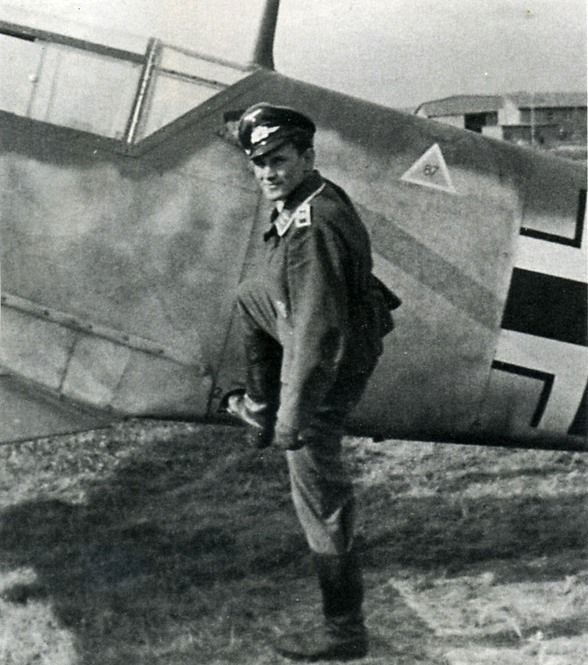
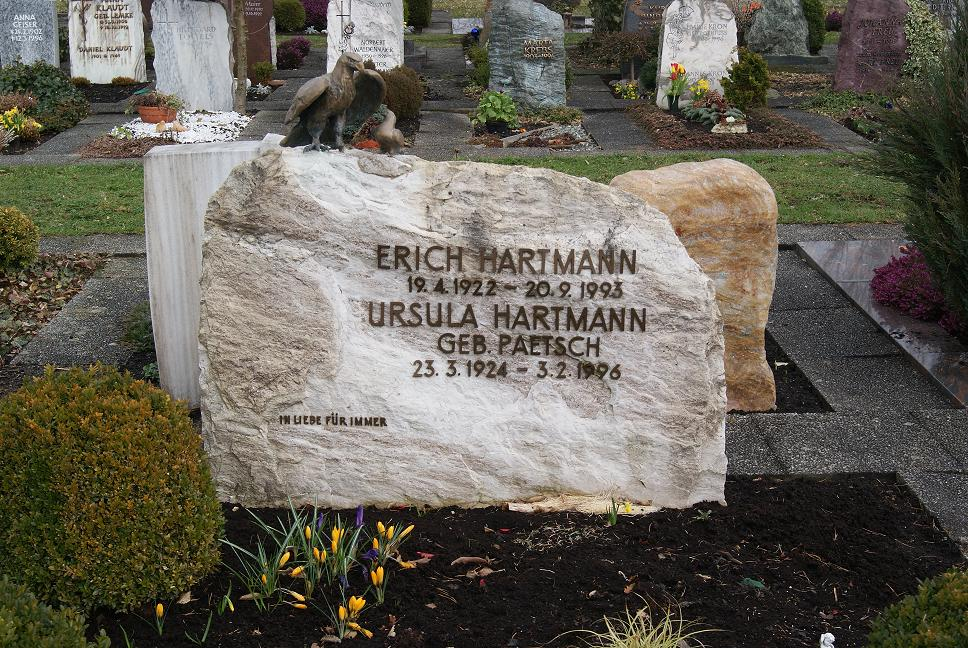
9/20/1993 - Seventy-one years after his happy birth to Dr. Alfred Erich Hartman and his wife, Elisabeth Wilhelmine Machthoff (one of the Germany's first woman glider pilots), in Weissach, Wurttemberg, Germany (April 19, 1922), Erich Alfred "Bubi" Hartmann passes away quietly at his home in Weil im Schonbuch from the heart condition angina pectoris (it also claims his father at the age of fifty-eight) on September 20, 1993, taking the title, Ace-of-Aces with him ... a title that is never challenged during his WWII career with the Luftwaffe in which he is known as Der Schwarze Teufel ("The Black Devil"), and one that will never be challenged in the future due to changes in the way aerial combat takes place, a title Hartmann wins by shooting down 352 (the next closest total is Germany's Gerhard Barkhoen with 301) Russian and American fighters (345 Soviet and 7 American) on the Eastern Front of the war, over Russia, during 1,404 combat missions (825 of which lead to aerial combat) while winning the 18th Knights Cross of the Iron Cross with Oak Leaves, Swords, and Diamonds and surviving sixteen plane crashes (he is never bested in combat, each crash is caused by plane issues or from flying through the shrapnel of close combat in the sky) and ten years in Russia as a Soviet prisoner of war.  

Hartmann And Friend

Transplanted to China at the behest of a relative in the diplomatic services, when the Germany economy tanks following the conclusion of WWI, the rollercoaster ride of the ace's childhood takes him back to the country of his birth in 1928 when civil war breaks out between the Republic of China (led by Nationalist politician Chiang Kai-shek) and the Chinese Communist Party (under the direction of party chairman Mao Zedong).  Footing found on his return to the Fatherland, Hartmann is educated at the Volksschule in Weil im Schonbuch (April 1928 - April 1932), the Gymnasium in Boblingen (April 1932 - April 1936), the National Political Institutes of Education in Rottweil, (April 1936 - April 1937), and Korntal's Gymnasium (April 1937 - April 1940), where he receives his Abitur of secondary education, and where he meets his future wife, fifteen-year-old Ursula "Uschi" Paetsch (love at first sight for Hartmann, the pair meet cute while bicycling, Erich beats up a rival for Paetsch's affections and they marry while the flier is on leave in 1944 ... they will have two children, a boy who dies when he is only three and whom Hartmann never sees, and a daughter, Ursula).  And his embrace of flying doesn't take a backseat to his classroom education (for a brief period, Hartmann considers becoming a doctor like his father), love of the sky instilled in his personality almost from the moment of his birth (he also has a younger brother, Alfred, who will join the Luftwaffe, become a gunner on a Stuka bomber, and survive the war as a POW after being shot down over Tunisia), with his mother's guidance, at 14, Erich is teaching members of Weil em Schonbuch's Hitler Youth the principles of gliding and at 15 becomes fully licensed to fly sail planes.  Continued his aerial education, Hartmann moves on to powered aircraft, and at the age of 18 in 1939, he becomes a fully licensed pilot.  In October of 1940, one year into the war Germany has started with the world, Hartmann begins his military training by joining the Luftwaffe (his first posting is with the 10th Flying Regiment in Neukuhren.  Classes passed, in March of 1941, Hartmann moves on to Air War School in Berlin0Galow and in a little less than three weeks he makes his first solo flight.  Basic flight training completed by October of 1941, he begins advanced flight training at the fighter pilot school in Lachen-Speyerdorf, then he is on to learning advanced combat techniques and gunnery skills.  He completes the course on January 31, 1942 and is assigned to the Luftwaffe's Fighter Pilot School 2 in SchleiBheim where he learns to fly the weapon he will use throughout the course of the war, the Messerschmitt Bf 109 fighter.
Erich's Parents
In China
Glider Pilot
"Bubi" - The Kid

One of the finest fighter planes of its time, the single-seat Bf 109 (it will become the #1 fighter produced during the war, with 33,984 being produced before Nazi Germany surrenders to the Allies in May of 1945) has a length of 29 feet and 4 inches, a wingspan of 32 and 7 inches, and a height of 8 feet and 6 inches.  It is powered by a Daimler-Benz inverted liquid-cooled piston engine turning a three-bladed propeller so that Willy Messerschmitt's invention can obtain a speed of 386 mph at an elevation of 26,247 feet (its rate of climb is 3,960 feet per minute), reach a ceiling of 39,000 feet, and combat loaded, can travel 355 miles to its assignment and then back to base.  For fangs, the fighter comes with two wing-mounted, synchronized 13 mm MG 131 machine guns and a single centerline 20 mm Motorkanone canon (later models will also have the capability of firing two eight-inch rockets).  In a matter of weeks, Hartmann masters the fighter, and to celebrate, following a successfully gunnery training flight, Erich ignores regulations, and performs aerobatics over the Zerbst airfield he is calling home.  Less than amused with the neophyte fighter pilot, Hartmann's commanding officer confines Erich to his quarters for a week and fines him tow-thirds of his pay.  It is a punishment that saves Hartmann's life when the pilot's roommate takes a training flight that was to be Erich's, and in the Bf 109 Hartmann was to fly, and kills himself crash landing the fighter near the Hindenburg-Kattowitz railroad.  Shocked by the suddenness with which death can come for aerial knights, Hartman becomes more serious about his training and soon adopts several generic flight and attack rules that will see him through the war ... "Fly with your head, not your muscles," "See - Decide - Attack - Reverse" (a philosophy which avoids dogfights and allows Hartmann to prune away lesser Russian fighter pilots and their inferior fighters, then before the enemy can react, drop away and start his cycle all over again), and lastly, get as close as possible to an opponent before opening fire, "when the enemy fills the entire windscreen you can't miss" (so close that on a number of occasions, flying through the debris of his latest triumph, he actually shoots himself down and has to crash land due the damage his Bf 109 takes).  By the time his training is completed, Hartman is qualified to fly 17 different types of German planes, can accomplish the difficult task of hitting a target drogue with half of his allocated ammunition, and is reported to be a pilot with "... excellent eyesight, lightning-fast reflexes, great flying instincts, and an uncanny ability to stay cool in combat ..."  He is also extremely lucky.
Bf 109 - 1943
Hartmann
With Another Friend

Assigned to legendary fighter squadron JG 52 (the group will be the most successful fighter command of the war, shooting down over 10,000 enemy aircraft, having the top three aces of th conflict amongst it's membership in Hartmann, #2 with 301 combat victories, Gerhard Barkhorn, and #3 with 275 aerial triumphs, Gunther Rall, and sixty-seven winners of the Knight's Cross of the Iron Cross) in October of 1942, Hartmann finds himself flying out of the Maykop airfield on the Russian Eastern Front (near the north-eastern shore of the Black Sea), under the command of Major Hubertus von Bonin (77 aerial victories in two wars), mentored by Oberfeldwebel Edmund "Paule" RoBmann (93 aerial victories in 640 WWII combat missions), and surrounded by experienced pilots he can learn from like Alfred Grislawski (133 aerial victories), Hans Dammer (113 aerial victories and credit for also destroying eleven parked aircraft, eight locomotives, 39 horse drawn wagons, 34 trucks, three anti-aircraft emplacements, and one armored scout vehicle), Josef Zwememann (126 aerial victories), Walter Krupinski (197 aerial victories during 1,100 combat missions), and Gunther Rall (275 aerial victories).  A long way from being history's aerial ace-of-aces, Hartmann begins his service with JG 52 by ferrying Junkers Ju 87 Stuka bombers from Maykop down to the Luftwaffe's Mariupol airfield ... and he gets off to a bad start.  Attempting to take off, the brakes of Hartmann's Stuka fail and he crashes into the airfield's control hut, destroying the building.  There are also massive problems with his first combat encounter with the Russians.
JG 52 Unit Emblem
von Bonin
RoBmann
Rall Gets #250

On Wednesday, October 14, 1942, Hartmann is finally given a combat mission to fly as RoBmann's wingman.  The mission does not go well for the Kid.  Spotting a flight of ten enemy fighters below his position, an impatient Hartmann goes full throttle, breaks away from RoBmann, and engages the Russian, scoring no hits, but almost becoming a victim himself when he almost crashes into an opposing fighter.  Already having broken several fundamentals of aerial combat, Hartman breaks another big one hiding in a low cloud from the Russian fighters and then attempting to return to base ... running out of gasoline, he survives having to crash land his Messerschmitt.  Surprised the youth is still alive, upon his return to base, an angry von Bonin grounds Hartmann for three days and assigns him to work as a member of one of the airfield's ground crews (during this period the fighter pilot will become a good friend of crew chief Heinz "Bimmel" Mertens, who subsequently will be put in charge of Hartmann's fighter, with no one else allowed to touch the ace's plane without permission coming firts from either Hartmann or Mertens).  The punishment he receives from RoBmann is much more simple, taking the form of silence and a vow kept, never to fly with Hartmann again.  Mentoring responsibility passed on to Alfred Grislawski and then Walter Krupinski.  Out of the doghouse and into the air again, Hartmann scores his first victory of the war against an Ilyushin Il-2 Sturmovik of the Russian 7th Guards Ground Attack Aviation Regiment on Thursday, November 5, 1942 (and he crash lands again after flying through the debris of his first combat triumph).  Still learning from the squadron's veterans and not yet turned loose, Hartmann's kill total stands at two as 1942 turns into 1943.
Hartmann
With Crew Chief Mertens
Ilyushin Il-2

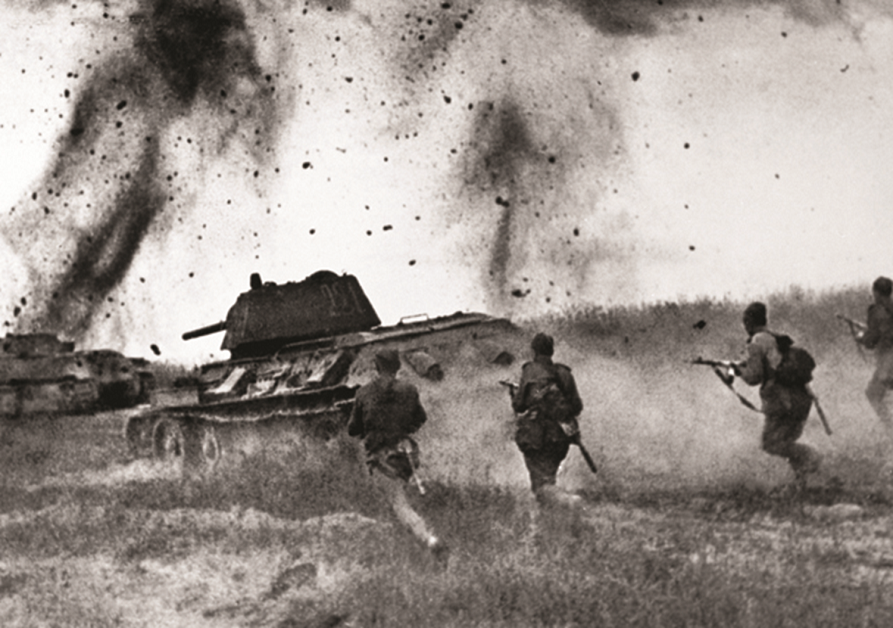
A turning point year as the fortunes of the Nazi Third Reich rot following the German defeat at Stalingrad, 1943 becomes magical for Hartmann as all his training and combat experiences coalesce as he is sent on mission after mission, and becomes his country's ace-of-aces.  Falling out of the sun, coming up behind an opponent, closing until he can't miss, then breaking away after firing and seeking out a new target, starting slowly, by April of 1943, Hartmann is a legitimate ace with 11 aerial victories (at the end of May his total will be seventeen).  Relocated to center section of the Russian eastern front as the Wehrmacht prepares for the greatest battle (Kursk or Operation Citadel, a clash of nations and cultures, the epic July 1943 battle will feature the efforts of almost three million combatants, over 8,000 tanks, and over 30,000 artillery pieces and mortars) in world history, Hartmann enters the fight looking to vent some of the anger he feels at losing the advice and protection of his friend Krupinski, the pilot hospital convalescing with injuries to his head, a fracture of the parietal bone, and a broken rib after colliding with another Bf 109 fighter that is taking off while the veteran pilot is trying to land.  As the Battle of Kursk plays out below him in July 1943, Hartmann will add 25 more Soviet planes to his score, ending the month with 42 kills, including an ace-in-a-day performances on Wednesday, 7/7, in which he takes out two Il-2 and five LAGG-31 fighters.  And things will grow even worse for Hartmann's opponents the following month.  Flying in mission after mission in August (for awhile he is also the temporary commander of the squadron), whenever there is a fighter available and the weather cooperates, Bubi goes up and more Russian planes come down ... forty-eight in all, bringing Hartmann's total to 90 by the month's end, with the ace scoring five kills on Aug. 1, five more on Aug. 4, another five on Aug. 5, and five more on Aug. 7.  And his luck stays intact.  Crash landing his fighter behind Soviet lines after leading an escort mission in which he flies through victory debris again, Hartmann is made a prisoner, but feigning internal injuries, is put in a truck for transportation to a local hospital, and seizing the opportunity presented when a Stuka strafes his ride, the pilot takes out his only guard and walks back to the German lines to the west (his adventure includes a run through a field of tall sunflowers as he is fired on by the armed locals, reversing direction for awhile to avoid a small village, following a small Russian patrol that is wiped out when it blunders into the German line, and almost getting shot by a frightened German who puts a round through the flier's trousers for not knowing that day's password ... and includes his crew chief grabbing a rifle, some water, and a plane, and going off by himself in search of his friend, with a big party at the base when the pair are reunited).         ..
Krupinski
Kursk - 1943
Mertens Resting On The Prop Of Hartmann's Fighter

September of 1943 sees Hartmann become the Staffelkapitan of JG 52's ninth squadron, replacing missing in action Lt. Berthold Korts (a hundred victory ace who is last seen dogfighting with a Soviet P-39 Airacobra).  Scoring twenty-five more victories during the month, Hartmann's victory total as October begins is 115 (he is the 54th Luftwaffe flier to achieve the mark).  In October, Hartmann's gets thirty-three more victories and his total rises to 148.  As a reward for breaking the century mark for aerial victories, on October 29, 1943, he is awarded the coveted Knight's Cross of the Iron Cross.  By the end of 1943, Hartmann's total stands at 159 and he survives another forced landing when his Bf 109 suffers engine failure near the town of Kirovohrad.
Korts
Knight's Cross to Iron Cross

It is in 1944 when Hartmann becomes a Luftwaffe legend and a Soviet boogeyman.  Responsible for continuing to savage the Soviets and lead the men of his squadron (during this time period, Stalin places a , in January, Hartmann shoots down 26 Soviet planes (and has another ace-in-a-day days on the 30th of the month, besting six Russians), and takes out another seventeen in February (and has two more ace days ... knocking down five Soviets on the first day of the month, and another ten Russians on the month's last day).  Reputation growing among his enemies, Hartmann identifies himself to his foes with his radio call sign of Karaya 1 (which is also painted on his plane, long before the Heartbreakers of Tom Petty get the same idea years later) and the distinctive black tulip pattern that is painted around the cowling of his Messerschmitt's engine.  Talismans of terror, seeing Hartmann's plane or hearing his call signal, Soviet fliers, who by this time are calling the ace "Cherniy Chort" (Black Devil) start running back to base, and recognizing the menace he presents, Josef Stalin offers a reward of 10,000 rubles for any pilot or anti-aircraft crew that can take down The Kid.   Total victories now up to 202, in March he is summoned back to Germany to receive his next award, the oak leaves to his Knight's Cross, from the leader of the Third Reich, Adolf Hitler.  Traveling to the Fuhrer's Eagle's Nest retreat in the Bavaria town of Berchtesgaden, Hartmann is accompanied by fellow aces, Gerhard Barkhorn (301 victories during the war), Walter Krupinski (197 victories during the war), and Johannes Wiese (133 victories during the war) that are also having their Knight's Crosses upgrade (leaves for Krupinski and Wiese, swords for Barkhorn).  Traveling into the mountains by train, the foursome get tanked imbibing massive amounts of champagne and cognac cocktails, and by the time they arrive in Berchtesgaden, the men can barely stand, their condition enraging Hitler's Luftwaffe adjutant, the man who must introduce the men to the Fuhrer, Major Georg Ludwig Heinrich Nicolaus von Below.  The major becomes even more irate when unable to find his hat, a not seeing straight Hartmann takes one off a hat rack, and puts it on, only to find it to be too large ... which is instantly explained when von Below grabs it off Hartmann's head and places it back on the rack as the cap belongs to Hitler.  Too drunk to care, Hartmann quips about the leader of Nazi Germany having a big head that must come with the job, and von Below becomes even more enraged.  Straightened up, the men get their awards without any further indiscretions. 
von Below
The Eagle's Nest
Hartmann & Barkhorn
Wiese

Back on the Eastern Front with his squadron after receiving his award, recognizing the fear he has put into his enemies and how they flee at the sight of his plane, Harrtmann begins lending his Messerschmitt to rookie pilots, who are able to get a little more experience in the sky as competent fighters before having to actually dogfight with Russian fliers, while meanwhile, Hartmann flies other fighters on missions, eventually covering up the black tulip design entirely so he can go about the business of shooting down Soviets.  Only five planes fall to Hartmann's guns in April of 1944, but reestablishing his aerial prowess flying in unmarked fighters in May of 1944, when he sends down 24 more Russian aviators, including an ace-in-a-day six on the 5th of the month.  In June Hartmann gets 35 more victories, and has ace-in-day totals on 6/1 (6), 6/4 (7), 6/5 (6), and 6/6 (5), and downs his first American P-51 Mustang fighter (in another encounter during the month, whipping his plane about the skies trying to avoid a patrol of P-51s, Hartman literally runs his fighter out of both gas and ammunition and is forced to bail out of his fighter).  July proves to be a quiet month with only two kills for the entire 31 days, but Hartmann explodes again in August by downing 34 more fliers during a month that includes besting ace Gerhard Barkhorn's top total of 274 aerial victories, having ace-in-a-day days on August 22 (5), August 23 (8), and the best single day of his fighting career, downing 11 planes on August.  Top of the pyramid, when the month ends Hartmann is alone in history ... the first pilot to shoot down more than 300 aircraft (his total is 303).  Too high a victory tally to risk the morale that would come with Hartmann being shot down, Luftwaffe chief, Reichsmarschall Herman Goering, grounds his top fighter and the pilot is told to report to Hitler at his Wolf Lair's retreat to have his Knight's Cross upgraded with Swords and Diamonds (only the 18th German to be so honored).  Arriving at Hitler's compound in east Prussia, Hartmann flies into the madness of the failed attempt on Hitler's life by Colonel Claus Philipp Maria Justinian Schenk Graf von Stauffenberg.  No drunken controversary with his second visit with Hitler, this time Hartmann gets in trouble for refusing to give up his personal sidearm (a Walther pistol) to one of the new SS guards surrounding the Fuhrer, stating that if a Knight's Cross winner of diamonds can't be trusted then Hitler could be told to keep his medal (now a Colonel, this time von Below calms the trouble and the ceremony comes off without a hitch and includes coffee, lunch, and a long discussion between the two men on fighter training, the best approach to stopping the bombing of Germany, the arrival of jet fighters into the German arsenal, and conditions on the Russian Front.
Black Tulip Messerschmitt
Another Russian Falls To Hartmann's Guns
Wolf's Lair After
Awards From Hitler - Hartmann is Second From Left

Diamonds on his Knight's Cross not the only reward Hartmann receives for becoming the all-time ace of aerial combat, the flier also is promoted to the rank of captain, and receives a ten-day vacation from the rigors of the Eastern Front ... time which he uses to marry Ursula Paetsch on September 10, 1944 (also in attendance are Gerhard Barkhorn as Harrtmann's best man, and two of his fighter pals, Walter Krupinski, and Wilhelm Batz, a JG 52 fighter ace and commander who will achieve 237 aerial victories during 445 combat missions, as witnesses) in Bad Wiessee, Bavaria (a second "religious" marriage will take place in a West German church in 1956).  During this time period Hartmann also is ordered to report to the former head of the Luftwaffe's fighter command, Generallieutenant Adolf Josef Ferdinand Galland in Berlin for discussions about a special project the former fighter pilot has been put in charge of (before being moved behind a desk, Galland will fly 705 combat missions in which he shoots down 104 Allied planes); development of a fighter squadron flying the potentially game-changing new fighter, the Messerschmitt Me 262 jet.  Flattered to be offered a pilot position within the new group, Hartmann nonetheless turns down the offer (twice, Galland will recruit the ace again a few months later in March of 1945 when the ace's total kills stands at 337), stating he wants to stay with the men of JG 52   Honeymoon and leave over, Hartmann returns to his squadron just in time to be with the group when it begins a ragged retreat from the Crimea region of Russia.as the war continues to fall apart for Germany (until his death, Hartmann will retain the memory of flying over a field covered with over 20,000 Wehrmacht battle dead) .  Revamping their fighters, the fliers of JG 52 can cram four members of their ground crews at a time into the tails of their fleeing Messerschmitts.
Erich & Ursula Get Married
Galland
Th First Combat Jets

Back in action as the squadron retreats into Hungary, at the end of October 1944, Hartmann shoots down tree Soviet fighters to bring his victory total to 305, before having a November in which he takes out twenty-seven more planes, including ace-in-a-day days on November 22nd (six aerial victories) and November 23rd (five YAKs), and closes out the year with 336 fighters downed by shooting four more Russian fighters out of the sky in December of 1944.  War winding down as the Third Reich is pushed on all sides back into the confines of Germany and Austria, in February of 1945, Hartmann is appointed Gruppenkommandeur of I/JG 52 and adds three more planes to his total, and then ups his score by twelve more in April, to bring his total victories to 351.  On the very last day of WWII in Europe, only hours before Germany calls it quits, one final time Hartmann (now a major) does what he has mastered better than anyone else in the history of warfare, and disposes of one final Russian flier with a surprise ambush attack.  Flying a morning reconnaissance mission with his wingman from their Czech airfield, Hartmann spots a group of Soviet fliers celebrating their imminent triumph over the Third Reich prematurely by flying victory loops above the advancing Russian infantry, only twenty-five miles away from the JG 52 base.  Instincts kicking in, Hartman selects another clueless opponent, dives on the Russian from 12,000 feet, and in the middle of a victory roll, blows up the Soviet flier with a round from his engine mounted cannon.  His 352nd victory achieved, Hartmann and his wingman flee the remaining Soviet fighters (reduced by one to seven), and a group of freshly arrived in the area P-51 Mustangs (twelve).  Ordered to fly to British lines with Commodore Hermann Graf (the first flier to reach two hundred aerial victories) by German General Hans Seidemann, with JG 52 fated to be surrendered to the advancing Russians, upon landing, Hartmann ignores the order, and instead, coordinates with Graf in destroying twenty-five Bf 109s (including Hartmann's Karaya One Messerschmitt) and an airfield full of ammunition, before marching the squadron to the west and surrendering to the Americans of the U.S. 90th Infantry Division.  On the day WWII ends for Hartmann, the leading ace of all-time is barely twenty-three-years-old.
Hartmann
Hartmann On The Hunt
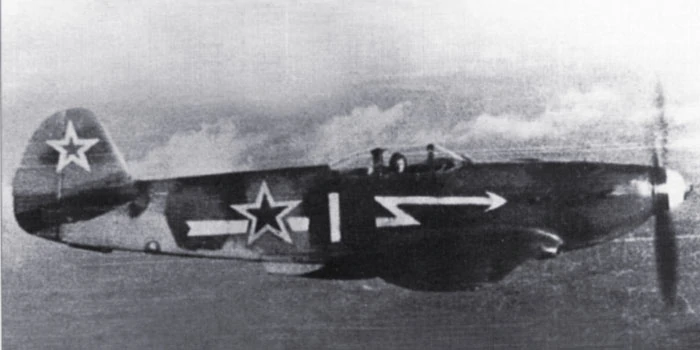
Soviet YAK

Unfortunately for Hartmann, the flier's war against the Soviet Union is just beginning.  The Allies. having come together in an agreement on how the ending of hostilities will take, decide at the Yalta Conference of February 1945 between Roosevelt, Churchill, and Stalin, that surrendering troops lay down their arms to the men they have been fighting ... so when Hartmann gives up himself and JG 52 to American troops, those troops turn right around and transfer the Germans to Soviet care.  A wanted man with a price on his head for helping devastate the Russian Air Force, Hartmann adds more red marks against his name when he refuses an offer of "good" treatment if he spies on Luftwaffe officers, or gives up details of what he knows about the ME 262 fighter jet.  Instead, Hartmann refuses and is given ten days of solitary confinement (the first of many such occurrences) in a four-by-nine-by-six-foot concrete-floored container, with his meals consisting of only bread and water.  Additionally, Hartmann's family is threatened with death, and the flier is beaten over the head by a Russian with a cane, until he finals snaps and attacks the guard with a wooden chair (expecting otherwise, Hartmann is not executed for retaliating).  Honor over death, Hartmann finally negates the Soviet's requests for cooperation by going on a four day hunger strike (he specifically refuses to join the German communist party or to take a top position with the newly formed East German Air Force) ... that ends when his guards begin force feeding the ace his meals.  In turn, the Soviets in 1949, who have not forgotten their 352 lost pilots and planes, put Hartmann into a show trial for war crimes, claiming the flier is guilty of atrocities against Soviet citizens, attacks on military objects (i.e. the planes and their airfields), and significantly damaging the Soviet economy with his marksmanship.  A slam dunk for the military tribunal judging his guilt or innocence, Hartmann is sentenced to 20 years of prison hard time!.  Not satisfied though, a different tribunal puts Hartmann up again for war crimes in 1951 on charges of deliberately shooting 780 Soviet citizens of the town of Briansk, attacking a bread factory in 1943, and destroying 345 "expensive" Soviet fighter planes (American planes be damned).  For these "new crimes," Hartman is sentenced to 25 more years of hard labor behind bars.  Knowing a railroad job when they see one (during their time in prison, the friendship of Hartmann and Graf will come to an end over Graf giving info to the Soviets, an act Hartmann can not abide), Hartmann's fellow convict aviators react to the sentence (and the ace refusing to do the hard labor) by setting off a riot in which they briefly free their squadron leader.  A problem keeping him where he can stir up trouble (throughout his internment ordeal, the ace keeps his sanity by never wavering in his faith in God, or that he will see his beloved wife again), and maybe even a bigger issue if the internationally renowned pilot suddenly vanishes, Hartmann is transferred among various prison camps of the Soviet gulag that include Shakhty, Novocherkassk and Diaterka in the Russian Urals, until finally, in late 1955, as part of the last (remarkably Hartmann, with help from JG 52 ace, Hans ""Assi" Hahn is able to keep a copy of his Knight's Cross with Diamonds from the souvenir hungry Soviets during his prison confinement, hiding it in a double bottom cigar box alongside a nearby stream where Hahn recovers it before being released back into West Germany ... getting his cross back is an extremely pleasurable moment for the flier),   Heimkehrer (meaning "homecomer") of repatriated prisoners of war returning to Germany (Hartmann's case is personally worked by the Chancellor of Germany, Konrad Hermann Joseph Adenauer, and his mother makes a point of not only writing Adenauer of the injustice her son is dealing with, but also gets missives out to Stalin and his foreign minister, Vyacheslav Molotov).
Prisoner Of War
Older Than 33
1955 With Ace Hans Hahn (108 Aerial Victories)

Back in West Germany, Hartmann is overjoyed to be home with his wife (the couple will have a daughter, Ursula Isabel, on February 23, 1957), but the joy is tempered by discovering that while he was a prisoner of war in Russia, his father and his son both died (a boy Hartmann never sees but in pictures). Intelligence and leadership qualities obvious, the flier joins the newly created air department of the German government, the Bundeswehr.  Surprising no one, with extensive training in Germany and the United States (much of it at Luke Air Force Base in Arizona, named for a WWI Medal-of-Honor ace named Frank Luke) on the Republic F-84 Thunderjet, the Lockheed T-33, the Canadair Sabre, and the Lockheed F-104 Starfighter, Hartmann is soon a colonel and is given command of the Jagdgeschwader 71 "Richthofen," West Germany's first all-jet combat unit.  Too much riding a desk for Hartmann's tastes, he crosses swords once too often with higher-ups over the reliability problems of the American F-104 and is quietly pushed into early retirement in 1970 (he is also right, as flying the F-104, German pilots suffer 269 non-combat crashes and 116 deaths before the flawed jet is replaced by the General Dynamics F-16 Flying Falcon in 1978).  With time on his hands and able to do how he chooses, Hartmann reverts to his youth and comes full circle on his life, and once more, in the skies near the city of Bonn,  becomes an instructor teaching others how to fly!  In his last years, the pilot also enjoys attending reunions with both friends and former foes, participating in fly-ins with other former fighter pilots, and he lives long enough to see his life story become a selection of best selling book in both the United States and Germany ("The Blond Knight of Germany" by Toliver & Constable, "German Fighter Ace Erich Hartmann" by Ursula Hartmann, and "Black Tulip" by Erik Schmidt    .  Finally frazzled to a stop by the heart condition he inherited from his father, Erich Alfred Hartmann, passes away in Weil im Schonbuch, Germany on Monday, September 20, 1993 at the age of 71 (twenty-three years after Hartmann's passing, in 2016, the fliers of the ace's former squadron, West Germany's JG 71, honor the blond knight WWII by putting the black tulip design on the cowling of their current aircraft.  And for the record (at that moment in time), after Hartmann's death in 1997, the ace's case is reviewed by the Moscow Chief Military Prosecutor for the Russian Federation.  Fate smiling on Hartmann one more time, the flier is acquitted of all historical charges against him in Russian law as the government agency states he had been wrongly convicted.   
Jet Pilot
West German F-104 Starfighter
Biography
The Hartmann's Final Resting Spot

At the age of seventy-one, Erich Alfred Hartmann, the all-time Ace-of-Aces finally falls in Germany on September 20, 1993 ... rest in peace Bubi.
Hartmann


Sheparding his flock and just another   

xxxxxxxxxxxxx


That week confined to my room actually saved my life. I had been scheduled to go up on a gunnery flight the afternoon that I was confined. My roommate took the flight instead of me, in an aircraft I had been scheduled to fly. Shortly after he took off, while on his way to the gunnery range, he developed engine trouble and had to crash-land near the Hindenburg-Kattowitz railroad. He was killed in the crash.[12]Afterward, Hartmann practised diligently and adopted a new credo which he passed on to other young pilots: "Fly with your head, not with your muscles."[3] During a gunnery practice session in June 1942, he hit a target drogue with 24 of the allotted 50 rounds of machine-gun fire, a feat that was considered difficult to achieve.[12] His training had qualified him to fly 17 different types of powered aircraft,[12] and, following his graduation, he was posted on 21 August 1942 to Ergänzungs-Jagdgruppe Ost (Supplementary Fighter Group, East) in KrakówUpper Silesia, where he remained until 10 October 1942.[13]