Wednesday, February 25, 2015

BYE-BYE BLUEBEARD

2/25/1922 - A nightmare for France ends on this day in Versailles, when 52-year-old mass murderer Henri Desire Landru, aka Bluebeard, is executed by way of having his head separated from his neck by the razor sharp blade of a guillotine.
HenriLandru.jpg 
Landru

In a famous Mother Goose tale, the story is told of a wealthy man with a great estate who has a blue beard, so blue that it frightens the local women.  Finally though he talks a beautiful girl named Fatima into marrying him, and the couple is very happy ... happy until Fatima goes into a locked room Bluebeard has been using to kill and cut up the bodies of several ladies he has been rejected by, a locked room she has been told to never enter.  Caught when the madman finds blood from the room on the magic key he has given his wife (the blood will not wash off after it is dropped on the floor of the abattoir), an upset Bluebeard is in the process of adding Fatima to his corpse count, when at the last second, she is rescued by her two brothers and Bluebeard is killed.  Bluebeard, a myth, a legend, a fib to keep children quiet ... but Landru is the real thing (despite his beard not being blue)!

Bluebeard, the wife, and the key
Image result for bluebeard
Fable?

Seemingly normal growing up in Paris, after serving in the French Army from 1887 to 1891 (rising to the position of sergeant), Landru tries to establish himself as a clerk, but finds himself unemployed as a result of the manager of the business absconding with the company's money.  Instead of picking himself up and getting on with his life. Landru decides the easy money is for him too, and henceforth he will get it by swindling wealthy widows out of their riches.  Horrified at his son's shenanigans (during this period he also gets his cousin pregnant), and his association with a rogue's gallery of thieves, pimps, and local thugs, thinking his parenting has failed his son, Landru's father responds by committing suicide (a knotted noose around the neck does the job quite nicely).
Image result for henri landru
Landru

Covering his tracks by doing work as a second-hand furniture dealer and part-time auto mechanic, Landru finds a host of victims by posting advertisements in the "lonely hearts" section of various Parisian newspapers ... "Widower with two children, aged 43, with comfortable income, serious and moving in good society, desires to meet widow with a view to matrimony."  Using a number of aliases, his gift of gab, and simply vanishing into another identity after each crime, Landru is quite successful in separating widows from the wealth, but every so often, a woman will go after the con, and sometime around 1914, Landru decides it will be easier to continue operating with no victims around to accuse him to the police.  It is the perfect time for his escalation into murder ... WWI, just miles from the the front door of Paris, is making thousands of women into widows ... and no one seems to ask questions when people go missing, because people are going missing every day.
Image result for henri landru
At Work
Image result for henri landru
Madame Jean Marie Cuchet

Thought to have vanished up to 60 women (and anybody else that gets in his way) during his killing spree of five years, Landru will eventually be charged with 11 murders:
*Mme. Cuchet and her son are last seen in January of 1915 
*Mme. Therese Laborde-Line is last seen in June of 1915 
*Mme. Marie-Angelique Guillin is last seen in August of 1915 
*Mme. Berthe-Anna Heon is last seen in December of 1915 
*Mme. Anne Collomb is last seen in December of 1915
*Andree-Anne Babelay is last seen in April of 1916 
*Mme. Celestine Buisson is last seen in August of 1916
*Mme. Louise-Josephine Jaume is last seen in November of 1917
*Mme. Anne-Marie Pascal is last seen in April of 1918
*Mme. Marie-Therese Marchadier is last seen in January of 1919
Heon

His lucrative pastime ends however in 1919, compliments of the efforts of two women, Madame Pelat (nee Collomb) and Madmoiselle Lacoste (nee Buisson), who combine forces to search for their missing sisters.  Spying by chance in Paris the man her sister introduced her to as her fiance before vanishing, Pelat follows Landru to his home, then gets the authorities involved.  Investigating his places of business and homes (Landru also spends time at the town of Gambais in the south of France), French authorities find no bodies (though they dig up the backyards of two residences of the killer), but they do recover a load of other incriminating evidence against Landru ... furniture belonging to some of the missing women, heaps of discarded women's clothing, 290 bits of bone fragments and teeth (none of which that can be identified as belonging to any of the missing), and a book listing the name's of the vanished, along with the killer's notes on each of their finances.  It is enough for an arrest and a trial on 11 charges of murder.
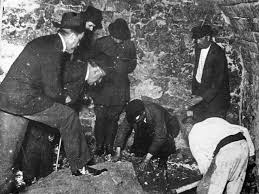
Image result for henri landru
Searching a Landru abode
Image result for landru on trial
Headlines
Image result for henri landru
The Stove Where Victims Went
Image result for landru on trial
On Trial

On trial for his life, believing that he can not be found guilty without bodies to prove he is a murderer, Landru treats the legal proceedings like a joke ... refusing to answer questions about the missing women, offering his seat to a woman watching the event, proclaiming his love for his estranged wife Remy and their four children (who he hasn't seen in months), scribbling drawings while testimony is being given, and formulating a strategy with his lawyer, Moro Giafferi, in which it is claimed that he is a slave trader and sent all the missing women off to work at a brothel in Brazil.  Though charmed by some of his antics and answers, no one on the jury believes that he didn't do away with the women, and found guilty (the jury takes only two hours to reach their verdict), he is sentenced to have his head loped off ... an act that takes place at Versailles on 2/25/1922 (gift of gab still present, he talks the warden in to allowing him to die with his beard in its full glory and loudly refuses the ministrations of a priest ... his last words are, "I shall be brave.").
Image result for landru execution
Awaiting the Blade
Execution

Landru's story though doesn't end with the removal of his cranium ... the public hears his name again when the crimes of serial killer Marcel Petiot are uncovered after WWII (saying he can find safe harbor for them, Petiot vanishes dozens of Jews trying to flee Nazi Europe), in 1947, Charlie Chaplin will play a character modeled after Landru in the feature film, Monsieur Verdoux, and in 1967, it is discovered that he confessed after all; on the back of a sketch Landru draws of his kitchen and its infamous stove that he gives to his lawyer after the trial are the bone chilling words, "I did it.  It is not the wall behind which a thing takes place, but indeed the stove in which a thing has been burned."
Image result for marcel petiot
Petiot and empty Jewish luggage
Image result for monsieur verdoux
Last Walk for Charlie in Monsieur Verdoux

And if you wish (and are of a morbid disposition), you can have your own Bluebeard moment in Hollywood, California, where for a $15 admission fee (parking is free), you can enter the Museum of Death and actually have a chat with Landru's mummified decapitated head, there on display ... MERCY!!!!!!!!!!!!!!!!!!!!!!!!
Image result for landru head
Landru

Thursday, February 5, 2015

BIRTHDAY BELLE

2/5/1848 - On a small farm near Carthage, Missouri, John Shirley and his wife, Eliza Hatfield (a relative of the clan that will become infamous for their feud with the McCoys), celebrate the birth of a daughter they name Myra Maybelle Shirley ... history though will know her better as the most infamous female bandit of America's Wild West period, Belle Starr (though the reputation is entirely unearned).
Belle Starr full.jpg
Studio Portrait

Brought up in Carthage after the family sells the farm and moves to the city to run an inn and livery stable on the town square, Myra receives a classical education and learns to play the piano, graduating from the prestigious Carthage Female Academy (a private institution her father helps found).  Sadly though, like millions of Americans, the Shirley Family will have their lives turned upside-down by the Civil War.

Arkansas - 1886 - Belle at Left

Fleeing the 1864 Union attack on Carthage, the Shirley Family moves to Scyene, Texas, and it is there that as a result of her brother's riding with Confederate guerrillas that she meets (John "Bud" Shirley will be gunned down by Union troops back in Missouri in 1864), and becomes friends with the southern raiders that roam the area, including future outlaws, Frank and Jesse James, and the Younger Brothers.  A crack shot able to hit her targets while riding side saddle in a black velvet riding habit crowned by a feather plumed hat, accessorized by two pistols and a bullet laden cartridge belt wrapped around her hips, she draws the attention of frontier thug, Jim Reed (wanted for murder in Arkansas, he also dabbles in stage robbery, running whiskey into the Indian Territory, cattle rustling, and horse thievery), and in 1866 the pair begin playing house together. Not surprisingly, the marriage ends in 1874 when Reed is killed by a posse near Paris, Texas.

In 1880, she begins morphing into the legend she becomes, going by the name of Belle she marries Sam Starr, another gunman with a taste for robbery and murder ... crimes that Belle's name will be linked to (in 1883 she will be found guilty of horse rustling in the Fort Smith Federal courtroom of Isaac "The Hanging Judge" Parker, a crime for which she will serve nine months at the Detroit House of Corrections in Detroit, Michigan).  Marriage #2 ends very much like the first did ... in 1886, Mr. Starr is gunned down by a lawman seeking to bring him in on robbery charges.
Parker - 1874

Seeking a new husband, Belle spends the last years of her life romancing a series of outlaws, with outlaw names ... Jack Spaniard, Blue Duck, Jim French, and others ... finally hooking up with a younger relative of Sam Starr, Jim July Starr (there is a 15-year age difference between the bandit and his outlaw queen bride), so she can keep her home on Indian land.  And sure enough, Belle's third marriage also ends due to lead poisoning ... this time though the victim is Belle herself.

Blue Duck & Belle

Killer unknown (suspects include her latest husband and both of her children, and a sharecropper named Edgar J. Watson), on February 3,1889, Belle is ambushed returning to her home from a neighbor's house near Eufaula, Oklahoma.  Blown off her horse by a shotgun blast, the killer makes sure of his work by putting another load of buckshot into her face (caught with killing blasts of lead pellets, Belle is made into a dead mess by shotgun wounds to her back, shoulder, neck, and face).  Adios ... Belle is only 40-years-old when she does the mortal coil shuffle and becomes a legend.
  
"A Wild West Amazon"
as portrayed in the National Police Gazette

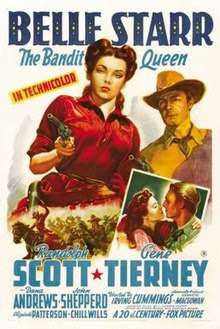
Never convicted of any major crimes and bearing a face only a mother could love (or a love lorn outlaw) ... for public consumption of penny dreadful tales, Belle is turned into an outlaw beauty that could shot and fight on a par with Jesse James, Billy the Kid, and Butch Cassidy.  Complete bologna ... as is Hollywood grabbing the legend and making Belle's life into a major release of 1941 for 20th Century Fox featuring beautiful Gene Tierney as the bad lady (and succeeding with that charade, Elizabeth Montgomery, the beautiful witch of Bewitched, will play Belle in a 1980 television movie)!
Belle Starr FilmPoster.jpeg
The Movie Version
Tierney as Belle

Happy Birthday Miss Shirley ... and Rest In Peace!


Friday, January 30, 2015

ANDY GETS ANGRY

1/30/1835 - They certainly don't make presidents like Andrew Jackson anymore!
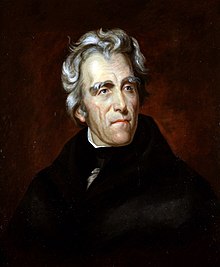
Andrew Jackson.jpg
Jackson by Tomas Sully - 1824

Taking time off from his many presidential duties, on a damp and misty Washington D.C. day, Jackson travels to the Capitol Building to attend the funeral of 41-year-old South Carolina congressman Warren R. Davis ... and almost becomes a corpse himself when he encounters a madman upon leaving the event.

Assassination Attempt

After stalking Jackson for days, waiting outside the East Portico for the president is a 35-year-old unemployed house painter from England named Richard Lawrence ... an armed maniac that believes all his problems will vanish if he kills Jackson.  And he has lots of problems.  Coming to America with his family at the age of 12, Lawrence seems normal until 1832, when he suddenly undergoes a change (some historians believe his unhinged mental state is a result of breathing in too much lead based paint fumes) ... vanishing from his family for months on end, claiming "unknown" individuals were out to "get" him, declaring himself to be King Richard III of England (the "My Kingdom for a horse!" royal that Shakespeare makes infamous in his play ... dead at the Battle of Bosworth Field in 1485!) and owed money by the United States government, threatening to kill a maid he believes has laughed at him, wearing flamboyant outfits that he changes three or four times a day, threatening to hit his sister over the head with a paperweight because he thinks she has been gossiping about him, standing in the doorway of his home looking out at the street for hours on end, having extended crying, laughing, and cursing fits, along with imaginary nonsensical conversations with himself, and sitting in his paint shop muttering to himself about the things he'd like to do to the president.  Big time nuts, the day before his moment in history, the madness finally overcomes Lawrence ... decision made, assassination on, he smiles and states as he leaves his shop, "I'll be damned if I don't do it."
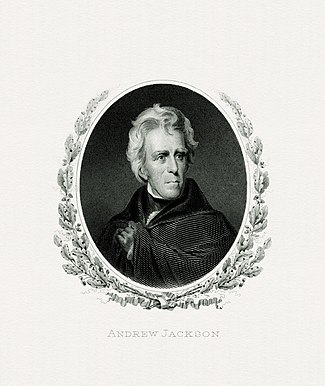
BEP engraved portrait of Jackson as President.
Jackson

And do it, he does!

Take That!

Not liking the shot he has as Jackson enters the Capitol, Lawrence positions himself near a large Greek pillar, in a spot he knows the president will pass on his exit from the funeral.  And he is right ... after paying his respects and walking past the congressman's casket, Jackson walks right by Lawrence, giving the assassin an almost point-blank target.  Seizing the opportunity he has been waiting for, Lawrence pulls a small percussion cap pistol from his pocket and fires at the president's back.  BAM ... but no bullet comes out of the gun!  Not fazed in the least as he has prepared for just such an event by bringing two guns to the offing, Lawrence draws and fires his back-up weapon with the same result ... POP ... but no bullet (after, the guns and powder are checked and work perfectly fine and it is believed the dampness of the day might have caused the guns to fail to fire ... others believe it is an act of Providence ... whatever the cause, the Smithsonian will one day give odds of 1 in 125,000 of both pistols failing to shoot).  

Scene at the Capitol

Two chances is all he gets though because his intended victim is a man very well acquainted with violence and its many applications. Jackson, 67-years-young, bearing scars on his left hand and head from where a British officer slashed him with a saber for refusing to shine the soldier's boots, carrying a duelist's bullet in his chest since 1806 (at odds over a horse race bet and insults to his wife, Jackson lets plantation owner and rival horse breeder Charles Dickinson fire first ... hit, the future president puts his hand over the wound to staunch the blood, fights through the pain of a hole and two broken ribs only two inches away from his heart, takes careful aim, and from 24 feet away, puts a round in Dickinson's chest that proves fatal), the victor over the British at the Battle of New Orleans, the victor over the "Red Stick" Creek Indians of Alabama and Georgia at the Battle of Horseshoe Bend, the man who whose attacks against the Seminoles in Florida forces Spain to cede the territory to the United States, reacts instantly to the attempt on his life.

Jackson   

Pivoting, Jackson races at Lawrence, and when the second shot of the assassin fails, gives an up-close-and personal display of how he earned the nickname, Old Hickory ... beating his would-be killer about the head and shoulder with the hickory cane he always carries.  It is a demonstration of Jackson's violent temper that might have proved fatal had not another mourner at the funeral intervened to pull the president off Lawrence ... a bear of a man himself, the 12th District of Tennessee's representative in the U.S. House, Mr. David "Davey" Stern Crockett!  The attempt on Jackson's life is the first against a sitting United States president ... sadly, it will not be the last.
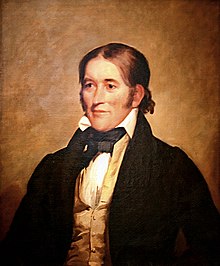
David Crockett.jpg
Crockett

Saved to stand trial, Lawrence goes before a judge and jury at the District of Columbia City Hall on 4/11/1835, and quickly becomes evident he is not playing with a full deck.  Only a day in the dock, Lawrence, dressed in a shooting jacket and posh cravat, refuses to acknowledge the court's authority, makes wild rants, calls himself Richard III, declares Jackson killed his father, and insults the jury.  NUTS ... the jury takes only five minutes to render a verdict of "not guilty by the reason of insanity."  Oh, and the prosecutor who goes after Lawrence is yet another famous someone ... attorney Francis Scott Key, the part-time poet that in 1814 wrote the Star Spangled Banner while watching as the British attacked Baltimore's Fort McHenry during the War of 1812.
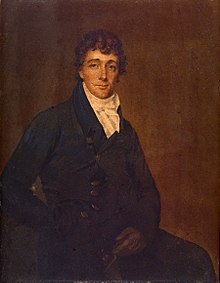
Francis Scott Key by Joseph Wood c1825.jpg
Francis Scott Key

Confined for the rest of his life in a number of institutions, Lawrence is finally sent to the newly opened Government House for the Insane in 1855, perishing there in 1861 at the age of 61. 
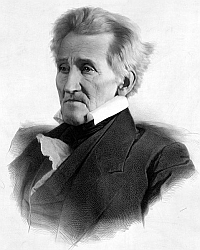
And Jackson?  He goes on making more history ... so much so that he becomes the face that now graces the $20 bill, dying at the age of 78 in Nashville, Tennessee, in 1845 as a result of tuberculosis, dropsy (an abnormal accumulation of fluids beneath the skin and in the cavities of the body), and heart failure.

At the End - 1845

Monday, January 26, 2015

ZERELDA LOSES HER ARM

1/26/1875 - Not that a psychopath needs a triggering event to get itchy to kill, or that the fighting in the American Civil War wasn't enough in and of itself to mess up a person for life ... nonetheless, on this day Jesse James' war on the authorities becomes personal with the death of his half brother, eight-year-old Archie Samuels, and the maiming of his fifty-year-old mother, Zerelda Elizabeth Cole James Simms Samuel (she got hitched a few times!) at the hands of Pinkerton agents.
Jesse james portrait.jpg
Jesse Woodson James - Circa 1882

Hired by the Adams Express Company to put an end to the depredations of the Younger-James Gang after its success bringing the train robbing outlaw Reno Brothers to justice, the Pinkerton Detective Agency of Alan Pinkerton sends a number of agents secretly into Missouri ... with disastrous results.  
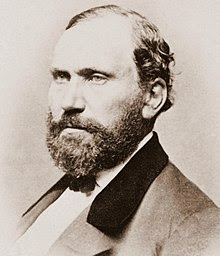
Allan Pinkerton-retouch.jpg
Alan Pinkerton

Sticking out like a sore thumb among the local residents, agent Joseph Whicher tries to talk his way into a job on the Samuel Farm, but only draws negative attention to himself when he stumbles verbally discussing local horse flesh ... one chance only, unknown riders (thought to be the James Brothers) soon kidnap and murder the poorly masquerading agent.  Soon afterwards, two more agents, Captain Louis J. Lull and Captain John Boyle, actually do run into the prey they are hunting ... encountering Jim and John Younger on a country road outside the village of Roscoe, Missouri.
John Younger 2.jpg   
John Younger - 22 - 1875

On there way to see friends in Roscoe, the Younger's instantly suspect Lull and Boyle (they are accompanied by local Deputy Sheriff Edward Daniels) of being Pinkertons after the men stop the outlaws and ask them directions to a nearby farm.  Tables turned with guns suddenly drawn (Boyle puts spurs to his horse and takes off for town), blood is drawn when Lull pulls out a hidden gun and shoots John Younger in the neck.  Gunfire answered, John rides down the fleeing Lull, kills him with a round through his chest, and then returns to his brother (who has shot to death Daniels), falls off his horse and dies.
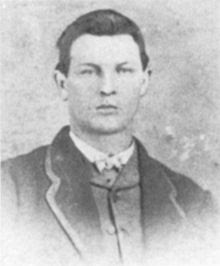
Jim Younger.jpg   
Jim Younger - 27 - 1875

Reacting to the deaths of his men, seething in Chicago, Allan Pinkerton sends even more agents into Missouri, determined to be done with the Jame and Younger boys once and for all.
Original company logo
Not Happy Campers

Receiving bad information that the James Brothers are hiding out in their mother's farmhouse (they are actually miles away), on the moonless night of the 26th, over a dozen Pinkerton agents and members of local law enforcement surround the structure.  Calling out for the brothers to surrender, when no response is forthcoming, but the lights inside are dimmed, one agent hurls an incendiary device covered in cloth and soaked in oil through a window and into the home.  Reacting to the flaming device, Archie Samuel kicks the sputtering object into the fire place ... where it explodes a second later, sending a wrath of shrapnel and flame through the home.  In the explosion, Zerelda has her right arm destroyed (later that night it will be amputated), Archie has his chest crushed and dies, and the kitchen is ignited when kerosene stored in the pantry bursts into flames.
Zerelda

Already a killer, Jesse is a man livid for revenge.  At first hearing the news, Frank has to stop his brother from riding into town and killing the first lawman he sees.  Instead, he calms Jesse down and puts a focus to his brother's rage ... and in April, "unknown" gunmen kill neighboring farmer Daniel Askew, a former Union militiaman thought to have lent his spread out to the Pinkertons to use as a base.  Not enough, Jesse next wants to go to Chicago to kill Pinkerton himself.

Jesse & Frank - 1872

Too dangerous, Jesse instead is convinced by Minnesota native and gang member Bill Chadwell that easier revenge is available ... along with a big fat payday ... the gang only needs to ride north to take down the First National Bank of Northfield, Minnesota (said to be owned by former Civil War general Adelbert Ames and his father-in-law, Union general and commander of New Orleans, Benjamin Butler).  A grievous mistake, in September of 1876, the citizens of Northfield will show Jesse that he has come to the wrong locale for payback.

Bad Idea Bill

Wednesday, January 21, 2015

ADIOS ALFALFA

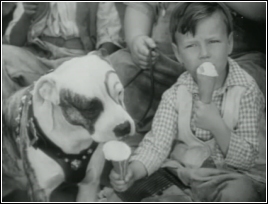
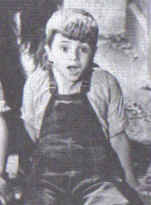
1/21/1959 - Fame and then tragedy, the short life (only 31 at the time of his demise) of Carl Dean Switzer comes to a bloody end in Mission Hills, California, over an argument about $50.  So someone named Switzer died 56 years ago, why should you care about that?  The answer is that Switzer might have entertained you many times when you were young, for once upon a time, Switzer was known as Our Gang's (renamed the Little Rascals for TV) beloved cowlick goofus, Alfalfa.
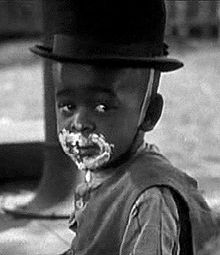
                                  Alfalfa gip.jpg
                                                     Switzer

On a Hollywood tour with his brother and parents while visiting relatives in California, Switzer is discovered at the tender age of only six when he starts an impromptu singing performance while having lunch in the studio of comedy producer Hal Roach (on hand for the show).  Impressed, the producer signs the child (and his older brother Harold) to a contract and in less than a year, Switzer as Alfalfa, is one of the stars of the long running series.  Five years of money and fame, the role comes to an end in 1940 when Switzer is only 12-years-old (full of himself, he is known for having a huge ego, an inclination for poorly received pranks, and a very bad temper).  

                                   
                                       Spanky, Darla, and Alfalfa

And then the scramble for finding work, acting or otherwise, begins.

                             
                                         Once Upon A Time

Augmenting the handful of acting roles that come his way (he is the Donna Reed scorned teenager that opens the floor over the hidden pool in It's A Wonderful Life, the Army brother of the two sisters in White Christmas, and appears very briefly in the Ten Commandments as a Hebrew slave), to make ends meet, Switzer as an adult also puts money in his pocket by trying his hand at farming, bar tending (and sampling the stock), breeding and training hunting dogs, and guiding hunting and fishing expeditions for Hollywood celebrities (among his clients are Roy Rogers and Dale Evans, Henry Fonda, and James Stewart).  And he also manages to get himself into trouble ... his marriage to the heiress of a grain elevator empire, Diantha Collingwood, ends in 1957 after only three years (and one child), getting into his car outside a Studio City bar he is mysteriously shot in the upper right arm (the gunman is never caught) in 1958, and he is sentenced to one year of probation and fined $225 for cutting down 15 pine trees in the Sequoia national Forest.

                          
                                         The Adult Version

It all ends in 1959!

                   
                                                 Switzer

Insanity piled on insanity, Switzer's life finally unravels when he agrees to train a dog for Moses Samuel "Bud" Stiltz.  The pooch is lost chasing a bear during a training session with Switzer, who then offers a $35 reward if anyone can find the dog.  Days later the dog is indeed found and returned ... with Switzer giving the canine's savior the promised monetary reward, along with $15 in thank you drinks at a nearby bar ... $50 that Switzer stupidly believes should be payed back to him by Stiltz, though the dog was totally his responsibility during its hunting lessons.  Drunk and short on funds, several days later, with his friend, 37-year-old still unit photographer Jack Piott, Switzer goes to Stiltz's home for his money ... what he receives instead are a bullet to his groin and a DOA ambulance ride.

                                 
                                                      Carl

Justifiable homicide or murder, in Stiltz's version of the killing, Stiltz defends himself when Switzer comes at him with a switch blade knife and screams, "I'm going to kill you!"  Piott's take on the shooting is that Stiltz gets upset when the men argue, goes in his room and arms himself, then shoots an unarmed Switzer (and is about to kill Piott too, stopped only by the arrival of paramedics and police on the scene).  And in the tale Stiltz's stepson, Tom Corrigan, finally tells in 2001, pissed that he has been hit over the head with glass-domed clock during the money dispute, Stiltz grabs a pistol from his room and shots Switzer as the actor is walking out the front door (he also verifies that killing threats were then made to Piott).  Whatever happened (an unopened pen knife is found under Switzer's body), a coroner's jury finds the killing justified and Stiltz walks away from the shooting without even a slap to his wrists.

                       
                               Rest In Peace

Adios Alfalfa, Switzer is buried at Hollywood Memorial Park, but lives on in the enjoyment that is still received by new generations discovering the comedic antics of Our Gang.  

                    
                                               Our Gang

An Our Gang that also suffered much of the same bad luck (curse?) that seemed to have plagued Switzer during his brief life:

*Pete the Pup ... poisoned to death by an unknown assailant
*Wheezer (Robert Hutchins) ... dead at the age 19 in an airplane crash
                       
*Froggy (William Robert Laughlin) ... died at the age of 16 in a bicycle accident
                           
*Bonedust (Robert H. Young) ... dies in the hotel fire he starts by smoking in bed in 1951
*Dorothy (Dorothy Dandridge) ... commits suicide after going bankrupt due to an investment scheme gone wrong in 1965
*Slim (Harold Switzer) ... killed in 1967 like his brother after getting into a money dispute
*Scotty (Scotty Beckett) ... dies at the age of 38 in a California nursing home after being savagely beaten two days before ... the slugger is never found
                       
*Darla (Darla Hood) ... under "suspicious circumstances" that are never identified, dies of hepatitis in 1979
                           
*Breezy (Kendall McComas) ... forced to retire from his position at the China Lake U.S. Naval Weapons Center, commits suicide on his 65th birthday
*Mickey (Robert Blake) ... found not guilty of the murder of his wife, found guilty by a civil jury of being responsible for the death
                               
*Waldo (Darwood Kaye) ... killed while walking on the sidewalk by a hit-and-run driver
*Buckwheat (Billie Thomas) ... dead of a heart attack at the age of 49
                         Billie Buckwheat Thomas.jpg
*Jay R (Jay R. Smith) ... stabbed to death and left in the desert by a homeless man he had befriended
*Chubby (Norman Chaney) ... dies of a glandular disease at the age of 21
*Speck (Donald Haines) ... killed in action at the age of 23 in North Africa during WWII
*Stymie (Matthew Beard, Jr.) ... after kicking heroin, dies at the age of 56 after suffering a stroke, falling down a flight of stairs that injury his head, and then going to the hospital for his wounds and catching a fatal case of pneumonia
                         Matthew Stymie Beard.jpg