Monday, September 12, 2022

THE SKUNK MAN OF THE WILD BUNCH

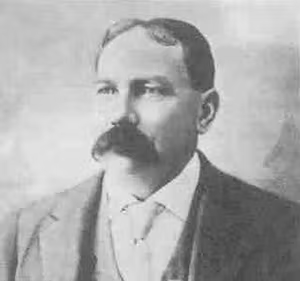
9/12/1868 - William Richard "News" Carver (the nickname comes from the outlaw's enjoyment in reading about his and the gangs he belongs to exploits), the future outlaw that will gain notoriety as a member of the Wild Bunch (his wedding to soiled Forth Worth dove, Callie May Hunt aka Lillie Davis, sets in motion a bandit bacchanalia that will result in the dissolution of the gang after a celebratory souvenir photo the groom and his pals have taken is discovered and circulated throughout the West by Wells Fargo special agent Fred Dodge) is born to in Coryell County, Texas to George Alfred Carver and Mary Jane Rigsby Carver.

Fort Worth - 1900
Carver Is Standing On The Left With One Hand On The Shoulder Of Harry "The Sundance Kid" Longabaugh And One Hand On The Shoulder Of Ben "The Tall Texan" Kilpatrick, 
Beside Him In Back Is Harvey "Kid Curry" Logan 
Standing Behind A Seated Robert Leroy "Butch Cassidy" Parker

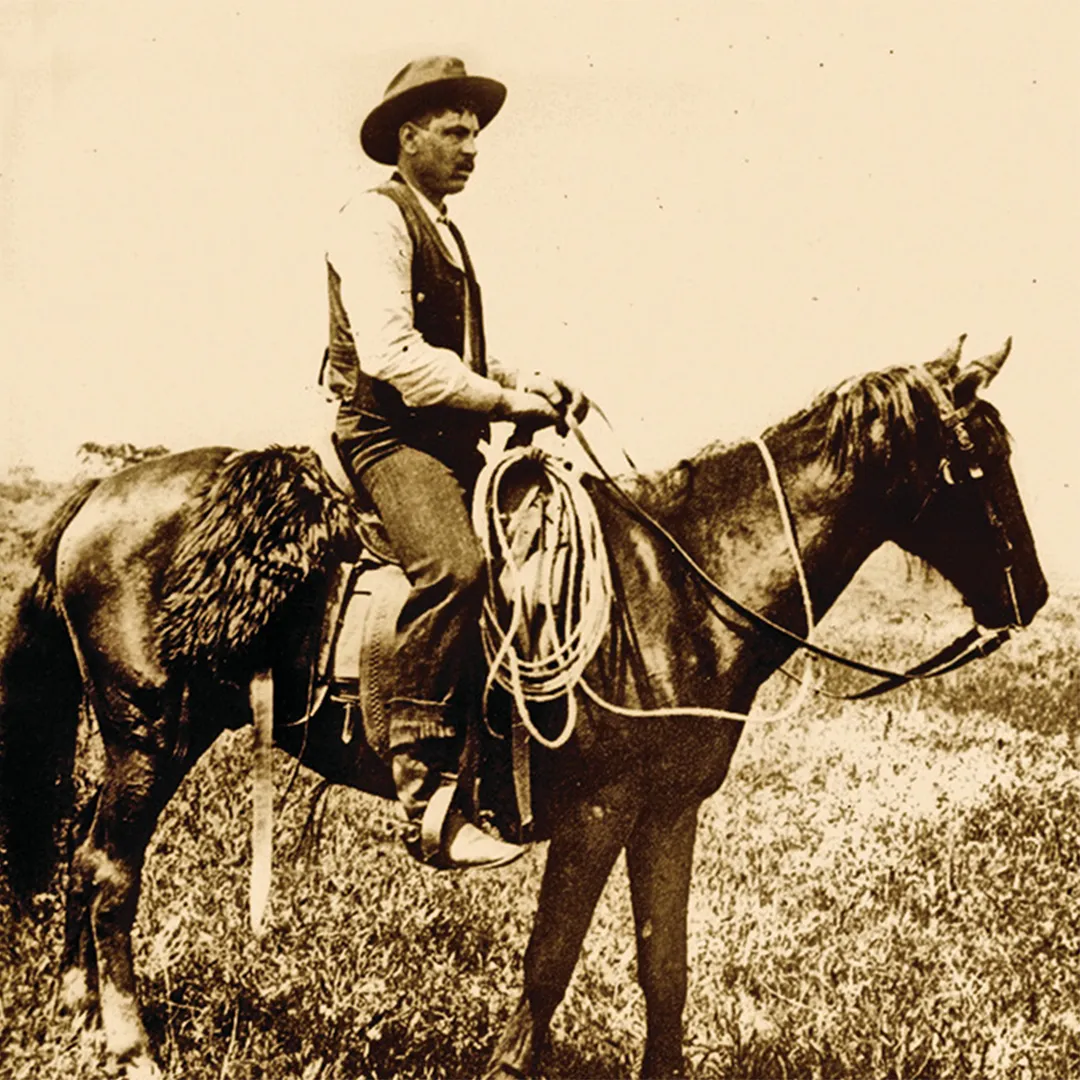
Described as a "good looking, quiet, nice boy," just one of the thousands of westerners that will take on the trade of cowboy before the turn of the century, Carver might never have been known to history if not for falling under the influence of his Uncle Dick (a former bandit that has spent time behind bars), who along with showing him the rudiments of the cattle business, introduces the youth to the basics of the outlaw trade when the men begin punching cattle together in 1889 at Half Circle Six Ranch in Texas' Tom Green County (an arid region on the Edwards Plateau, almost in the center of Texas, which is established in 1874 and named after Brigadier General Thomas Green, a Confederate officer killed in 1864 by a Federal gunboat shell while leading a division of Southern cavalry).  At the ranch, Carver becomes friends with two sets of cowboy brothers with whom he will ride the owlhoot trail of banditry ... Thomas Edward "Black Jack" Ketchum and Sam Ketchum, and two of the Kilpatrick family, George and his older brother, Ben.  During his time period at the Half Circle Six, Carver also falls madly in love with a local beauty, 17-year-old Viana Byers from the town of Dove Creek.  The couple marry in February of 1892 and are seemingly on their way to a life of happiness with Viana pregnant, but all dreams the pair have of a live together become ash when Mrs. Carver develops a fever and she and the baby perish in July.  The deaths and subsequent heartbreak (somewhat of a ladies man, along with countless evenings with a variety of "soiled doves," Carver will have relationships with Viana's younger niece, Laura Bullion, before passing her on to his Wild Bunch confederate Ben Kilpatrick, romances woman rancher Josie Bassett and her sister, Ann (who also dallies with Kilpatrick, Elzy Lay, and Butch Cassidy), and his second and last wife, Fannie Porter prostitute, Lille Davis) is more than enough to send Carver into a drunken bender in which he is more than willing to dice with the Fates and agrees to join up with the Ketchum's in creating a gang of desperadoes (along with cowboying together in Texas and New Mexico (Carver will also partner with Sam Ketchum in running the gambling concession in a San Angelo, Texas saloon between 1893 and 1895).
Tom "Black Jack" Ketchum
Josie Bassett
Bullion

Choosing the wild of the outlaw life, Carver participates in his first train robbery on Friday, May 14, 1897, joining Tom Ketchum and cowboy turned gunman, David Atkins (on the run from a killing that took place only a few days before), in hitting the lonely train depot at Lozier, Texas (the whole community consists of a tiny depot and a telegraph office run by Miss Addie Upson, with the nearest town being either Dryden or Langtry, 15 miles up the tracks or 15 miles down the tracks depending on the direction one is traveling)   Raiding the westbound #20 of the Southern Pacific Railroad, Ketchum and Carver hop aboard the train as it leaves Lozier, take control of the cab and stop the locomotive a few minutes from the depot where Atkins is waiting with a satchel full of dynamite.  Access to the baggage car gained by bullets being fired into the coach and Messenger William Joyce responding to the Winchester induced entreaties of Engineer George Freeze to "open the door," the outlaws blow up two safes (destroying the baggage car), taking an hour and twenty-three minutes (made available by Atkins cutting the nearby telegraph wires) to plunder the train and stuff three burlap bags of loot before riding off to the north (the railroad will announce thy have lost $48,980 in the robbery, a hefty payday in 1897 ... worth almost $2 million in 2022).  Posses escaped with days and nights of riding, the individual vanish into various cowboy jobs before coming back together for the group's next caper.
Atkins

The gang increases in size by one for its next robbery, with the one being Tom's brother, Sam Ketchum, and the next taking place on Saturday, September 4, 1897, when the bandits hit the southbound train No. 1 of the Union Pacific, Denver, and Gulf Railroad bound from Denver to Fort worth, the line's Texas Flyer.  The spot selected for the robbery is the wilderness southeast of Folsom, New Mexico; only a few miles distant from Colorado's southern border, a site below Twin Mountain where the curves and elevation almost bring passing trains to a stop.  Train boarded in Folsom, the bandits take control of the cab with their Winchesters, bring the engine to a stop at the heist's selected spot, intimidate the train's crew and it's passengers with randomly fired bullets (Express Messenger Charles Drew gets a Winchester clubbing from Sam Ketchum when he doesn't move fast enough for the outlaw), empty a safe the messenger is willing to open, and after two failures (its key is with the express agent in Amarillo), blow up a second safe with fourteen pieces (the destroyed express car is replaced when the train reaches Clarendon, Texas) and escape from the caper disappointed, carrying only $3,500 in cash and a consignment of silver spoons.  Hiding place in Turkey Creek Canyon, Arizona reached without any encounters with the local authorities, the men immediately begin planning their next attack on New Mexico's trains (a crime punishable by death at the time).
Sam Ketchum
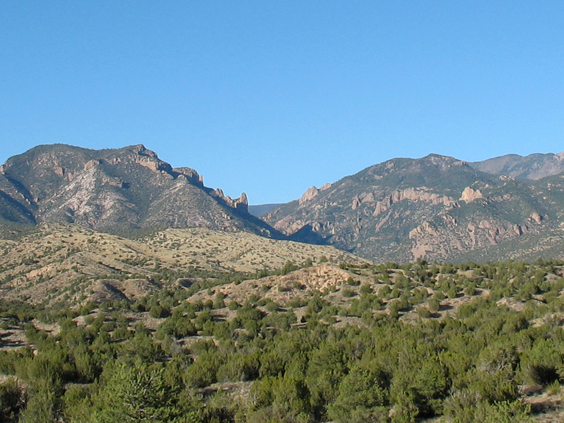
Turkey Creek Region

The gang expands again by one for its next job, adding out-of-work Texas cowboy and trail cook named Ed "Shoot-Em-Up-Dick" Cullen (a nickname he hangs on himself when he introduces himself to a Chinese restaurant owner he refuses to pay for his evening meal).  The five men that hit the westbound No. 20 Southern Pacific train on the evening of December 7, 1897 at Steins Pass, New Mexico (the tiny bit of civilization is nineteen miles west of Lordsburg and a few miles short of the Arizona state line and consists, of a small train depot, a post office, a general store and a few other buildings ... just before robbing the train when it pulls into the depot at around 8:00 in the evening, Sam Ketchum, Cullen, and Atkins ransack the post office) are the Ketchum brothers, Tom and Sam, Will Carver, Atkins, and Cullen.  Tom Ketchun and Carver cut nearby telegraph lines and build two bonfires on either side of the tracks where the gang wants the engine to stop, but run into problems when the fires illuminate their firing positions in the night and the employees and guards aboard the express car (more men than usual as the railroad has responded to rumors of an upcoming robbery, the car is defended by Messenger Charles J. Adair, and guards C. H. Jennings and Eugene Thacker) take advantage of the mistake, along with besting the bandits' rifles by using shotguns at close range.  In the thirty minute gun battle that takes place, the car defenders take no hits, but strike each of the outlaws with buckshot ... Tom Ketchum is hit in the legs while he is trying to crawl beneath the car and blow it up with dynamite, Carver takes similar wounds, Sam Ketchum is twice grazed in the head, and Atkins is also struck in the legs Sam Ketchum and Atkins will angerly argue over which wound is the most hurtful.  But Cullen gets hit the hardest, replenishing his ammo, the neophyte bad man exposes himself reaching into his saddle bag for bullets and takes a killing blast to his head.  "Boys, I'm dead," Cullen cries out after being hit, and he is correct, his outlaw career comes to a bloody conclusion roughly three hours after it has begun.  Wounded, a member down, knowing the authorities will soon be arriving, the surviving bandits mount there horses and flee, escaping two posses that come after them when they mistake another group of cowboys in the area as the desperadoes.   
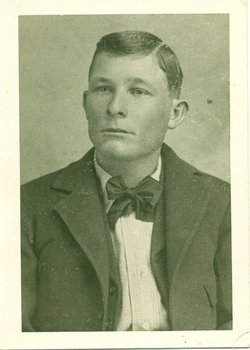
"Shoot-Em-Up-Dick"
"Shoot-Em-Up" Shot Up!

Fleeing across the border into Mexico, the bandits avoid both Federales and American posses while resting up in northern Sonora and Chihuahua.  They return to the States in 1898 to hit the Southern Pacific Railroad again with a different mix of gun thugs.  For the Comstock, Texas (a small town out in the wilds of the Lone Star State, about 180 miles to the east of San Antonio) robbery of the lines No. 20 that takes place of April 28, 1898, the band of raiders consists of the two Ketchum brothers, Will Carver, and a man never fully identified that is thought to be Ben Kilpatrick; replacing Atkins who has tired of the brutality and viciousness in Tom Ketchum's personality (eventually he takes his adventuring across the Atlantic Ocean and hires out his services to the Kaffrarian Rifles of South Africa during England's war with the Boers).  A evening robbery that slops over into the next day, the Ketchum Gang uses their usual playbook in the heist ... the train is boarded by two bandits, the outlaws take over the engine cab, split off the cars of the No. 20 they want to rob, move the engine, baggage and postal car, and express car two miles forward forward to a desolate spot called Helmet where they are joined by two more men, blow up the safe in the express car (the dynamite blast sends the safe through the roof of the car with a hole in it that is one foot in diameter), and ride off $20,000 richer than they were before the evening began.  Or they get nothing at all based on the timely arrival in the vicinity of a troop of Texas Rangers, which is what the Wells Fargo superintendent, Gerrit A. Taft, tells the public.  Whatever the case, there is no gunplay during the robbery and the men all escape into the night.  Hiding in plain sight as working cowboys, the boys are ready to hit another train two months later.  In the interim between the Comstock raid and their next job, the Ketchums and Will Carver are put on Wells Fargo wanted posters offering $1,000 each for their arrest and convictions (Carver laughs hearing the posters have his height and weight wrong, that he has a dark complexion that allows him to pass as a Spaniard, and funniest of all, that he has one glass eye).  Taking a break from the heat, the Ketchums and Carver move about the outlaw hideouts of Colorado, Wyoming, and Idaho, where they meet future confederates, Robert Leroy Parker aka Wild Bunch leader Butch Cassidy (Cassidy likes Carver and discusses working with him in the future, but takes an instant dislike to the Ketchums and tries to talk Lay out of working with the brothers on a future New Mexico train robbery), Parker's best friend, bandit William Ellsworth "Elzy" Lay, and Harvey Alexander Logan, aka the man many will consider "the wildest of the Wild Bunch," the murderous Kid Curry.
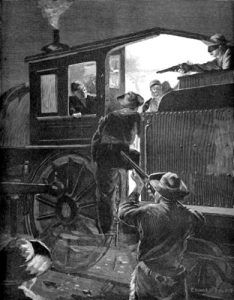
Taking The Engine Cab
Butch's Wyoming Prison Photo
Lay
Logan
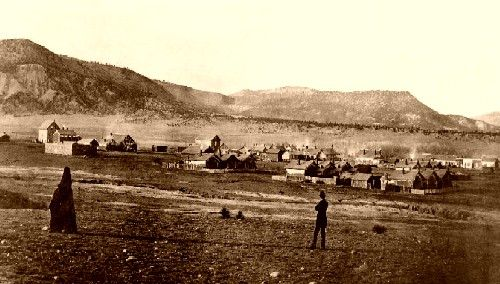
Returning to their southwestern stomping grounds, evidence that Cassidy was correct about the Ketchums is soon forthcoming.  One tantrum too many, after almost killing a friendly rancher over a set of horses Black Jack wants for free despite promising to pay for them, and yet another fight with his brother over the gang's leadership, Sam Ketchum and Carver kick Tom out of the gang he created and has led.  The job set for 1899 though is still on, and the pair soon meet up with Lay and another new recruit, another former Texas cowpuncher, Bruce "Red" Weaver (recently recovered from coming down with smallpox) near the town of Cimarron, New Mexico.  There, drawing the attention of locals, the outlaws set up camp nearby while prepping for their coming robbery, buying supplies (Carver, using the alias of G.W. Franks, will place orders for two forty-inch rifle scabbards, a .30-40 carbine, and a thousand rounds of .30-40 smokeless ammunition ... delivered before the job to "Simerone" by the employees of Wells Fargo), taking occasion meals, and sometimes imbibing a little while playing a little Saturday night poker).  At the beginning of July, the men suddenly vanish from the locale, reappearing on the Tuesday night of the 11th at almost the exact same site of their 1897 train robbery.  Bold or foolish, they hit the Southern Railway's No. 1 at the same double curve, using the same tactics as previously, although the dynamite this time is managed and set off by Carver (who also sets the bonfire where the No. 1 is ordered to stop after being boarded by two outlaws at it's Folsom water stop).  Safe penetrated and car ruined in the blast, the outlaws enjoy whiskey, pears, and peaches (the latter two items found among the wreck of the express car) before escaping with over $70,000 in plunder.  Thinking retribution is a long ways away, Sam Ketchum, Lay, and Carver (Weaver has ridden off from the gang after receiving his portion of the loot, pursuing a vendetta against William Holliman over dating the latter's sister, he will be killed in Alma, New Mexico in 1901) settle into their familiar Turkey Creek Canyon mountain hideaway, where on Sunday afternoon, July 16, 1899, a posse of lawmen (quicker than expected, posses are sent out from Cimarron, Walsenburg and Trinidad, Colorado, and from Wells Fargo) consisting of Cimarron Marshal Creighton M. Foraker, Wilson "Memphis" Elliott, a bounty hunter from Texas, mountain teamster James H. Morgan, Sheriff Edward J. Farr of Colorado's Huerfano County, railroad detective William Reno, cowboy Henry M. Love from the nearby Springer Brothers Ranch, locals Perfecto Cordova and Santiago Serna (Serna will leave the group before they find the outlaws), and Frank H. Smith, a well-connected youth visiting friends, Chicago-based ranchers Garrett and McCormick     
Cimarron, New Mexico
Carver

Using information provided by Morgan that he has seen the posse's quarry head into Turkey Creek Canyon, the lawmen follow the outlaws' trail to their hideout, find the site eight miles into the canyon (as the crow flies, they are eleven miles from Cimarron), and in the late afternoon, quietly start setting up on ridges surrounding Ketchum, Carver, and Lay.  Before everyone is in place for their ambush of the outlaws though, Lay comes out of the trees with a canteen and makes his way to a pool of water in the dry creek of the canyon (Ketchum and Carver are standing beside the group's campfire.  Ignoring wasting time asking for the bandits to surrender, at a range of roughly a hundred yards, Farr fires on Lay, and knocks the outlaw to the ground with a bullet to his left shoulder and one in his back from another member of the posse.  Gunfire sprouting from all directions, Ketchum and Carver take up positions behind sturdy pines and large boulders and begin firing back at the posse.  Surprised, at first the lawmen seem to have the advantage as Lay's wound knocks him out for a few minutes, and Sam is hit from 150-yards away by a rifle bullet from Elliott that breaks the outlaw's left arm (additionally, two of the four horses the bandits have are killed) just below his shoulder.  Taking on the whole posse, Carver finds a protected spot where he can fire without being seen, and is soon sending slugs all about the canyon, while at the same time, Lay crawls back to the camp fire, gets his Winchester, and though he drifts in and out consciousness, also begins firing on the posse.  Hiding from the heavy fire coming their way, Farr and Smith hide behind a tree that is not big enough to hide both men, and not thick enough to stop the steel jacketed slugs the outlaws are using thanks to Carver's ammunition order.  Smith is the first lawman to be hit, going down with a Carver round that passes through the flesh of the youth's left calf.  Lay, awake targets Farr, grazing the lawman's right arm just above his right wrist, stepping back to wrap a handkerchief around his wound, the outlaw then adjusts his aim and sends a bullet one hundred yards at the Colorado sheriff.  A killing shot (many historians believe that it is actually Carver that fires the round that does in Farr), the round pierces through several inches of wood before plowing into the thirty-one-year-old Farr's chest as he collapses on top of the wounded Smith, living just long enough to whisper to Smith to "say goodbye to my wife and baby."  The battle all Carver's again, Lay faints after his killing shot as accurate fire from the Texas cowboy takes Reno out of the contest with four near mixes that go though the railroad detective's clothing, and a grazing shot the cuts two of the cartridges on his belt in two.  Then Carver drives the other men behind a large rock outcrop that the men can only fire from by exposing themselves to the outlaw's marksmanship, effectively pinning the men down until evening falls. During this period, Carver mortally wounds Love when a slug from his Winchester hits the man in the leg, sending shards of an unclean knife (before joining the posse, the cowboy has been using the knife to treat anthrax infected cattle) into the flesh and bones of the deputy's right thigh (too late to treat Love when doctors finally see him eighteen hours later, the cowboy dies in agony four days after being wounded). 
Lay Is Hit And The Battle Begins - True West
Magazine Illustration
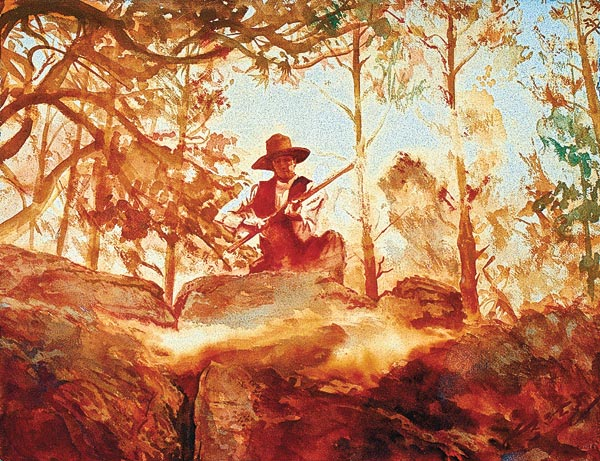
Looking For A Target - True West Magazine
Illustration
Farr

The arrival of darkness and the steady rain allow the outlaws to move up and out of the canyon to the west using only two horses (Carver will walk while making sure Ketchum stays on his mount), refusing to leave Sam behind as the outlaw requests of his companions.  Deciding they need to rest, the men are able to travel only three miles to the confluence of Cimarron and Ute Creeks, where they decide to rest in a small cabin used by a rancher, his wife, and the rancher's sons, the McBrides.  Though Lay wants to stay there and fight off any lawmen that might show up, both Carver and Ketchum finally convince him of the pointlessness of that being the men's best play, and as difficult as the decision is, Sam is left behind to fend for himself (but not before giving his cash and gold watch to Carver).  Tiring of their guest, for $500 in reward money, the McBrides let authorities in Cimarron know where one wounded bandit is residing, and on Wednesday, after a brief struggle with lawmen, Sam is arrested.  Taken to the territorial prison in Santa Fe, the 45-year-old outlaw dies on July 24, 1899, from blood poisoning after not allowing a doctor to remove his wounded arm (Sam's crazy brother Tom will try to rob the No. 1 at Folsom again, by himself this time, and in the August 16th attempt, he will be suffer a wounded arm that requires an amputation, and captured, gets put on trial, is convicted, and sentenced to death by hanging ... a hanging that instead becomes a decapitation when the authorities butcher the execution.  Dead on April 26, 1901, Black Jack is 37-years-old at his leaving).  While Ketchum is dying in prison, the other two outlaws remain at large, and because of the deluge of rain that hits the area, the search by authorities is quietly called off.  The specific hunt ended doesn't mean the outlaws are in the clear however, and on August 16th, outside the town of Chimney Wells, New Mexico, the men are betrayed to the law by V.H. Lusk, a rancher they think is their friend, while trying to get fresh mounts.  Lay is arrested for various outrages (the outlaw does not go into captivity peacefully, wounding Lusk in the wrist and forearm, Deputy John D. Cantrell in the left shoulder and arm, before being clubbed into submission by the revolver of Sheriff Miles Stewart ... tried and convicted, Lay will receive a life sentence in the New Mexico Territorial Prison, but keeping his nose clean, he is released in 1906 after helping stop an escape in which the warden's wife and daughter are taken hostage, and goes on to be an upstanding citizen, marrying and siring a family, and working a variety of jobs that include running a ranch, working as an oil-field scout, running several saloons, serving as a payroll guard, and at the time of his death on November 10, 1934, at the age of 65, he supervises the building on the All America Canal in Southern California ... he is also thought to have dug up the Ketchum Gang's hidden loot to his post outlaw wanderings).  Wilier than Lay on the morning of the 16th, Carver watches his confederate's capture through field glasses from a nearby hill before waving his hat and yelling "adios" to his partner and Sheriff Stewart, before riding off to the northwest.     
Dead Sam
Convict Lay
Black Jack Gets Ready To Go

Experience verified, introductions previously made, with the Ketchum Gang destroyed, Carver is almost immediately welcomed into an even more dangerous conglomeration of robbers and killers, the Wild Bunch of Butch Cassidy, Harvey Logan, and the Sundance Kid.  When four other members of the gang (Tom Capehart, Thomas C. Hilliard, Ben Kilpatrick, and Logan) leave their cowboying jobs with the WS cattle and horse ranch of New Mexico ride away from the area due to posse pressure and new northern heists, Carver is purported to ride with the men and takes part in the series of events events that result in the murders (mostly attributed to Logan)of amateur deputies Andrew A. Gibbons and Frank LeSueur out of Springerville, Arizona, Grant County Cattlemen's Association bounty hunter George Scarborough (the former deputy marshal and sheriff responsible for killing John Selman, the man who murdered gunfighter John Wesley Hardin in 1896, he leaves behind a widow and seven children), and there are rumors that he participates in the gang's 1899 robbery of the Union Pacific Overland Flyer No. 1 outside of Wilcox, Wyoming (the infamous job in which express car messenger, Charles Woodcock, has to be dynamited out of car he is protecting, a heist that gains the bandits unsigned bank notes, nineteen scarf pins, twenty-nine gold plated cuff links, for Elgin watches, and over $50,000 in cash).  There is nothing purported however about the role Carver plays in the bank robbery that takes place in Winnemucca, Nevada on the Wednesday morning of September 19, 1900.
Scarborough
The No. 1 After The Wild Bunch

Refusing to break his word to the governor of Wyoming that he will commit no further crimes in the state (instead, most of the rest of the gang hits the Union Pacific railroad at Wilcox, Wyoming), Butch Cassidy gets together with the Sundance Kid, and Carver, to plan a Wild Bunch job for Nevada that will confuse the authorities as to which outlaws are where (a plot that is still working to this day!).  Chosen for a Wild Bunch visit is the town of Winnemucca (named for a Northern Paiute Indian chief that once called the area home, the actual word means "one moccasin"), a small town the sprouts out of the Nevada desert along the Humboldt River when the transcontinental railroad, mining interests, and the sheep-herding of Basque immigrants all come together in the Silver State after the American Civil War ends in 1865.  Selected as the target of the trio's lawlessness is the town's First National Bank located at the corner of Bridge and Fourth streets.  The heist planned and scouted (Sundance will evaluate the town and bank over several days while working there as a member of a road repair team), extra horses are procured for the outlaws' escape after the robbery and placed with friends along the men's escape route into Idaho, the Three Creek Store of James and Elizabeth Duncan is robbed for supplies (friends of Carver, it is cover for if the authorities get curious as to the source of the outlaw's groceries ... after the robbery, the Duncan's will secretly be paid in full).  Shortly after noon on the 19th, with Cassidy and Sundance armed with Colt .45s, and Carver covering the proceedings with a Winchester (inside the bank are part owner and head cashier, George Nixon, three assistant cashiers, and a single customer, horse buyer W.S. Johnson), helped along by Cassidy holding a Bowie knife to the throat of Nixon so the banker opens the vault, the bandits spend five short minutes transferring 125 pounds of gold coins worth $32,640 into ore sacks, then gallop out of town (the posse that follows the bandits towards Idaho gives up after a single day), but stop briefly when a sharp turn in their route out of town causes a bag of gold to fall into the street (shots are exchanged with a couple of citizens, including the town's Deputy Rose, who fires at the men from the front of a locomotive he has commandeered, no one however on either side is hit).  In, out, and away, what makes the robbery special in Wild Bunch lore are two incidents that take place before and after the heist.  Making his way into town by himself so as to not raise any suspicions that the bank might be raided, Carver encounters and kills an angry skunk that doesn't leave peacefully, covering the outlaw in a stench that lasts for days, and causes his companions to ban him from the warmth of their campfire (and causing his horse to balk each time he tries to mount the animal) ... and provides the outlaws with something to tease Carver about on future endeavors (the Pinkertons will even mention his foul smell on the wanted poster that comes out afterwards, and hostages inside the bank will hold their noses until the robbery is over, and sets off Carver temper so that he eventually yells, "Damnit, I can't help it.  He got me first!").  The other incident involves a local 10-year-old youth named Vic Button, who rides to school in Winnemucca for his education from his parent's nearby CS ranch.  Passing the camp of three cowboys outside the town, the boy falls in love with the magnificent white horse of one of the men and offers to swap rides, an offer that the cowboy refuses, saying he still needs the animal for some upcoming work.  Not dissuaded, each day for a week the youngster rides by the cowboy camp on a different horse, and continues to offer the horse's owner a swap, much to the amusement of the men.  Cowboys gone after the robbery takes place, the boy is surprised when he finds the stallion picketed on his parents, property with a note saying the horse did its jobs and now is a gift to the youngster from Butch Cassidy (later, Button will also receive a personal copy of the Wild Bunch's Fort Worth visit, sent personally through the mail by Cassidy).  Not caring the gift is from a notorious outlaw, Button will name the horse Patsy and ride her for years and years.
Winnemucca - Bank Is Building On The Left At
The End Of The Street
George Nixon
Sundance And Etta Place
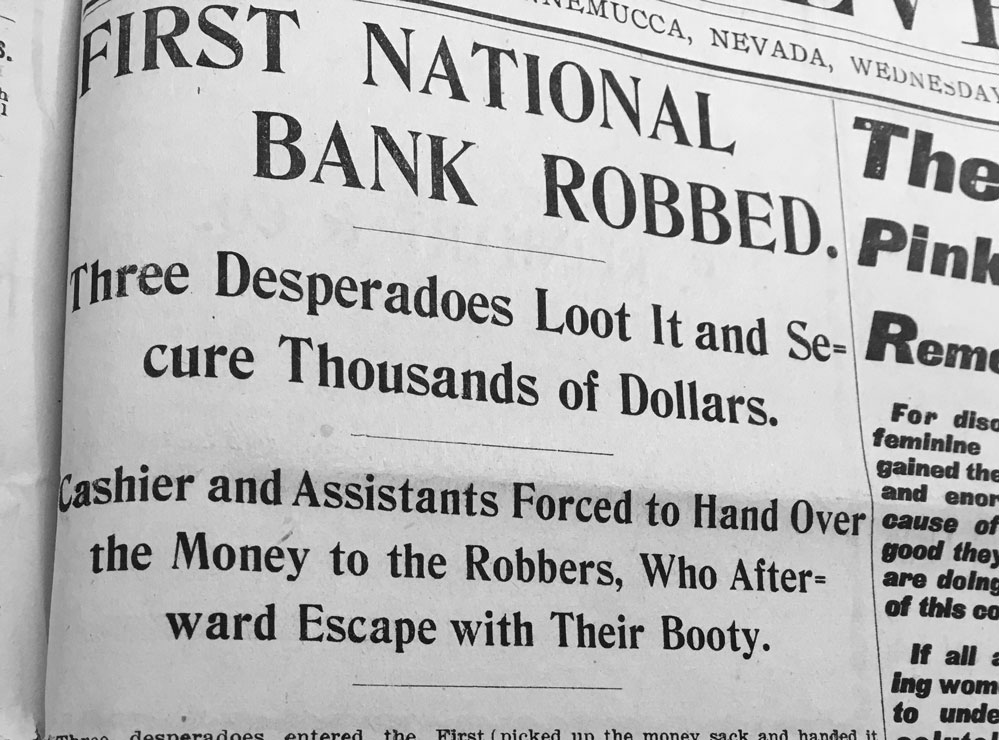
Next Day Headlines
Button And Patsy Ten Years Later

Phones and telegraphs making the West a smaller and more dangerous place for the mounted outlaw, despite the outlaw band successfully robbing a train and a bank within three weeks of each other, Cassidy and Sundance decide that they will pack of their plunder and become gentlemen ranchers in South America (Carver is invited to come along with his bride, but states he'd rather "die on dirt I know than live in some jungle."), and with all the outlaws having money in their pockets, using the outlaw mail system of cryptic notes being left in specific hollow tree stumps, Logan, Kilpatrick, and Carver agree to meet Sundance and Cassidy in Fort Worth, Texas (a town of roughly 27,000 people, there will also be playful jaunts to San Antonio and Houston, and Carver and Logan also make a quick tip to Shoshone, Idaho to dig up some of the gang's gold before returning to Texas by way of Salt Lake City and Denver), for a multiple day celebration (there will be lots of drinking, gambling, and bedroom carousing to go with buggy rides and picnics) of the two men leaving the states, and to wish Carver and the lady he plans to wed, prostitute Callie May Hunt, aka Lillie Davis, a long and happy wedding.  On December 1, 1900, Carver, using the alias William Casey and Hunt are married by Tarrant County Justice of the Peace, John P. Terrell.  Commemorating the entire Texas reunion and their comradery for each other, on Wednesday, November 21, 1900, the men congregate in their go to church Sunday best clothing (top hats, neckware, vests, white shirts, ironed patches and gold watch chains exposed), dressed like wealthy businessmen and ranchers  at the Swartz View Company owned by photographer John Swartz for a photo that becomes one of the most famous ever taken during America's Wild West days (the idea is either Cassidy's or that of the Sundance Kid) ... a picture capturing the nucleus of the Wild Bunch in their prime, Carver, Logan, Cassidy, Sundance and Kilpatrick, called The Fort Worth Five.  A beautiful portrait photo, but a stupid idea, because it gives the authorities a solid view of what the outlaws really look like that soon is used on thousands of dead-or-alive wanted posters that flood the west; a shot that plays a part in the violent fates each of the bandits will experience.  Hubris and ego overflowing from his many escapes from justice while riding with the Ketchums, his transition into a leadership role with the Wild Bunch, and his recent twin triumphs of planning and pulling off the gang's Winnemucca raid and finding love again, the first to go will be the skunk man, Carver (Logan breaks out of a Nashville, Tennessee jail in 1903, and running from a posse after a failed train robbery, commits suicide after being wounded near Parachute, Colorado in 1904, Cassidy and Sundance are thought to be killed in San Vincente, Bolivia in 1908, and after spending time in prison, Kilpatrick is clubbed to death by an express messenger after attempting to rob a train near Sanderson, Texas, in 1912).
Business Card
The Fort Worth Five
Carver

Foolishly remaining in Texas after Carver gives his new bride $167 and tells her to visit her parents until he comes to get her (an event which will never take place), Carver, Logan, and Kilpatrick rent a buggy and beginning touring the region for their next mark, make visits to the homes of Carver's and Kilpatrick's parents, recruit Kilpatrick's younger brother, George, into their new band, and seek vengeance against the rancher that betrayed Elsy Lay in New Mexico back in 1899, Rufus Thomas (living in San Angelo, Texas, Thomas narrowly misses two assassination attempts on his life by Carver in the spring of 1891).  And as often happens when Logan is around with his hair-trigger temper and quick shooting marksmanship, there will be yet another Wild Bunch murder to aggravate the authorities when farmer Oliver C. Thornton is shot to death after arguing with the Kilpatricks over the brothers' failure to stop their swine from wandering on to Thornton's property (a crime that will never be fully solved as most of it's principles end up dead themselves in the next few years).  With many folks reporting spottings of Caver and Ben Kilpatrick to the authorities, tensions grow as the day the men have selected to rob the First National Bank of Sonora, Texas, on Wednesday, April 3, 1901 gets closer.  As if announcing their presence in the area, the outlaw's camp is established on the range of the T Half-Circle near a waterhole between the towns of Ozons and Sonora, the bandits foolishly steal oats for their horses and a quarter of beef for themselves from the headquarters of Sol Mayer's ranch.  Horses ready and a relay established to swaps mounts outside of town while escaping any posses the law might set in motion, weapons cleaned and loaded, the foursome of Caver, Ben and George Kilpatrick, and Harvey Logan ride into town at dusk the day before the planned robbery and check out the town and bank one final time (mostly for George Kilpatrick who claims to have never been within the town's limits).  Posing as buyer/sellers of polo ponies (an odd choice in cattle country), the gang inquires after baking powder, flour, and oats at the Castillo store on Plum Street, but move on when the oats are not available, with Ben Kilpatrick and Logan tying up their mounts in a sparsely populated part of town away from prying eyes, awaiting their partners, while Carver and George Kilpatrick first visit a stable across the street from the bank, before tying up at the nearby bakery and grocery store of W.J. Owens, and go in to buy the grain they've been seeking.
Ben Kilpatrick
Sonora, Texas

Unbeknownst to the outlaws, alerted days before that Wild Bunch bandits might be in the area, the outlaws movements have been tracked by Boosie Sharp, a bartender at the town's Maude S saloon.  Hurrying to the sheriff's office in the local courthouse, Sharp passes his information on to Sheriff Elijah Briant, and Briant in turn quickly puts together a small group of deputies (former sheriff J.L. Davis, the brother of the bartender, Henry P. Sharp, and Constable W.D. Thomason) and takes the group to the Owens store.  Not leaving George outside as a lookout, in the store, Kilpatrick is standing next to the front door while Carver is at the counter finishing filling a sack with grain and tying it closed (both men are armed only with their pistols), when with guns already pulled (the previous year Briant had been shot and almost killed when he tried to arrest a local rowdy without first drawing his revolver), the lawmen enter the business and demand the two men's surrender at roughly 9:00 in the evening.  Rattlesnake swift, Carver goes for his Colt .45, but the weapon gets entangled in his suspenders as he is drawing, and the lawmen do not wait for the weapon to be cleared before opening fire on both men.  Bullets flying, Carver is partially unarmed by a Briant bullet that hits the outlaw in the right forearm and causes him to drop his revolver.  Attempting to pull his other weapon left handed (a .38 Army revolver), Deputy Davis puts Carver on the floor with a round that hits the desperado in the chest.  Down, but still game, Carver gropes along the floor for his Colt (Deputy Sharp kicks it away before the bandit can reach it), but takes even more hits groping for his weapon before going still.  Not forgotten, the totally surprised Kilpatrick is not fast enough to even get his revolver out of his holster, and he too is sent to the floor, compliments of the marksmanship of Constable Thomason (Kilpatrick has a round enter his left breast and come out below his shoulder, and is also hit twice in his left arm, is shot on the left knee, and a glancing bullet also hits him in the forehead ... thought to be dying from fourteen wounds, the young outlaw will rally and survive his wounds).  Gunfight over in seconds (thankfully, one of the lawmen's misses also misses Owens' wife and daughter, who are in the next room baking bread), the Tall Texan and Kid Curry hear the noise coming from the store, instantly comprehend its meaning, mount up, and ride out of Sonora, never to be seen within the city limits again.  Taken to the courthouse on doors taken off their hinges, Carver has a slug go through his right lung before coming to rest near his spine, is hit twice in the right arm, causing two fractures to the limb, twice in the right leg, also causing two fractures to limb, once in the left arm, and once in the left temple (the bandit's personal inventory consists of a silver-mounted, ivory handle Colt .45, a hammerless Smith & Wesson pistol, a beltful of gun cartridges, a gold Elgin watch, a small compass, a diamond ring, two $20 gold certificates, and thin gold wedding ring, and two small photographs, one of his wife Viana, and one of his girlfriend, Viana's niece, Laura Bullion). 
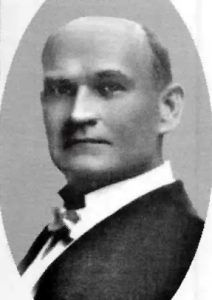
Briant
The Sonora Courthouse
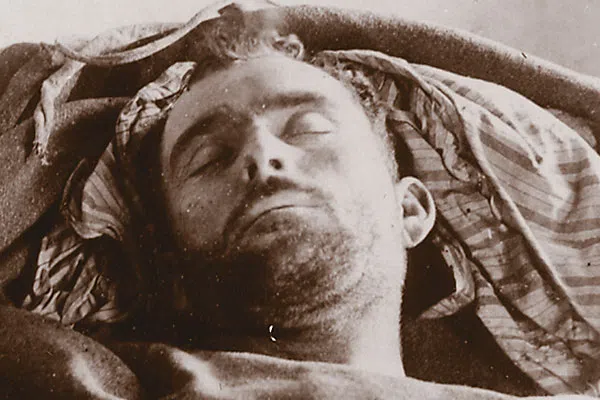
Carver In Death

A valued outlaw of the Ketchum Gang and The Wild Bunch, "News" Carver's criminal career comes to a savagely swift and blood conclusion in Sonora, Texas on Tuesday, April 2, 1901 (unattended by members of his family, Carver has his funeral paid for by his rancher friend of years, George Hamilton, and he is buried under the rites of the Methodist Church in an unmarked grave that a mysterious veiled woman has a stone placed over reading simply, April 2, 1901), the hard cowboy and gunslinger is thirty-two at the time of his leaving.
Carver's Nameless Final Resting Place


  .   


Wednesday, September 7, 2022

A PAUPER'S PIT FOR ZIP

9/7/1895 - Notorious Oklahoma badman, Nathaniel Ellsworth Wyatt, better known to the marshals trying to bring law-and-order to the Indian Territory as Zip Wyatt (he will also go by the alias' of "Wild Charlie" and "Dick Yeager"), passes away in the Enid, Oklahoma city jail after losing a gunfight to a posse early in the previous month near Skeleton Creek, Oklahoma (his mortal wounds come compliments of the marksmanship of deputies, Ad Polk and Tom Smith).

Zip

The second of eight children to be born into the post-Civil War family of John T. Wyatt and his wife, domestic servant Rachel Quick, Nathaniel spends his youth in Indiana (in the Sugar Ridge Township of Clay County), before moving southwest, into the Indian Territory that will become the state of Oklahoma, as a teenager of seventeen.  He and his family soon settle in the Guthrie region of the future state (north of town in an area known as Cowboy Flats on Antelope Creek) where Nathaniel easily slips into the life of an outlaw, with training coming by way of a renegade father notorious enough at drinking, fighting, and general carousing about that he earns the nickname, "Old Six-Shooter Bill," and an older brother, Nimrod, a professional gambler known as "Six-Shooter Jack" (he will be killed by an unhappy poker player in a Texline, Texas saloon in 1891).  And there are the friends he makes while riding for the Wyeth Cattle Company, a pair of cowboys that are extremely handy with a gun, Bill Doolin and Bitter Creek Newcomb.  Early in his nefarious career on the wrong side of the law, Nathaniel acquires his own moniker, being called "Zip" for his ability to slip away from the law during his cattle rustling days.  In his twenties, Wyatt is a handsome man about six feet tall with dark brown hair and hazel eyes.
Guthrie - 1889
Doolin

Wyatt's mother dies in February of 1890 and a year later, his primary female influence becomes his new wife, Annie Bailey, the 17-year-old daughter of a boatman operating a ferry running transport across the Cimarron River.  Wyatt is 24 and believed to be the culprit in the botched robbery of the Santa Fe railroad station of Wharton that results in death of a night telegrapher Charles Smith without charges being filed against Zip (the take of nothing and his escape from a warrant being filed for his arrest further contributing to his nickname).  The couple settle near the town of Mulhall (about thirteen miles north of Guthrie) and have a daughter, but a quiet city life is not to be in Wyatt's future, and drunk one evening in June of 1891, he decides to have some fun shooting up the streets that have grown up around a Santa Fe railroad station on the Oklahoma plains.  Spurring his horse about, despite being tipsy, Wyatt decimates the windows, hitching posts and flower pots of the town with his pistol work; actions which cause several citizens to begin firing at cowboy in protest ... so Zip shifts his gunfire to Mulhall's defenders, wounding two before galloping north out of town.  The miscreant very well known in the region, a warrant for Wyatt's arrest is soon issued by a Guthrie grand jury, but the cowboy avoids it's consequences by first hiding out on the Cleo Springs horse ranch of a former rustling partner named Matt Freeman (he repays the kindness by beginning an affair with Freeman's wife, Jennie.  Then he moves even further north and begins outlawing in Kansas.  His first crime is the robbing of a Greensburg livery business owned by A.D. Roberts of several items of riding gear ... his next, is murder.
Mulhall Train Station

Investigating the theft, 41-year-old Deputy Sheriff Andrew Winfield Balfour tracks the culprit ten miles further north to the community of Pryor's Grove, which is hosting a horse race and a carnival.  Identifying Wyatt as the man he is looking for, with his gun in hand, Balfour attempts to arrest Zip, but the outlaw pulls a concealed pistol and shoots the lawman in the stomach, severing the man's spine and killing him almost instantly (the deputy leaves behind a wife and six children) while suffering two bullet wounds to his left hand and arm (high above, Darius Schuster is performing his high-wire act on a tightrope and bicycle as "The Great Gamboni" when the shooting takes place ... crying "Murder!" the gunplay unbalances Schuster and the man falls, incurring a number of injuries that will keep him from ever performing on a high-wire again).  Now a murderer of lawmen, a $1,000 reward is placed on Wyatt's head and he heads even further north (and east), hoping to find refuge back in Cory, Indiana with his Aunt Lydia and Uncle Tom (the McGriffs).  Safe for awhile, his hunters are no fools though and eventually the law shows up in the form of Captain Charles Hyland of the Terre Haute police, Sheriff John Hixon of Oklahoma's Logan County, Vigo County, Indiana Sheriff James Stout, Deputy U.S. Marshal Willis B. McRae, and Terre Haute copper William J. "Peggy" Smith.  Hideout surrounded, at dawn, McRae and Smith slip into the house and surprise Wyatt who draws a .48 revolver, but drops it to the floor when Smith pushes a shotgun into Zip's stomach (along with telling the outlaw, "I'll blow ye to smithers!") is enough to dissuade the killer from getting into a gunfight in front of his uncle, aunt, and the couple's teenage son, Oscar.  Returned to Guthrie, the cowboy goes on trial for his Mulhall gunplay, while Kansas officials wait to put him on trial for Balfour's murder.  Knowing he is guilty of killing the lawman and most likely will have his neck stretched if he remains in the clutches of the authorities, Wyatt escapes his cell, but is soon captured and returned to a barred existence.  The cowboy however has a Plan B, and during a "Come to Jesus" prayer service at the jail by the Salvation Army on New Year's Eve, December 31, 1892, Wyatt breaks into the jail's sewer system and crawls through the muck to freedom.  
The Guthrie Jail

Now for the most part using the alias Dick Yeager, Wyatt returns to the Freeman ranch and puts together a gang of crooks and thieves that will terrorize the Oklahoma Territory for the next two years.  Wyatt's first recruit is a Kansas desperado (Freeman out of the picture, Wyatt is now openly living with his former friend's wife) and former El Reno policeman named Isaac "Ike" Black, and Black's wife, Belle.  The women will dress like cowboys most of the time and will serve the gang as secret scouts, will coordinate procuring any supplies the group needs, and will relay messages to various members of the group.  For gun hands, along with Black, the gang will acquire a group of gun thugs that go by an assortment of bandit nicknames ... Jim Umbra, Mexican John, Rattlesnake Charley, Indian Bob, and an assortment of other Indian Territory scum.  Making their base of operations the wild Glass Mountains of northwestern Oklahoma (the region is full of bat caves and has also been frequently by the Dalton Bothers and Bill Doolin and his Oklahombres), the gang selects an easy target for their first operation and rustles the untended horses of a band of Cheyenne Indians.  Instead of easy pickings though, the warriors of Chief Henry Roman Nose come after their purloined ponies, retrieve their mounts, and push the outlaws back into their wilderness hideout.  Rustling out, the gang then begins a bloody two years in which they rob stores, farms, ranches, and post offices, and are blamed for most of the crimes that take place in the territory (the members of the Doolin gang also are blamed, sometimes rightly so, for the same lawbreaking).
Belle & Jennie
Glass Mountain
Chief Henry Roman Nose And His Wife

And sometimes the blame falls exactly where it should.  In November of 1893, the gang hits Hightower store and the post office of the town of Arapaho, escaping back into the hills with $750 in cash and a large supply of blankets to get the group through the winter.  The town of Todd gets the Wyatt treatment in 1894 in a botched robbery that nets the bandits no money, but compliments of Zip's quickness with a gun, also takes the life of Blaine County store owner Edward H. Townsend (who dies in front of his wife and children as he tries to keep the outlaws from entering his business), a territorial lecturer for the area's Masonic Grand Lodge (not amused, the Masons up the reward for Wyatt's capture by another $300).  1894 also sees Wyatt murdering Dewey County Treasurer Fred Hoffman during a robbery, and there is a failed train robbery near Wharton that costs another citizen his life.  Robberies, killings, and lots of bat cave hiding that as the group scatters from the law, allows Wyatt the opportunity to freelance his services to Bill Doolin's murderous gang for a raid on the Army payroll being carried by the Rock Island Railroad.  Working with Doolin, Dynamite Dick, Little Dick West, Charlie Pierce, Tulsa Jack, Bittercreek Newcomb, and Red Buck, for his thirty minutes of effort, with rifle at the ready and pistol drawn, Wyatt covers the train from an embankment above where the iron horse stops, then moves through the passenger cars behind a negro porter carrying a grain sack that the beset travelers are encouraged to throw their jewelry, watches, and cash into, assisted in the purloining by Pierce (Pierce and Newcomb have less than a month to live before being betrayed by Dunn Family of Pawnee, Oklahoma).  Noticing former U.S. Marshal William Grimes among the passengers, Wyatt accepts $1.40 from the man for the grain sack and tells him to tell U.S. Deputy Marshal Chris Madsen that he sends his regards the next time he sees him.  Fleeing from the train, the outlaws each earn a cut of over $35,000 in plunder (refusing at first to open the door to the bandits, the express car messenger is wounded in the left leg, right wrist, and right arm by random rifle bullets that persuade him to change his mind and let the outlaws in), and Wyatt receives the added bonus of having lawmen across the territory think he's dead when fighting off a posse a few days later, lawman kill William "Tulsa Jack" Blake (the posse that does Tulsa Jack in is led by Madsen).  Money pocketed and posse avoided, Wyatt returns to the Watonga-Okeene area to rest up before his next robbery.  The reward for bringing in Wyatt either dead or alive has now been raised to $5,000!
Grimes
Madsen
That Ain't Zip!

Unwilling to wait for another call to action from Bill Doolin, Wyatt organizes a raid on the general store and post office of Fairview, Oklahoma.  The raiders are comprised of himself, his girlfriend Jennie, Isaac Black, and Isaac's wife, Belle and ride out of town on the night of 6/3/1895 with cash, coins, supplies and three stolen horses.  Heading back to their hideout in the Gyp Hills, the gang makes camp in the hills, where the following day, they are jumped by a posse consisting of U.S. Deputy Marshal Gus Hadwinger, U.S. Deputy Marshal J. K. Runnels, Woods County Sheriff Clay McGrath, and Woods County Deputy Marion Hildreth.  In the all-day gun battle that ensues during a torrential rain storm, the outlaws become separated from their women (arrested, both women will go a trial for the robbery, but will be acquitted for a lack of evidence) before slipping up a nearby canyon to safety with Wyatt suffering a bullet wound to his left arm and Black taking a piece of lead in his left side  Lawmen now flooding into the region (over 1,000 men will participate in a hunt lasting over 100 days), the bandits move from hiding place to hiding place, but inevitably bump into men looking for a major reward payday for bringing in the pair.  On July 23rd, the pair have managed to reach the outskirts of Guthrie, but there they decide their lady friends are too well protected to rescue from the jail, and Wyatt and Black head back towards the Gyp Hills.  On the run and out of supplies after weeks of dodging lawmen, weary and not thinking straight, the pair sneak into the town of Oxley at night and pilfer a post office and store, a robbery that nets them a few supplies, tobacco, and $35 in cash, but also alerts the authorities where their prey is located.  Distancing themselves from their latest "caper" by only six miles, a posse finds the weary outlaws camped near Salt Creek the next morning and another gun battle takes place in which Wyatt takes another body wound, Black is creased by a rifle bullet to the head, and lawman Frank Pope is shot in the right leg.  Bleeding and barefoot, the outlaws manage to escape the posse, but are now afoot, a situation they resolve by stealing two of the lawmen's mounts, then later in the evening moving out of the hills and through the lawmen's perimeter by stealing another horse and a cart, and posing as posse men, strike out for the North Canadian River with Wyatt putting the lawmen at ease by playing a French harp mouth organ the entire time the outlaws are exposed to their pursuers.  Luck almost now totally dissipated, on the 29th of July, the men again duel a posse (this time in a running gun battle lasting twenty-five minutes) before escaping and making their way to an abandoned shack about four miles east of the small town of Cantonment (now just Canton, about fifty miles) where they hope to rest a little before renewing their flight.  On Thursday, August 1st, the authorities once more find the outlaws.  
cantonment military camp field true west magazine
Cantonment

Shack quietly surrounded as the outlaws eat a cold supper, when the men step outside arguing about who is entitled to the last portion of tobacco, Woods County Deputy Marion Hildreth (still chasing the men) yells at the pair to surrender, an order the pair immediately answer by firing their Winchesters at the posse.  Fire met by fire, one lawmen is wounded, but the bandits get the worst of the gunfire, with Black struck in the head by a bullet that kills the outlaw (besides his clothes and weapons, Black is in possession of $1.50 in coin, a picture of his wife, Belle, and a paper with the words to two ballads written upon it), and another round that strikes Wyatt in the chest near his right nipple and then furrows halfway around Zip's body.  Retrieving the rifle he drops as he is hit, Wyatt screams "Marion Hildreth, you have killed the best man in Oklahoma," as he sprints into a nearby cornfield,  Seriously wounded, Wyatt tramples through the tall stalks of corn and runs east over a sand hill, moves through another cornfield and then comes upon the home of a young doctor.  Wounds hastily treated, and a new mount procured at gunpoint, despite the doctor's admonition that he can't ride with his wound, Wyatt sets off on the doctor's little buckskin horse and heads east.  Pains worsening as he rides along, Wyatt makes it seven miles before the doctor's pronouncement comes true.  Turning the doctor's horse free, the outlaw begins walking, but soon encounters a farmer on the road driving a lumber wagon.  His pistol convinces the man to take him to a ford across the Cimarron River.  Wading across the river's wet, Wyatt spots a teenager driving a cart on the other side and soon has another reluctant driver carrying him onward ... at full speed for twenty-five miles.  Reaching Garfield County, Wyatt release the boy and continues his flight, first driving forward in the cart, then mixing riding with walking as he reacts to his wounds and the condition of the horses he steals, all the while pursued by posses that keep getting bigger and bigger.  
zip wyatt balck illustration by bob boze bell true west magazine
Bob Boze Bell Illustration For True West Magazine - The Fight On The Front Porch - Black Is Hit While Wyatt Fires His Winchester
ike black dead true west magazine
Black

The long chase almost over, a 40-man posse tracks Wyatt to Turkey Creek, but then peels away from the trail to ride into the nearby town of Hennessey for supplies and fresh mounts.  Ready for trouble, the lawmen receive information that the outlaw has been spotted crossing the Rock Island Railroad tracks about five miles south of the town of Enid; at Waukomis they telegraph the Garfield County sheriff to send assistance to the region's Skeleton Creek Valley where Wyatt has reportedly stolen a horse from a farmer named John Daley.  Multiple posses now combing the area, five miles south of the town of Marshall, on the hot summer morning of Sunday, August 4,1895, lawmen find the big stolen roan horse of farmer Will Blakely grazing in a bend of Skeleton Creek ... alongside the horse they also find bloody tracks into the nearby cornfield of farmer Alvin Ross.  Quietly, two posses' (by this point in the hunt, a large portion of Oklahoma's Anti-Horse Thief Association are involved) members merge and surround the area.  Taking charge, Garfield County Sheriff Elza Thralls sends forward three volunteers, deputy's  Ad Polk and Tom Smith (the third man's name is lost to history, when frightened by the prey's reputation with a gun, turns back before Wyatt is found) to find out what the cornfield might conceal.  Creeping through the corn stalks, the two deputies discover a worn out Wyatt sleeping on a sandy mound where no corn will grow, the outlaw's right around his Winchester rifle and his left hand next to his cedar-handled Colt revolver.  Guns at the ready, Polk calls out, "Throw your hands up, we've got you!"  His eyes instantly snapping open, Wyatt grabs his guns, but as he does, both deputies fire and score hits on the outlaw ... only an inch apart, Smith's round tears through the outlaw's stomach, while the bullet from Polk's 40-70 Winchester turn's Zip's pelvis into a ruin, a shatter of roughly fifty splinters of bone.  Despite his wounds, Wyatt gets off a couple of shots that miss their targets before he is overpowered by Smith, Polk, and other lawmen that have come to the deputies aid.  At the end, the outlaw waves a single arm over his head and croaks "enough" in surrender.
Cornfield Capture From Police Gazette
Wyatt's Rifle

The hunt finally over, it takes an hour to carry Wyatt out of the cornfield and place him in a wagon for further disposition and a jaunting ride to a small church in the town of Sheridan (where doctors treat the bandit's wounds as best they can), then on to Hennessey, before finally jailing him in Enid ... a long journey made even longer by the fact that the lawmen argue with each other the whole way as to who should receive the reward for Zip's capture (a jurisdictional nightmare, the Sheridan men think they deserve the reward, Kingfisher County wants the money, the capture was made in Logan County, and the officers holding Wyatt at the church are from Garfield county) and where the badman should stand trial.  Listening to the various arguments from his resting place in the church, Zip whispers to a nearby deputy guarding him, "If you'll give me my six-shooter for about two seconds, I'll stop the argument."  No gun supplied to Wyatt, it is eventually decided that the reward money should be split among the posse men from Sheridan and John Daly, the farmer that spreads the last alarm after his encounter with Zip.  As to the site of the trial, the doctors put a quick kibosh to any idea of a locale ... Wyatt's wounds are mortal and the outlaw has only days left to live.  Before the end comes though, Wyatt seems to enjoy the continuous stream of visitors to his Enid cell, talking up his exploits and claiming to have killed eleven men in fair gunfights.  The first man to stop by Wyatt's cell is U.S. Deputy Marshal Ed Kelley (he knows Wyatt well from having arrested him several times as the former police chief of Guthrie), with hundreds more following in the days ahead, many bringing homemade meals for the outlaw.  Even "Six-Shooter Jack," John T. Wyatt, Zip's father, puts in an appearance.  Eventually though, Wyatt's wounds curtail the visits.  The jail a hot box of agony, Wyatt's guards try to provide him with a modicum of relief from the heat by hanging wet blankets on the jail's cells and window, along with keeping him liberally dosed with morphine.  As the days pass though, nothing can hold back Wyatt's body slowly shutting down and the outlaw's cell smells of the gangrene that comes from his wounds, he stops eating and his only sustenance is cold milk as he becomes little more than a skeleton covered in bed sores and in almost constant pain drifting in out of consciousness, with the local paper following his daily woes as if they were reporting on a baseball game.  Arriving at the inevitable ending, on Wyatt's last day the doctor attending him asks, "Is there anyone you wish to see or anything you wish to say?"  To which the grinning outlaw replies, "Nobody to see, Doc, an' nothin' to say," before drifting into a final unconsciousness.  Nathaniel Ellsworth Wyatt, the thirty-one year old outlaw also know as Zip Wyatt, Dick Yeager, and Wild Charlie dies with his boots off in Enid, Oklahoma on September 7, 1895, at 12:06 in the early morning of Friday, however his story continues on past his leaving.    .
Downtown Enid
Awaiting The End

The day after Wyatt's death, his sister shows up at the Enid jail to claim her brother's possessions, but nothing is forthcoming from the Sheriff because the outlaw's personal effects have already found new homes, his infamous Winchester going to posse member Tom Smith, the outlaw's watch vanishing entirely, and the sheriff deciding Zip's pistols are his.  Upset by the unauthorized transfer of Wyatt's property, the family turns away from claiming Zip's body for burial, so the county steps in and on Sunday, September 9th, 1895, the bandit goes into a cheap pine coffin and is buried in an unmarked pauper's grave, attended on the last journey of his mortal remains by casket maker Dan C. Bass, grave digger James McMillen, and Bass' little black dog.  Later, as the town of Enid grows, the cemetery where Wyatt's remains are buried is dug up and the graves moved to other sites around town to make way for a school and playground.  Wyatt is missed in the transfer to a new resting place and still resides where he was put in 1895 ... and it is said that on hot August and September nights he can be seen wandering the area, asking for a cool glass of milk.  Before the burial though, there is another bit of business that Wyatt must endure.  Wondering at the magnitude of the outlaw's internal wounds, Enid doctors Champion and Woods conduct an autopsy on Wyatt's body and find a rifle slug that has gone through the inner half of the outlaw's femur and pubic bone and has come to rest just above his pubic arch.  The other bullet is the one that turns Wyatt's pelvis into a shattered mess before coming to rest close to his vertebrae column.  Additionally they find that the inner lining of Zip's stomach has turned black; explaining the desperado's agonies during his last days, Wyatt has been decomposing for several days before his death ... an extremely hard way for even an outlaw to go! 
zip wyatt on a horse true west magazine
Nathaniel "Zip" Wyatt 

Sunday, July 10, 2022

BUCKSKIN LESLIE KILLS HIS LOVER

7/10/1889 - Aptly named Tombstone, one of the gunmen infamous for the known shootings he commits while in that wild Arizona mining town, Nashville Franklyn "Buckskin Frank" Leslie, in a fit of jealousy while drunk, kills his "wife," Mollie Edwards, with a bullet into the woman's brain, then turns his pistol on the man Edwards is talking to, a local pistolero named James "Six-Shooter Jim" Neal, hitting the man in the left breast and in the arm (Neal will survive the encounter).

Leslie

Born in San Antonio, Texas on March 18, 1842, the early part of Leslie's life is a mystery.  The son of a father named Bernard from Virginia and a Kentucky woman named Martha.  There is also a tale that he is born in Galveston to Thomas Kennedy and Martha Leslie, and begins using his mother's last name when he has a falling out with his father.  Whatever the case might be, for the first 36 years of his life, there is no historical documentation for Leslie's activities, but there are lots of stories that the gunman is happy to pass along as an adult in his cups.  Accordingly, Leslie goes to Heidelberg, Germany to study medicine (while his brother attends West Point), but leaves that career path behind after returning to the United States and fighting for the South from 1861 to 1865 as a First Lt. in Brigadier General Benjamin Gordon's 10th Cavalry (or as a bugler in the service of the state of Virginia, while his brother is fighting for the Union).  After the war, Leslie's resume expands to include supposed stints a deputy sheriff for Abilene, working under the guidance of James Butler "Wild Bill" Hickok, as a "rough rider" in Australia, piloting a ship in the Fiji Islands, demonstrating rifle marksmanship around the world, and scouting for the United States Army in Texas, the Oklahoma Territory, and the Dakotas during the 1870s.  Carrying a reputation as a man not to be trifled (there are rumors that he has shot and killed 14 men), what is known about the man when he emerges as a bartender at Thomas Bollard's saloon in San Francisco during an 1878 census (by the following year, he is tending bar Kerr & Jurado's Saloon and Billiard Room) is that Leslie stands 5'7" tall (he walks on two-inch high boot heels), weighs a slight 135 pounds, has pale, blue eyes, sports a large moustache, favors games of chance, wears two guns during his waking hours (and is an expert shot with either hand), has an evil temper that is quick to flare, especially when he is liquored up (and he gets liquored up a lot), and of course, that he has a predilection for wearing buckskin, hence his nickname.   
Hickok

In July of 1880, Leslie arrives in Tombstone, Arizona attired in the buckskins of an Army scout, and looking like the General Custer portrayed in an Anhueser-Busch lithograph that hangs in almost every western saloon of the time, is immediately hired by a local establishment to tend bar.  Exchanging his wilderness attire for the fine clothing of a San Francisco gentleman (all tied together with a fringed buckskin vest, Leslie soon partners with William H. Knapp in opening the Cosmopolitan Saloon on the city's busy Allen Street, next door to the Cosmopolitan Hotel that the Earp Family will make it's headquarters after the Gunfight at the O.K. Corral takes place on October 26, 1881.  In the battles that play out for control of Tombstone and the region, he soon becomes an Earp partisan and good friend of the clan's leader, Wyatt Berry Stapp Earp (Wyatt will state for the record years later that Leslie's shooting skills and speed are on a par with those of the dentist pistolero from Georgia, John Henery "Doc" Holliday).  He also quickly becomes involved with a woman that tickles his fancy named Mary Jane "May" Evans Killeen, a chambermaid at the Cosmopolitan Hotel ... though separated from her husband, a still very married chambermaid.
The Cosmopolitan Hotel

Recent arrivals to Tombstone from Virginia City, Nevada, 23-year-old Mary Jane Evans marries 32-year-old Mike Killeen in the parlor of the Cosmopolitan Hotel on April 13, 1880 in a ceremony officiated by Reverend J.V. McIntyre, and witnessed by 12-year-old Louisa Emma Bilicke (the daughter of the owner of the hotel) and 38-year-old Frank Leslie.  The newlyweds have issues with each other almost immediately that include Mr. Killen's late nights drinking and gambling, his quick temper, his jealous nature, and the fact that her friendship with Leslie seems to be budding into something much deeper.  Not willing to lose the women, Killeen makes the mistake of letting most of the whole town know that he plans to kill his rival at the first opportunity he gets.  The opportunity comes on the evening of June 22, 1880.  After an evening of dancing at the Grand Hotel, at around midnight, Leslie and Mary occupy the porch of the Cosmopolitan.  Cautious knowing his life has been threatened, Leslie places his pistol beside him before swooping in to kiss Mary.  Buss barely begun, Leslie quickly pulls away from the object of his affections just as his friend, George Perine, arrives on the porch to warn Leslie that an armed Killeen on his way.  No sooner are the words out of his mouth than Killeen arrives and all three men draw their weapons and begin blasting away at each other from a distance of only a few feet.  In the resulting melee, Leslie is grazed twice and his head is knotted from blows from Killeen's pistol and Killeen is mortally wounded (he will take five days to die from his chest wound, and before he goes, he names Perine as his actually killer).  Leslie and Perine both arrested, the men are brought before a magistrate and Leslie takes full responsibility for the killing, stating Perine never fired his gun.  Self defense claimed and believed, both men are released from jail and Leslie decides to vacate town for a few days and go prospecting in the nearby Dragoon Mountains with a friend, Colonel Roderick F. Hallford (the pair will locate a rich deposit of copper ore and name their claim, "Copperopolis").  Brief exile over, only eight days after Killeen is killed, Leslie is back in town and back in the parlor of the Cosmopolitan Hotel where he takes the Widow Killeen as his bride.  Though his opponent has been bested, Leslie's penchant for violence has not been assuaged whatsoever. 
Mary Killeen

Becoming a menace to the peace of the town and the health of Tombstone's citizens, in the early 1880s Leslie rides in the posse led by the Earps that goes after the bullion robbers (a $26,000 in which stage driver Budd Philpot and passenger Peter Roerig are killed) that hit the Wells Fargo stagecoach leaving Contention, Arizona on the night of March 15, 1881, pistol whips a drunk that doesn't move out of his way fast enough while he is entering the Oriental Saloon, and is said to have killed gunman Johnny Ringo after the two have a disagreement while spending a drunken two weeks hunting together in the Turkey Creek Canyon region of Arizona (the killing remains a mystery to this day).  On November 14, 1882, his marksmanship with a revolver sends another Tombstone resident, gun thug Billy Claiborne, to the town's Boot Hill cemetery.  Bristling for months after being accused of running out on his Cowboy friends at the infamous Gunfight at the O.K. Corral (when the bullets begin flying, Claiborne flees out the back of the corral without firing a shot), to pump up his ego, Claiborne takes to calling himself Billy the Kid (the real kid, is killed by Sheriff Pat Garrett in Fort Sumner, New Mexico on July 14, 1881), and insists that everyone else in town use his new moniker too.  Having made the acquaintance of the real kid before the youngster demise, Leslie of course refuses to participate in Claiborne's charade and tensions begin the two men build until a drunken Billy pushes Leslie too far (Cosmopolitan Saloon burnt down, Leslie is working as a bartender at the Oriental Saloon at the time).  Demanding that he be called "Kid," cursing the staff of the Oriental Saloon (he is asked nicely to stop his foul comments more than once), and accusing Leslie of being Johnny Ringo's killer, Leslie finally tires of Claiborne's posturing, and grabbing him around the collar, throws the drunken lout out into the muddy street.  Ire raised to retribution required heights, but no fool knowing Leslie is a better shot, Claiborne procures a rifle and waits outside the saloon to ambush his enemy when he leaves the bar.  No fool and warned by two men that there is a man with a rifle hiding in a fruit stand near the entrance to the Oriental, Leslie quietly exits the saloon from a side door and surprises his waiting opponent.  Stepping from the darkness, Leslie tells Claiborne, "Don't shoot.  I don't want you to kill me, and I don't want to have to shoot you."  Claiborne however responds by snapping off a shot in Leslie's direction, which misses.  Leslie's shot in answer does not miss and hits Claiborne in the left side and then blows out the cattle rustler's back.  Brought down, Leslie advances o his opponent to see if more lead will be required to conclude the evening's foolish festivities, but seeing him coming, Claiborne calls out, "Don't shoot again.  I am killed."  Indeed, removed by friends to a nearby doctor's abode, the 22-year-old Claiborne perishes six hours later in a killing that will be ruled "self-defense" (sticking it to Leslie one last time, Claiborne's last words are said to be, "Frank Leslie killed Johnny Ringo.  I saw him do it!"). 
Ringo
Claiborne
The Oriental
News Of The Day

Earps and Clantons gone as the town tries to turn respectable, one problem rowdy remains from Tombstone's wild pass, Buckskin Frank Leslie.  1880s not yet over, the menacing Leslie continues to intimidate the locals ... there are two near gunfights with a miner named James Young over disputed claims (both encounters end peaceful, thanks to Young's at-the-ready double-barrel shotgun), Leslie partners with Oriental Saloon owner Milt Joyce in running a ranch near the rugged Swisshelm Mountains the men name Magnolia (it is 19 miles from Tombstone and all Leslie's by 1885 when Joyce sells out and moves to San Francisco to operate the city's Cafe Royale), holds off an Apache raid from his ranch house, becomes a scout for the U.S. Army's 4th Cavalry when Geronimo leads a small band of miscreants off their reservation, after eight years of marriage, divorces Mary (handing out many beatings over the years, Mary finally tires of Leslie's presence when he has a not-so-secret affair with a local soiled dove named Miss Birdie Woods and also grows weary of becoming the "Silhouette Girl' that Leslie uses for target practice, tracing her profile in bullet holes ... for her troubles, Mary receives a divorce settlement in which she is awarded her legal fees, $650 in cash, and a quarter interest in the Magnolia's operations which includes ownership of 13 horses and 150 heads of cattle), spends a few months as a mounted customs inspector riding the border between the United States and Mexico along the Rio Grande River, and shoots off the boot heel of a cowboy in Tombstone's Birdcage Theater that he believes is not showing the proper respect to one of the establishment's female singers.  In 1889, Leslie is back in major trouble once more. 
Joyce
Leslie

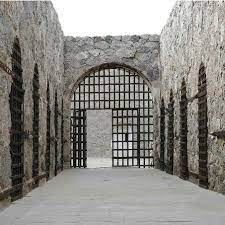
Earning extra money as a bouncer and bartender in the Oriental Saloon, Leslie spends much of his time at the town's Birdcage Theater, where he becomes enamored by one of establishment's new entertainers, a glamorous 22-year-old prostitute and singer named Mollie Williams (she also answers to Blonde Mollie and Mollie Bradshaw).  Shortly after Leslie takes interest in Williams, her pimp, a man named Bradshaw, is mysteriously killed (when asked if he has killed the man, Leslie remains silent and just grins at his questioner).  Freed by the death to start a relationship with each with Bradshaw's death, though unwed, Mollie moves into the Magnolia as Leslie's new wife ... and like the old wife and other women in the gunman's life, she and her lover soon are engaged in almost daily drunken arguments, jealousy, and physical abuse.  His internal demons calling, on the night of July 10, 1889, Leslie kills his last victim, Mollie Williams.  Returning to the ranch after an evening of imbibing enough whiskey to make him jealous and stupid, Leslie walks into his home, sees Mollie talking with a young ranch hand and wannabee gunfighter named James "Six-Shooter Jim" Neal.  Stating, "I'll settle this," with no further explanation, Leslie pulls his revolver and shoots Mollie in the head, killing the women instantly as she falls out of the chair she was sitting in, he then pivots and fires at Neal, dropping him with bullets that find his left breast and arm (saving his own life, when Leslie isn't paying attention, he crawls away into the darkness and manages to crawl to a nearby ranch before being taken to Dr. George E. Goodfellow in Tombstone.  No self defense explanation possible with Mollie unarmed when Leslie fired on her, a witness alive that can testify against the culprit, and the town tired of the antics of one of it's most deadly troublemakers, after a preliminary two-day hearing, Leslie is sent to Tucson to stand trial for Mollie's death.  Handwriting on the wall, on January 6, 1890, Leslie pleads guilty to the crime and trades on his past service against the Apaches to escape being sentenced to death by hanging and is sentenced to life in prison at the notorious Yuma Territorial Prison (he will be escorted to the prison by fellow hardcase, Sheriff John Horton "Texas John" Slaughter, who delivers his prisoner to his new home so drunk that he can barely walk, where Leslie becomes convict #632).
The Birdcage
Mollie Williams
Dr. Goodfellow
Prison

Up to no good almost immediately, after three months behind bars, Leslie leads five other men on an unsuccessful prison break (the men have almost tunneled their way to freedom when one of the members of the escape group informs on his confederates) that results in the Tombstone gunman being thrown into solitary confinement.  Broken by his stint in a dark hole, Leslie emerges from his punishment a changed man and causes no more problems for the institution, becoming a model prisoner instead by using some of his medical knowledge to become a pharmacist in the prison's infirmary.  He also begins corresponding with q woman that has read about him in a San Francisco newspaper, the woman that will become his second wife, divorcee Belle Stowell.  Friends in high places and continuing pressure from Stowell soon result in Governor Benjamin J. Franklin granting Leslie a full and unconditional pardon on November 17, 1896.  Putting Arizona behind him, Leslie buys himself a one-way train ticket to Los Angeles, California.  From Los Angeles, he takes another train ride to Stockton, California, where on December 1, 1896, at the San Joaquin County Clerk's office, the 55-year-old miscreant marries the 39-year-old Stowell.  A match most certainly not made in Heaven, the couple never make the honeymoon cruise they have planned to China, and four months later, the pair separate, with divorce coming on March 19, 1903 on the grounds of Leslie "failing to provide" for his wife.  A bachelor once more, Leslie next makes his way to Texas, where he gets a job tending bar for an Arizona friend named John Ralph "Jack" Dean at Fort Worth's Delaware Cafe, where he organizes a group of companions into a company of gold diggers set to look for glitter in the wilds of Alaska.  Wishful thinking, instead of Alaska, in April of 1898, Leslie is in Hermosillo, Mexico, preparing for an expedition into the country's interior with Arizona's Dr. Goodfellow (the same physician that patched up Neal after Leslie shot him) and San Franciscan, Tom Selby.  Another endeavor that proves to be more fizzle than fire, Leslie leaves Mexico and enlists in the U.S. Army to fight in the Spanish-American War of 1898, serving in Cuba under the commands of Colonel Theodore Roosevelt and Major General Henry Lawton.
Governor Franklin
San Juan Hill, Cuba

War over, at 60-years old, Leslie serves as a guide for a geological survey of parts of Arizona and Mexico led by Professor Edwin Theodore Dumble (for the Southern Pacific Railroad), during which he is robbed by Yaqui bandits near the town of Guaymas (money and his mount are taken before the gunman is turned loose).  Again in Mexico in 1900, Leslie finds two years of employment with the Mulatos Mining Company of Nogales.  Returning to the United States, Leslie's dark side once more seeps into his activities and he is a participant in a con game to fleece a Nevada mine owner named J.P. Reynolds (Leslie gets lucky and is only charged by the local; authorities with vagrancy), and in 1902, he is arrested for Grand Larceny involving a check for $675.  Also in 1902, Leslie assaults his last victim, and as often happens with drunks, the victim is himself ... stooping to pick a pistol that has fallen out of his inner vest pocket, the automatic weapon discharges upon hitting the floor, and the gunman is hit by a bullet that goes through the flesh of his left leg, about four inches above the knee, before then tearing into his right ear and gashing his skull.  Healed but disfigured, Leslie also survives the San Francisco earthquake and fire of 1906.  Forced to relocate after the tragedy, Leslie homesteads for a year on the Orcas Island near Seattle, but defaults on the property before moving to California and settling near the town of Berkeley, where he meets his third bride, 43-year-old Elnora Tolbert.  The two marry in Napa in 1913, but wanderlust still in his soul, after relocating to Omak, Washington, Leslie heads south sometime in 1916 at the age of 74 (Elnora will remain in the region until the day she dies), intending to participate in yet another mining expedition to Mexico.  The 1920 census shows him living in Sausalito, California in a home owned by his old friend from his Cafe Royale days, James W. Orndorff.  In the next census it is noted that Elnora is now a "widow," and although there is no known death record for the man, there is no listing for Leslie anywhere within the 1930 census.  His last known location is Oakland, California, where in 1925 he is working in a poolroom that also allows him to sleep there after he has performed his cleanup duties (allows his residence until the establishment fires him for stealing a pistol.  To date it is unknown whether he is killed in one last gunfight, dies of natural causes, or commits suicide, but is believed to have passed sometime during his 80th year.
Old Man

One additional tale that needs telling before Leslie rests in peace once more is the story about how he almost goes Hollywood in the early 1920s.  One of the first movie stars of the silent era, when William S. Hart decides to make his next film, an oater called Wild Bill Hickok, Leslie is recommended to the actor to serve as a technical advisor on the movie by his former Fort Worth partner, Dean.  And the actor is interested, but the opportunity fades away when no one can locate Leslie.
Wild Bill
Buckskin Frank